
Table of Contents
Key takeaways:
- Patient record accuracy now impacts revenue and safety. As patients review notes more closely, real-time, error-free records directly affect outcomes, compliance, and trust.
- Automation is the only scalable path in 2026. Practices cutting documentation time by 50%+ rely on integrated scheduling, intake, charting, and AI, not more staff.
- Unified platforms beat point solutions. Systems like CERTIFY Health connect records, workflows, billing, and compliance to reduce errors, stop revenue leakage, and deliver better care without burnout.
Introduction
Patients are now reading their own visit notes more than ever, and it’s not pretty. A large ambulatory care study covering 136,000+ patients across 79 practices found that 21% identified mistakes in their electronic visit notes, and more than four in ten of those errors were considered serious, affecting diagnoses, medical histories, medications, or test results.
This skyrocketing patient engagement, plus exploding care complexity, is slamming providers with demands for flawless, real-time patient records amid chaotic workflows and compliance nightmares. That’s where patient management steps in as the fix, automating accuracy and flow.
In this guide, we will see Top 10 patient management software solutions for 2026. These validated patient management system tools optimize patient record management software, crush documentation errors, and turbocharge safer care delivery.
Understanding Patient Management Software
Patient management software streamlines the chaos of patient records with intuitive patient charts and timelines that track vitals, flags, history, and meds in one longitudinal view.
It powers encounters by capturing vitals from devices or manual entry, logging allergies and problem lists, then fuels clinical documentation like SOAP notes, progress notes, diagnosis entries, attachments, and discharge summaries.
AI kicks in for real-time transcription, generating summaries and assistive notes, while care coordination handles tasking, handoffs, and treatment plans. Document management acts as a secure repository, orders link lab/imaging results, and reporting delivers clinical dashboards for insights, all tied to compliance via HL7/FHIR and audit trails.
Quick wins from these core functions:
- Reduces documentation time by 50%+ via automation.
- Improves care handoffs, slashing miscommunication risks.
- Enables real-time data sharing for telehealth or referrals.
This isn’t just software; it’s the backbone enabling small family practices or large multi-specialty groups to handle rising patient volumes without burnout.
Why Patient Record Management Software Matters In 2026
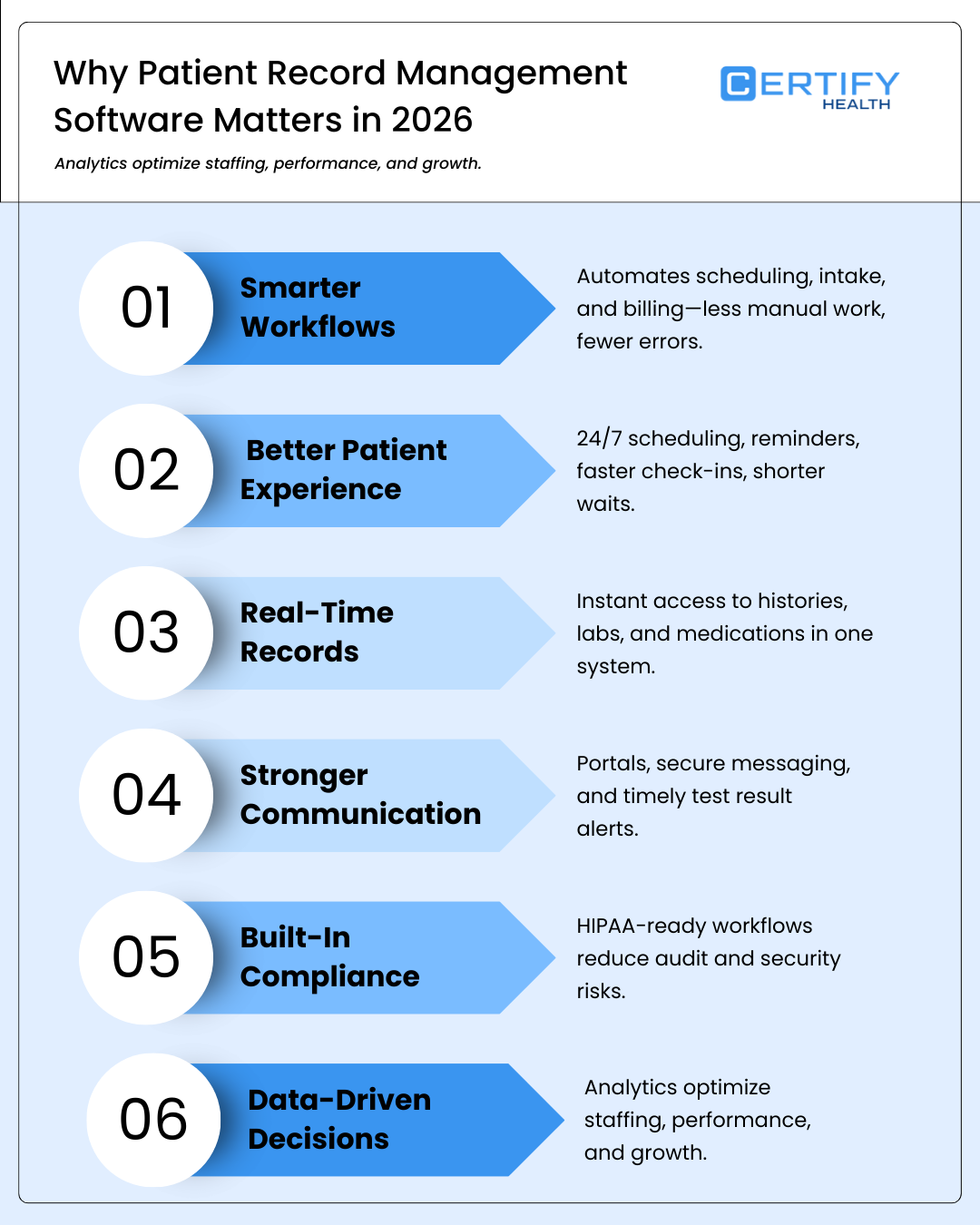
With automation, real-time data, and AI-assisted workflows, patient record management software is no longer optional; it’s essential for delivering safe, efficient, and scalable care in 2026. Here’s why Patient Management Software matters:
Improved Efficiency & Workflows
When staffing is tight and volumes are high, automation keeps things moving. Patient management software handles scheduling, registration, and billing automatically, cutting manual work, reducing errors, and helping teams stay productive even with fewer hands on deck.
Enhanced Patient Experience
Patients now expect healthcare to function just like the other services they use every day. With 24/7 online scheduling, automated reminders that reduce no-shows, and faster check-ins, practices deliver smoother visits and shorter wait times, without adding staff.
Centralized, Real-Time Data Access
No more hunting through disconnected systems. Providers get instant access to patient histories, lab results, and medications in one place, supporting faster decisions, fewer mistakes, and better outcomes at the point of care.
Better Communication & Coordination
Patient portals, secure messaging, and real-time test result notifications keep everyone on the same page. Communication gaps shrink, follow-ups improve, and care teams coordinate more effectively across visits and locations.
Data Security & Compliance
With stricter HIPAA enforcement and evolving regulations, security can’t be an afterthought. Patient management software builds compliance into daily workflows, protecting sensitive data while reducing audit and penalty risks.
Data-Driven Decisions
Built-in analytics turn everyday data into insight. Practices can track patient trends, monitor operational performance, and optimize staffing and resources, so growth is intentional, not reactive.
How to Choose Patient Management Software
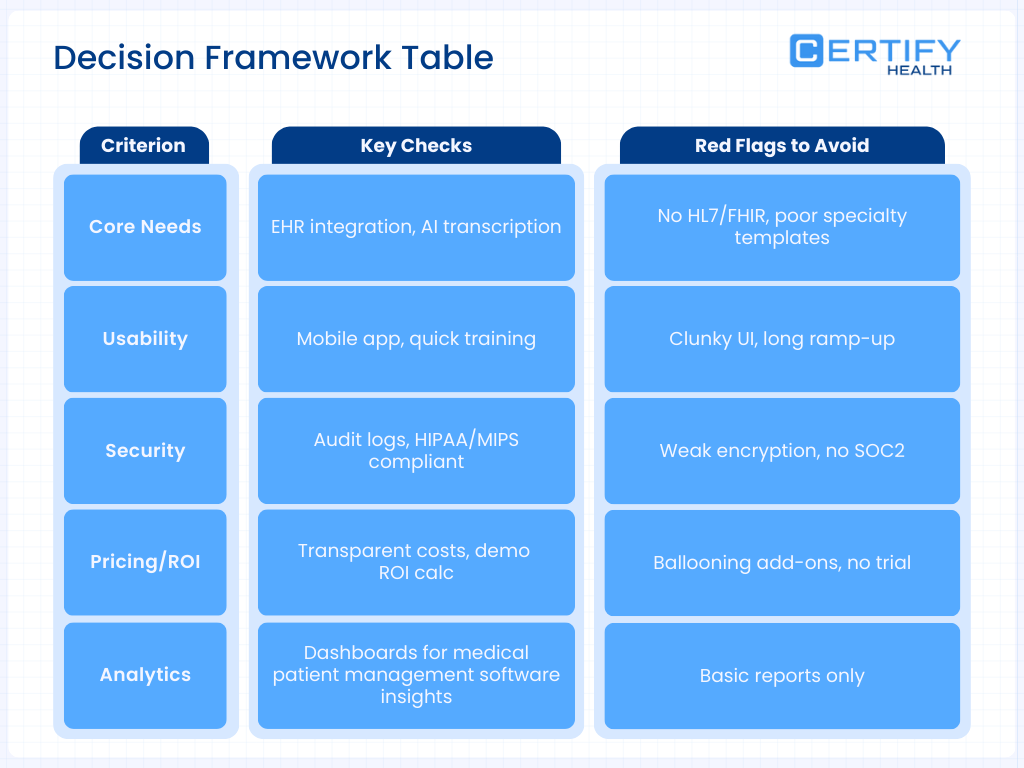
Follow these key steps to select patient management software that fits your workflow, safeguards data, and delivers measurable value.
Step 1: Evaluate Must-Haves
- Core Clinical Features – Comprehensive patient charting, SOAP/progress notes, problem lists, medication tracking, and secure document management.
- Scalability – Can the system handle 20 patients/day or 200 without lagging?
- Intuitive Interface – Minimize clicks and streamline daily tasks for faster, error-free operations.
Step 2: Prioritize Security and Compliance
- Verify HIPAA, MIPS, and ONC certifications with robust audit trails and encryption.
- Probe data backup, access controls, and breach response, essential amid rising cyber threats.
Step 3: Crunch the Numbers
- Compare pricing (per-provider subscriptions vs. revenue-share), factoring in hidden costs like implementation.
- Demand demos, free trials, and user reviews from similar practices; quantify ROI via time savings on clinical documentation, improved patient satisfaction scores, and analytics revealing revenue leaks.
Top 10 Dental Practice Management Software
CERTIFY Health is a patient management system that facilitates better documentation and care coordination while managing the entire patient record. It connects scheduling, intake, check-in, billing, eligibility, and AI scribing into one continuous workflow, keeping patient data unified across visits while reducing administrative drag for growing practices.
Key features:
- Patient Timeline: Brings together vitals, meds, and medical history in a single view, helping clinicians spot potential issues earlier.
- Encounter Capture: Records vitals, allergies, and problem lists in a structured way, reducing data entry mistakes from the start.
- Clinical Documentation: From SOAP notes to discharge summaries, documentation gets done faster, giving each provider back hours every week.
- AI-Driven Notes: Real-time transcription handles typing, so clinicians can stay present with patients rather than the keyboard.
- Care Coordination: Keeps tasks, follow-ups, and handoffs in sync across the team, even during high patient volume.
- Orders and Results: Connects lab orders and imaging with your workflow, so results flow in without manual chasing or unnecessary delays.
- Document Management: Centralizes every file in an organized, searchable, and audit-ready repository for your staff.
- Reporting and Insights: Gives a clear view into operational performance so you can fix bottlenecks and prevent revenue leakage.
- Embedded Compliance: Supports HL7, FHIR, and detailed audit trails by design, making regulatory requirements easier to manage.
2. MEDITECH
MEDITECH is a healthcare patient management software with front-end access and back-end muscle, handling registration to billing for seamless practice ops. It captures remote data amid staffing gaps, unifying workflows for better revenue and care.
Key features:
- Patient Access: Digital forms, easy scheduling, and automated insurance, no-shows drop, front desks breathe again.
- Records & Workflow: One patient view. No tab hopping. No wasted minutes.
- Interoperability: Data flows via FHIR and APIs, so care stays connected, not fragmented.
- Remote Monitoring: Patient data continues to come in between visits, catching issues before they escalate.
- Billing & RCM: It speeds up verifications, reduces denials, & helps cash flow.
3. Epic Systems
Epic’s patient management centers on MyChart, enabling patient self-service while unifying records for seamless care delivery. It networks data nationwide, perfect for interconnected practices battling volumes.
Key features:
- Patient Portal (MyChart): Give patients access to their records, results, scheduling, messaging, and bills, improving satisfaction.
- Self-Scheduling & Digital Check-In: Online booking/intake drops no-shows, easing staffing strains.
- Automated Reminders & Notifications: Alerts cancellations & no-shows, filling slots amid shortages.
- Centralized Scheduling: Manages multi-provider/location appointments, optimizing calendars.
- Unified Patient Record: A single longitudinal view across settings prevents data silos, speeding decision-making.
- Interoperability & Data Exchange: ‘FHIR/Care Everywhere’ enables instant sharing of patient data, fueling coordinated care.
- Billing & Digital Payments: Supports insurance workflows and digital payments to improve revenue collection efficiency.
4. Cerner (Oracle Health)
Oracle Health is a comprehensive health information system with robust patient management capabilities. It unifies clinical and operational workflows to create a seamless care delivery experience, giving patients, staff, and care teams access to accurate, real-time documentation when and where they need it.
Key features:
- Patient Portal: Provides patients with safe, online access to their medical records, test results, and healthcare communications.
- Self-Service Scheduling & Registration: Patients book appointments, complete forms, and check in digitally without staff assistance.
- Automated Intake & Check-In: Guided digital workflows streamline arrivals while reducing front-desk workload and bottlenecks.
- Unified EHR & Real-Time Data: Clinicians access up-to-date patient information across clinical and operational systems instantly.
- Patient Communication & Engagement: Automated reminders, alerts, and secure messaging keep patients informed and connected.
- Interoperability & Care Coordination: Seamless data sharing enables coordinated care across providers, departments, and locations.
- Document Management & Capture: Digitally capture, organize, and store clinical and administrative documents within patient records.
5. PrognoCIS EHR
PrognoCIS centralizes patient data and streamlines clinical workflows with integrated charting, scheduling, documentation, and secure engagement tools. Its unified system lets clinicians access records in real time, manage appointments and intake digitally, communicate with patients via portal, and coordinate care across settings.
Key features:
- Clinical Documentation: AI templates/voice/NLP craft notes faster, saving 2 hours/provider daily.
- Patient Records: The longitudinal hub unifies data, providing quick, holistic views.
- Appointment Scheduling: Online/reminders/confirmations fill calendars, no-show drop.
- Eligibility & Authorizations: Checks insurance eligibility/track prior auths, reduce denials upfront.
- Digital Intake & Check-In: Access to digital forms & check-in from anywhere, improve data collection, and reduce front desk congestion.
- Interoperability: Labs/imaging/pharms link seamlessly with their system.
- AI Enhancements (PrognoAI): Scribe/summaries/eligibility/denial predict ROI spikes.
6. Valant
Valant is patient management software (specifically as part of an integrated EHR and practice management system), not just a clinical tool. It includes core features that manage patients, workflows, and administrative operations across behavioral health practices.
Key features:
- Specialty Documentation Templates: Behavioral health-focused notes accelerate charting accuracy while reducing clinician documentation time.
- Integrated Lab Connectivity: Order and retrieve lab results inside the EHR, eliminating delays and manual data entry.
- Clinical Performance Analytics: Visual dashboards track outcomes, retention, and trends to support informed clinical decisions.
- Group Care Management Tools: Simplify scheduling, documentation, and coordination of group therapy sessions at scale.
- AI-Assisted Clinical Notes: Automated note generation speeds documentation while maintaining structured, compliant clinical records.
7. Aprima Medical Software
Aprima is a clinical software platform and integrated patient management system that unifies office workflows, scheduling, documentation, and patient information into one cohesive system.
Key features:
- Patient Portal: Patients can view their records, schedule appointments, send secure messages to their care team, and pay bills—all on their own time.
- Unified Patient Records: Demographics, history, and all key details live in one complete profile, enabling quicker and more reliable clinical decisions.
- Smart Clinical Documentation: Intuitive charting tools streamline note-taking, boost accuracy, and ensure consistency across your team.
- Orders and Medications: Meds, labs, and orders flow seamlessly together, supporting safe, compliant care without gaps.
- Interoperability and Data Sharing: Secure connections with labs, pharmacies, and health information exchanges eliminate data silos for smoother workflows.
- Secure Messaging: HIPAA-secure chat reduces phone calls, organizes patient-provider conversations, and keeps everything trackable.
8. Practice Fusion
Practice Fusion is a cloud-based EHR and patient management platform for independent practices, centralizing patient data, scheduling, intake, charting, messaging, labs, and e-prescribing to streamline workflows, reduce manual tasks, and boost patient engagement.
Key features:
- Patient Portal: Patients securely access records, manage appointments, and handle billing online.
- Digital Scheduling & Intake: Patients schedule visits and complete registration forms electronically.
- Automated Reminders: Email, SMS, and call notifications minimize no-shows and reduce staff follow-ups.
- Charting Templates: Customizable visit templates speed up documentation and improve accuracy.
- Lab & Imaging Connectivity: Send orders and receive test results directly within patient charts.
- Secure Communication: HIPAA-compliant messaging keeps providers and patients connected safely.
- Data Sharing & Referrals: Exchange clinical information and manage referrals seamlessly across providers.
9. AdvancedMD
AdvancedMD is a cloud‑based patient management and practice software platform that centralizes scheduling, intake, reminders, secure portals, and communication tools to streamline patient workflows. It enhances care delivery with online patient access, automated interactions, and integrated clinical and administrative data.
Key features:
- Patient Portal: Patients securely access their health records, schedule appointments, manage billing, and send messages online.
- Digital Intake & Forms: Patients complete registration and medical forms online before arriving for their visit.
- Prescription Refill Requests: Patients can easily submit medication renewal requests through the secure portal.
- Access to Test Results: Lab and imaging results are available instantly for patients to view online.
10. iPatientCare
iPatientCare is a patient management software (as part of its broader EHR and practice management suite). It includes tools that help practices manage patients’ information, communications, scheduling, engagement, and clinical workflows from a unified, cloud-based platform.
Key features:
- Patient Portal: Patients securely access health records, test results, appointments, refill requests, and messages online.
- Automated Alerts & Communication: Multi-channel alerts keep patients informed and reduce no-show rates.
- Digital Appointment Booking: Patients schedule appointments easily through online portals or connected scheduling tools.
- Telehealth Visits: Virtual video, audio, and chat appointments integrate directly into the patient record.
- Interoperability & Data Exchange: Enables seamless data connections with labs, pharmacies, registries, and external healthcare systems.
- Configurable Clinical Templates: Specialty-tailored documentation supports efficient, accurate patient encounters.
Conclusion
In 2026, the right patient management software is how high-performing practices survive tightening reimbursements, staffing shortages, and rising patient expectations.
The top solutions on this list deliver clean, error-free records, automate time-draining workflows, and strengthen compliance, cutting documentation time by 50% or more, improving collections, and keeping chairs full.
More importantly, they create smoother, faster experiences for both patients and staff. If you’re ready to reduce revenue leakage and regain control of daily operations, the next step is simple.
Book a personalized demo with leading patient management platforms like CERTIFY Health and see the impact firsthand.