
Table of Contents
Executive Summary
Outpatient clinic leaders face mounting pressures: patient expectations for seamless digital interactions, staff turnover exceeding 40% due to manual workflows (MGMA 2025 data), and revenue losses from no-shows, affecting 27% of practices with rising rates in 2025 (MGMA Stat poll) and claim denials averaging 17% (up to 49% by issuer) (KFF 2021/2023 data).
This Tech Adoption guide provides a structured roadmap for implementing a Patient Experience Platform (PXP) like CERTIFY Health’s solution to tackle these pain points faced by outpatient care practices.
Tailored for small practices (1-10 providers), mid-size groups (11-19 providers, multi-site), and large multi-specialty (50+) operations, it outlines a 12-week rollout. Key benefits include 25-30% reductions in no-shows, 20% faster collections, and Net Promoter Scores (NPS) improvements of 25-35%, based on CERTIFY Health deployments.
We address operations, clinical, billing, and IT teams, with HIPAA-compliant strategies to minimize disruption.
To Better Understand or See it in Action, Schedule a CERTIFY Health demo.
The 2026 Outpatient Landscape: Key Challenges and Opportunities
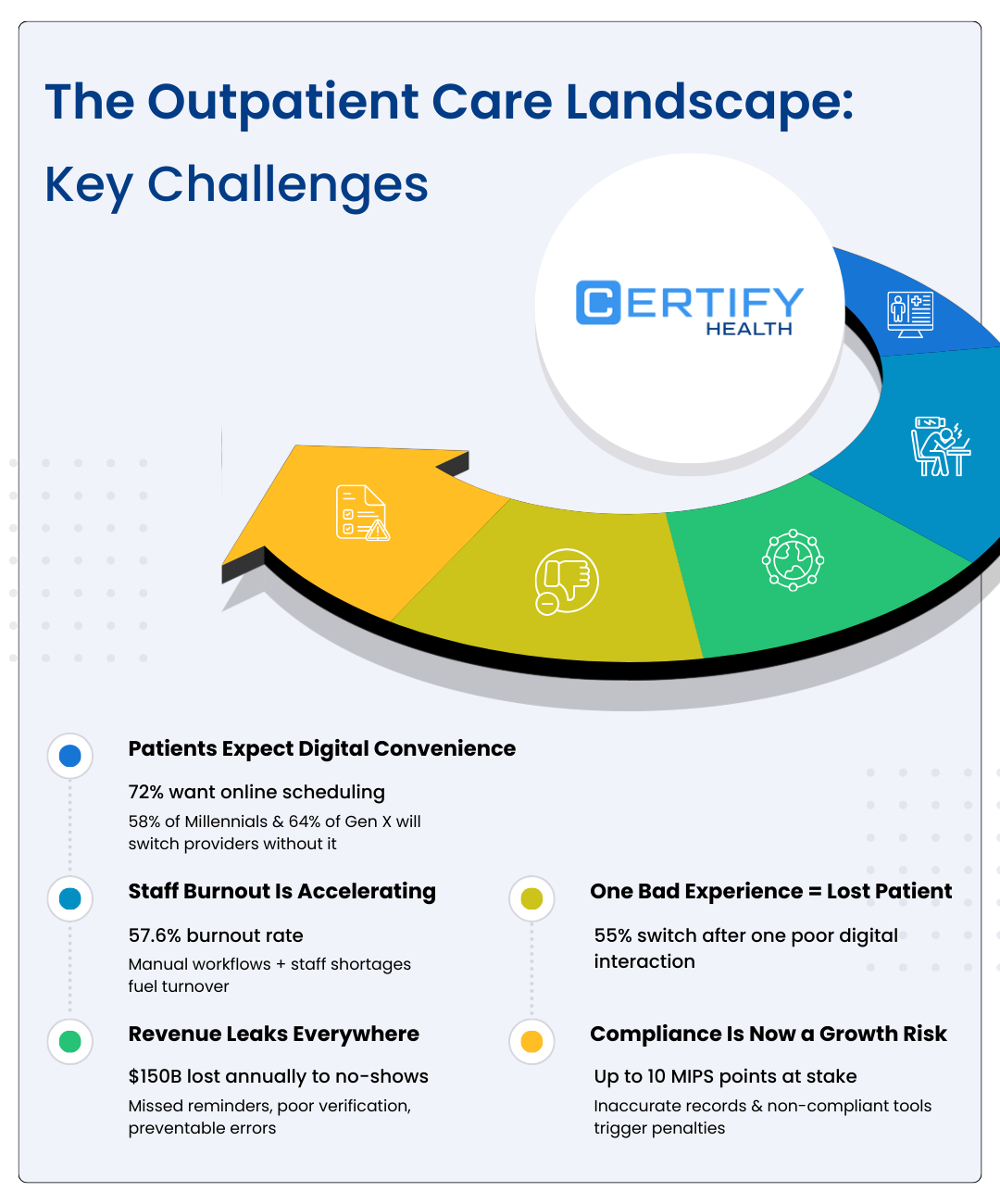
Patients increasingly demand digital parity with retail experiences:
72% prefer online scheduling, and 58% of Millennials and 64% of Gen X would abandon providers without it. Manual processes exacerbate issues:
- Operational Strain: Front desk burnouts, productivity issues, and trust management. (Burnout percentage 57.6%, common reason for higher turnover rates)
- Financial Impact: incorrect insurance verification, incomplete eligibility checks, claim denials, and no-shows, hit your bottomline. No shows alone cost $150 billion annually U.S.-wide.
- Patient Dissatisfaction: 55% of patients switch providers after one negative digital interaction.
- Regulatory Pressures: MIPS scoring penalizes poor patient access (up to 10-point deductions), while HIPAA mandates secure digital communications.
These pressures aren’t theoretical; they’re backed by real outpatient data.
Explore the full findings, benchmarks, and trends shaping outpatient care in the 2025 Outpatient Pressure Index →
Patient Experience Platform (PXP) Fixes These Challenges
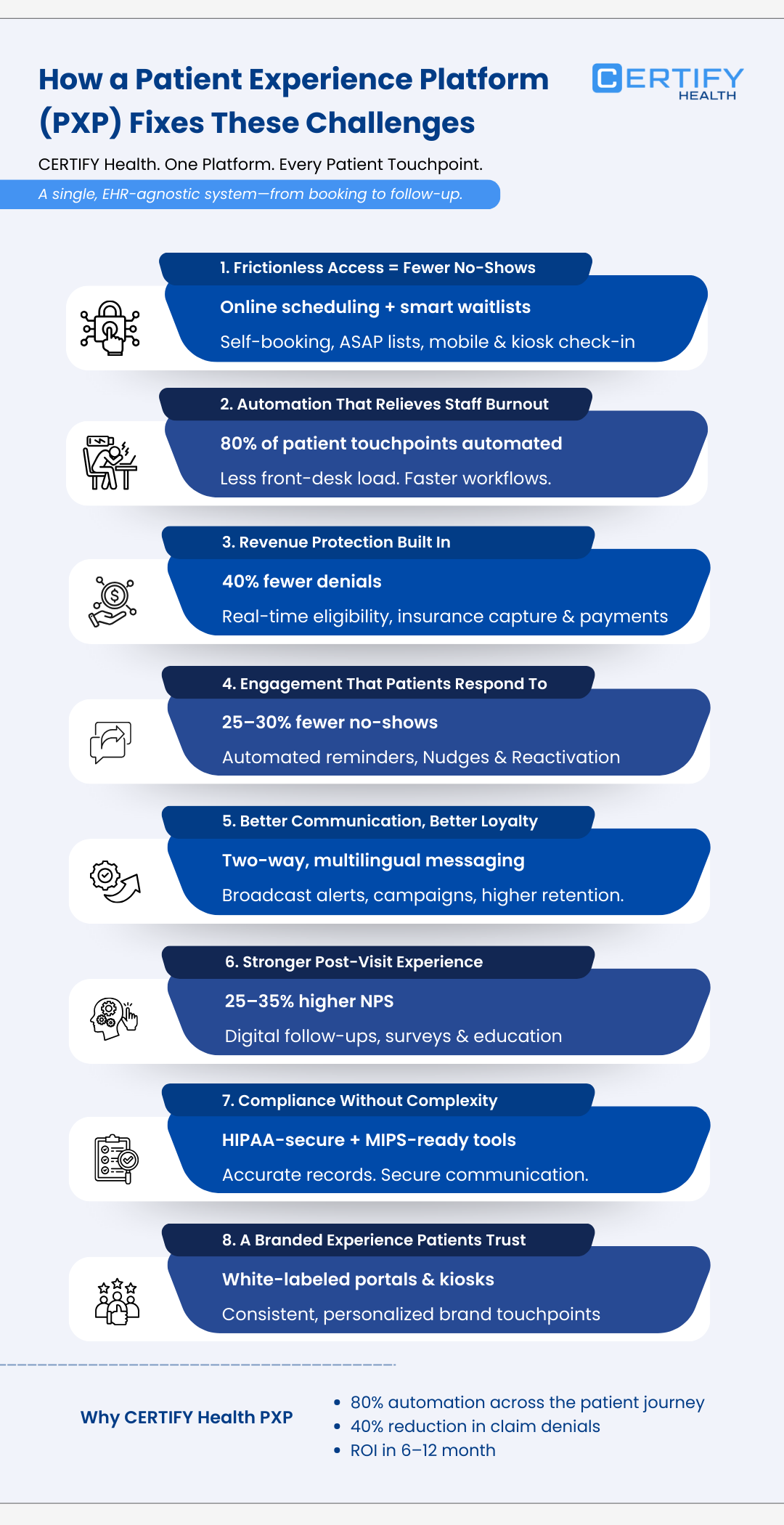
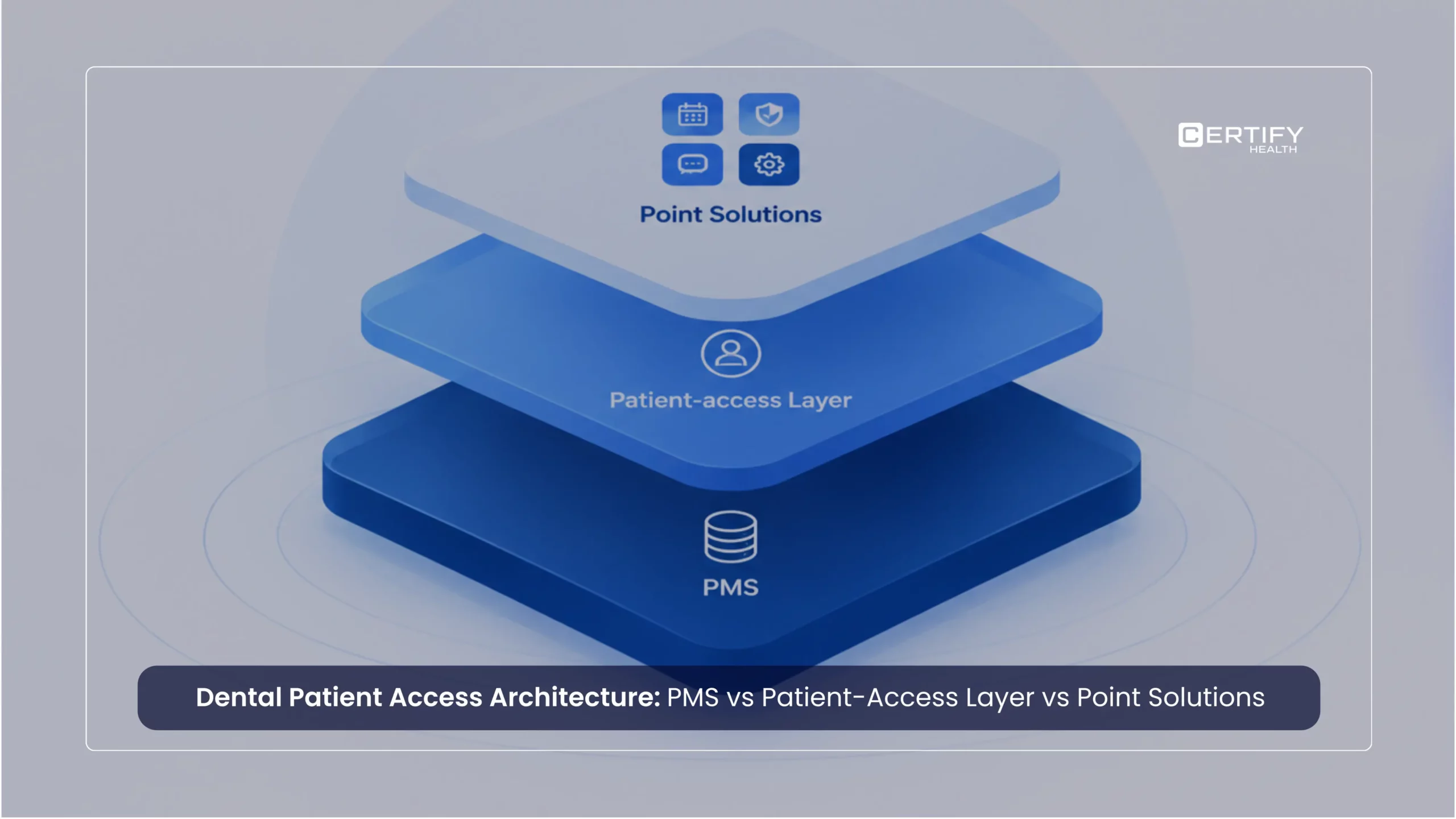
Patient Experience Platforms (PXPs) like CERTIFY Health directly counter these issues by digitizing every patient touchpoint, from booking to follow-up, in a single, EHR-agnostic system.
They automate workflows to cut staff burnout, increase revenue through real-time verification and payments, drive engagement to slash no-shows and dissatisfaction, and ensure HIPAA-compliant tools for MIPS success.
CERTIFY Health’s Patient Experience Platform, for instance, reduces denials by 40% via real-time eligibility checks and automates 80% of patient touchpoints for ROI in 6-12 months. Key modules include:
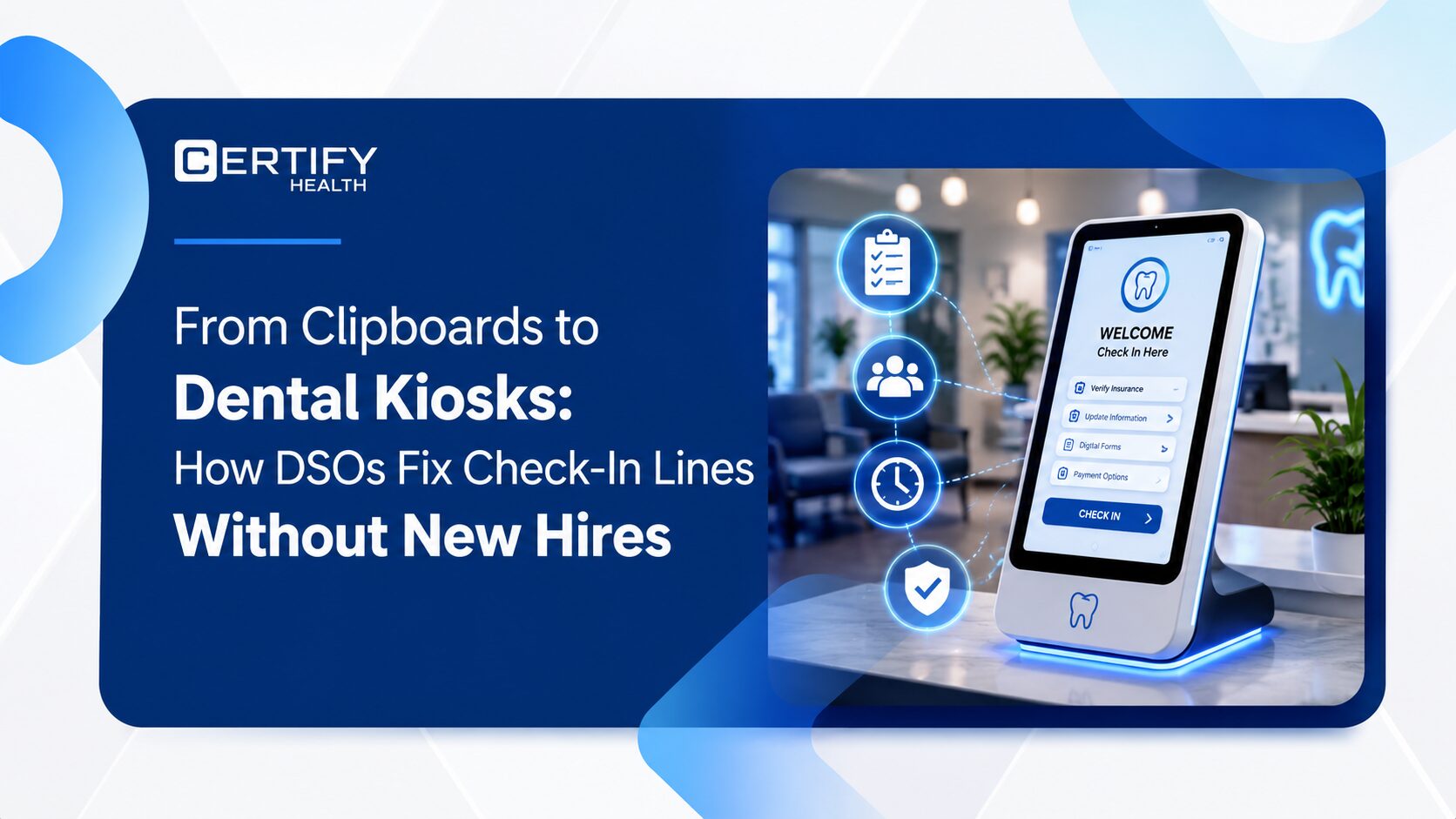
- Appointment Access: Online self-scheduling, waitlist automation (ASAP List), mobile & kiosk check-in, walk-in management, tackling no-shows, and access demands.
- Digital Intake: Multi-channel intake, eConsents, insurance capture, surveys, photo ID, eligibility verification, FaceCheck, preventing denials, and streamlining onboarding.
- Reminders & Nudges: Automated nudges for appointments, check-ins, payments, and reactivation, reducing no-shows by 25-30%.
- Communication: Two-way messaging, multi-language, broadcast alerts, patient campaigns, improving satisfaction and retention.
- Post-Visit Experience: Feedback surveys, educational follow-ups, visit summaries, lifting NPS by 25-35%.
- Patient Portal: Feedback, reactivation, loyalty-building, fostering long-term engagement.
- Brand Experience: White-labeled kiosks, portal branding, personalized communication tone, enhancing trust and differentiation.
A Patient Experience Platform integrates scheduling, intake, eligibility verification, payments, secure messaging, and analytics to transform operations.
See how these capabilities come together in a real outpatient workflow.
Framework For Successful Tech Adoption in Outpatient Care
Using HIMSS EMRAM as a Digital Maturity Lens
Patient experience platforms don’t fail because the technology is weak, they fail because practices adopt them before their workflows, data, and teams are ready. HIMSS’s EMRAM model offers a useful way to think about digital readiness, but it needs to be translated for outpatient care and patient-facing workflows.
This framework adapts EMRAM’s maturity mindset to help outpatient practices adopt patient experience platforms in a way that actually improves access, coordination, and outcomes.
Stage 0–1: Fragmented Operations → Stabilize the Basics
What outpatient care looks like here
- Scheduling, intake, reminders, and billing live in separate tools
- Front desks rely heavily on phone calls and manual updates
- Patient data is incomplete, outdated, or duplicated
Patient experience reality
- Long hold times
- Missed appointments
- Repeated form filling
- Inconsistent communication
Adoption focus
At this stage, a patient experience platform should replace manual effort, not add another layer.
What to implement
- Digital scheduling and reminders
- Online intake and basic patient communications
- Foundational integrations with the core PMS/EHR
Goal
Create a single source of truth for appointments and patient information before expanding engagement.
Stage 2–3: Digital Records → Connected Patient Touchpoints
What outpatient care looks like here
- EHR and PMS are in place
- Core clinical data is digitized
- Staff still switch between systems to serve patients
Patient experience reality
- Faster check-ins, but fragmented communication
- Follow-ups and recalls depend on staff memory
- Limited personalization
Adoption focus
Move from digital records to connected patient journeys.
What to implement
- Bidirectional integration between PMS, EHR, and patient experience tools
- Automated reminders, recalls, and follow-up workflows
- Patient access to forms, instructions, and visit updates
Goal
Ensure patients experience care as one continuous journey, not disconnected steps.
Stage 4–5: Workflow Automation → Predictable, Reliable Experiences
What outpatient care looks like here
- Data flows across systems
- Scheduling, billing, and intake are partially automated
- Staff spend less time fixing errors
Patient experience reality
- Fewer no-shows
- Shorter wait times
- More consistent communication
Adoption focus
Use automation to prevent breakdowns, not just respond to them.
What to implement
- Smart waitlists and gap-filling logic
- Eligibility checks and pre-visit verifications
- Rules-based messaging tied to appointment and care events
Goal
Deliver reliable, low-friction experiences without increasing staff workload.
Stage 6: Data-Driven Engagement → Proactive Patient Care
What outpatient care looks like here
- Clean, connected operational and clinical data
- Leadership can see trends across access, engagement, and outcomes
Patient experience reality
- Patients feel remembered, not managed
- Issues are addressed before complaints arise
- Engagement feels timely and relevant
Adoption focus
Shift from reactive communication to proactive patient engagement.
What to implement
- Reporting on no-shows, follow-ups, and engagement effectiveness
- Segmented communication based on patient behavior
- Automated outreach for high-risk or overdue patients
Goal
Use insights to guide better decisions, not just measure performance.
Stage 7: Optimized Experience Ecosystem → Continuous Improvement
What outpatient care looks like here
- Fully integrated ecosystem across EHR, PMS, billing, and engagement
- Minimal manual intervention
- Teams operate from shared visibility
Patient experience reality
- Seamless access
- Clear communication
- High trust and loyalty
Adoption focus
Make patient experience a continuous improvement loop, not a one-time implementation.
What to implement
- Cross-platform analytics tying experience to outcomes
- Feedback-driven workflow optimization
- Scalable engagement models across locations and specialties
Goal
Turn patient experience into a measurable, repeatable advantage.
Why EMRAM Works as a Guide, but Not the Goal
HIMSS EMRAM is valuable because it reinforces one core truth:
Technology maturity must come before experience excellence.
But in outpatient care, success isn’t about reaching a stage—it’s about:
- Reducing friction
- Improving coordination
- Freeing staff to focus on patients
A patient experience platform works best when it’s adopted in alignment with operational readiness, not ahead of it.
The CERTIFY Health Approach to Patient Experience Adoption
CERTIFY Health‘s Patient Experience Platform (PXP) is purpose-built to guide outpatient practices through HIMSS EMRAM-inspired maturity stages.
Our structured 12-week implementation pathway ensures technology aligns with your operational readiness, starting with basics like scheduling and scaling to data-driven engagement.
This phased rollout minimizes disruption, delivers quick wins (e.g., 20-30% fewer no-shows in Week 3), and builds toward reliable, proactive patient care.
| EMRAM Stage | CERTIFY Health Implementation Weeks | Key Features Activated | Outcomes Aligned to Framework |
|---|---|---|---|
| 0–1: Stabilize the Basics Fragmented ops → Single source of truth |
Weeks 1–4 | - Kickoff alignment & infrastructure review - Digital scheduling/reminders - Online intake/forms with OCR |
Replaces manual phone/scheduling; 20-30% fewer calls; 80% digital form completion; foundational PMS/EHR integrations. |
| 2–3: Connected Patient Touchpoints Digital records → Continuous journeys |
Weeks 5–7 | - Insurance eligibility/compliance checks - Kiosk check-in & FaceCheck biometrics - Secure two-way messaging |
Bidirectional integrations; automated reminders/recalls; real-time wait updates; 40-60% fewer claim denials; 50-70% faster check-ins. |
| 4–5: Predictable Experiences Automation → Low-friction reliability |
Weeks 8–9 | - Mobile app/portal launch - Text-to-Pay, AutoPay, patient wallets |
Smart workflows for payments/eligibility; rules-based messaging; 40-60% faster collections (60 to 20 days); seamless multi-channel access. |
| 6: Data-Driven Engagement Reactive → Proactive care |
Weeks 10–11 | -Post-visit surveys, recall campaigns, and patient feedback loops enable proactive outreach for high-risk patients. |
Evidence-based tweaks improve loyalty and returns. |
| 7: Optimized Ecosystem Integrated → Continuous improvement |
Week 12+ | -End-to-end testing, leadership sign-off, and dedicated support create continuous improvement. | Feedback loops; scalable models; leadership sign-off with baseline KPIs for measurable advantage. |
This mapping ensures PXP adoption matches your readiness, no overwhelming features until workflows stabilize, while delivering ROI from Week 3 onward.
Why CERTIFY Health Excels: Dedicated POCs and HIPAA-secure tools ensure sustainable maturity. Ongoing optimization proves ROI through workflow efficiency and revenue lifts.
Implementation & Adoption by Practice Profile
Our pathway flexes for diverse outpatient settings, ensuring relevance across scales, ownership, and specialties.
We customize pacing, features, and support to match your starting maturity: solo practices get lightweight basics first, while large groups leverage advanced analytics from day one. Below, we break it down.
By Practice Size
Solo/Small Practices (1–10 Physicians)
Profile Characteristics: Physician-owned, limited staff (1-3 front desk/billing), basic PMS/EHR, high manual workflows, focus on personalized care.
Implementation Approach: 6-week core rollout (Weeks 1-6), then maintenance mode.
Start with highest-pain manual tasks; skip complex multi-location features. Dedicated POC handles all training.
Key Features & Timeline:
- Weeks 1-2: Kickoff + Digital Scheduling/Reminders
How it works: Patients self-schedule via links sent by text/email. Automated SMS/email reminders fire 48/24 hours before visits based on PMS data sync. Front desk dashboard shows real-time availability and waitlist fillers.
Impact: Cuts scheduling phone calls 50%+; no-shows drop 20-30% as patients confirm digitally.
- Week 3: Online Intake/OCR
How it works: Patients complete forms via SMS link 24-48 hours pre-visit. OCR scans insurance cards uploaded via phone camera, auto-populates PMS fields, flags expired cards. Front desk reviews exceptions only.
Impact: 80% digital completion rates; 40% fewer data errors vs. paper.
- Week 4: Kiosk Check-In + FaceCheck
How it works: Touchscreen kiosk scans QR code from confirmation text, verifies identity via facial recognition (FaceCheck), room assignments. Real-time queue updates display on patient screens.
Impact: Check-in times drop 70%; staff freed from ID verification for 2-3 hours/day.
- Weeks 5-6: Text-to-Pay + Basic Messaging
How it works: Patients receive payment link post-visit; one-click from saved wallet. Secure SMS thread handles basic questions (“Where do I park?”) with auto-replies.
Impact: Collections accelerate 40% (60→20 days); call volume drops further.
Medium Practices (11-49 Physicians)
Profile Characteristics: Multiple locations/specialists, moderate IT support, growing patient volume, some automation but siloed systems.
Implementation Approach: Full 12-week rollout with parallel location activation. Weekly stakeholder check-ins; staff training scales across 2-3 sites simultaneously.
Key Features & Timeline:
- Weeks 1-4: Scheduling → Intake → Eligibility
How it works: Self-scheduling feeds PMS calendar across locations. Online intake syncs to EHR. Real-time insurance eligibility pings front desk during booking/check-in, flags coverage gaps before visit.
Impact: 40-60% claim denial reduction; consistent scheduling across sites.
- Weeks 5-7: Kiosks + Secure Messaging
How it works: Multi-kiosk deployment per site. HIPAA-secure SMS/Emails and two-way staff-patient communication. Auto-responses handle 70% of FAQs; staff manages escalations via unified inbox.
Impact: Call volume drops 50%; patients message for directions, prep instructions.
- Weeks 8-10: Portal + Payments + Surveys
How it works: Branded patient portal centralizes forms, bills, instructions. Text-to-Pay + AutoPay options. Post-visit surveys trigger automatically via SMS/email with 1-2 questions max.
Impact: Patient adoption surges; feedback identifies bottlenecks.
- Weeks 11-12: Campaigns + Optimization
How it works: Recall sequences target overdue patients by specialty. Staff training refresher based on usage data. End-to-end workflow testing.
Impact: 25% utilization improvement across locations.
Large Groups (50+ Physicians)
Profile Characteristics: Enterprise IT, multiple specialties/sites, advanced EHR, compliance-heavy, focus on system-wide KPIs.
Implementation Approach: Phased by department (cardiology Week 3, primary care Week 5), enterprise training program, C-suite reporting from Week 8.
Key Features & Timeline:
- Weeks 1-3: Cross-Platform Scheduling/Eligibility Foundation
How it works: Single patient record spans all locations via EHR sync. Eligibility verification runs against payers simultaneously. Waitlist logic auto-fills cancellations across network.
Impact: Centralized scheduling prevents overlaps and unlocks 20% more appointment capacity.
- Weeks 4-8: Full Kiosk/Messaging/Portal Rollout
How it works: 10+ kiosks per high-volume site with biometric backup. Enterprise messaging platform scales 10K+ conversations/month. Custom-branded portal per specialty.
Impact: 70% check-in automation at scale; unified communication layer.
- Weeks 9-12: Specialty Campaigns + End-to-End Testing
How it works: Template campaigns per specialty (cardio recalls, derm biopsies). Comprehensive testing simulates 1000+ patient journeys. Leadership sign-off on workflows.
Impact: $100K+ faster monthly collections; system-wide experience parity.
By Ownership/Affiliation Structure
Private/Independent Practices
Profile Characteristics: Physician-owned, lean operations (1-5 staff total), basic PMS/EHR, direct revenue pressure, autonomy priority over enterprise features.
Implementation Approach: Accelerated 6-week path focusing immediate revenue/staff relief. Single POC manages everything; minimal meetings (3 total). Custom portal branding reinforces practice identity.
Key Features & Timeline:
- Weeks 1-2: Kickoff + Scheduling/Reminders
How it works: Self-scheduling embeds directly on practice website. SMS reminders pull from existing PMS, updates no-responses. Front desk gets simplified dashboard (no complex reporting).
Impact: Phone scheduling drops 60%; physician sees patient load increase immediately.
- Weeks 3-4: Intake/OCR + Text-to-Pay
How it works: Patients get branded intake link matching practice logo/colors. OCR auto-fills insurance into billing software. Post-visit payment texts use practice name/signature.
Impact: 80% digital forms completion; collections jump 50% as patients can pay from anywhere.
Hospital/Health System-Owned
Profile Characteristics: Epic/Cerner enterprise EHR, HOPD billing complexity, strict HIPAA/compliance audits, multiple approval layers.
Implementation Approach: 10-week enterprise rollout with IT/security team involvement from Day 1. Bi-directional API testing Week 2; compliance documentation throughout.
Key Features & Timeline:
- Weeks 1-3: Infrastructure + Eligibility Integration
How it works: CERTIFY PXP maps to hospital EHR patient ID. Real-time eligibility verifies against payers during scheduling/check-in, feeds results back to Epic workqueues. Auto-flags ineligibility/errors/missing information.
Impact: Upfront eligibility validation reduces denials by 60%, eliminates downstream billing rework.
- Weeks 4-7: Kiosks + Compliance Workflows
How it works: Hospital-branded kiosks integrate with existing badge systems. FaceCheck biometrics cross-reference EHR photo. All audit trails export to hospital compliance platform.
Impact: Check-ins drop from 8→2 minutes; zero PHI breach risk.
Private Equity (PE) Backed Practices
Profile Characteristics: Multi-acquisition rollups, growth KPIs for investors, inconsistent tech stacks across sites, pressure for utilization/revenue metrics.
Implementation Approach: 8-week rapid deployment with portfolio-wide templates. Weekly investor-ready progress reports; campaign library for quick scaling.
Key Features & Timeline:
- Weeks 1-4: Foundation + Collections Acceleration
How it works:Unified scheduling across acquired practices syncs to each site’s PMS calendar. Text-to-Pay rollout with one-click payment links post-visit; patients pay from exam room using saved wallets.
- Impact: Portfolio collections accelerate 40% (60→20 days); immediate cash flow for reinvestment.
- Weeks 5-8: Campaigns + Recalls
How it works: Pre-built recall sequences per specialty (cardio stress tests, derm screenings). Auto-targets lapsed patients across 10+ locations. Track utilization lift per site.
Impact: 25% appointment utilization increase; investor-ready growth metrics.
Corporate/Retail Clinics
Profile Characteristics: 50-100 daily patients/site, 1-2 staff per location, retail/hourly flow, zero tolerance for training downtime.
Implementation Approach: 4-week kiosk-heavy rollout. “Zero training” auto-features; remote activation per clinic.
Key Features & Timeline:
- Weeks 1-2: Digital Scheduling + Kiosks
How it works: Corporate-branded self-scheduling. 90% of patients complete check-in independently through kiosks. Real-time wait times display on lobby screens. - Impact: Check-in automation hits 70% Day 1; staff handles exceptions only.
- Weeks 3-4: Text-to-Pay + Auto-Messaging
How it works: Payment links fire automatically post-visit. Corporate campaigns push flu shots, wellness visits.
By Specialty (Challenges Focus)
| Specialty | Key Challenges | CERTIFY Solution & How It Works | Timeline & Expected Impact | Framework Fit |
|---|---|---|---|---|
| Cardiology | Complex pre-auths; post-procedure follow-ups | Automated eligibility verification; recall sequences target 30/90-day checks | Weeks 3–7: Authorization turnaround cut in half; follow-up adherence improves by 25%. | Stage 4-5 reliability |
| Orthopedics | Rehab no-shows; multi-visit protocols | Waitlist auto-fills cancellations; SMS appointment clusters (3x/week physical therapy) | Weeks 3-8: 30% no-show drop; 20% capacity gain | Stage 2-3 connectivity |
| Gastroenterology | Prep compliance; same-day cancels | Digital intake collects, patient education material; 7-day reminder cascade | Weeks 2-5: 40% prep compliance lift; 15% cancel reduction | Stage 0-1 stabilization |
| Dermatology | 15-min turnover; biopsy consent volume | Kiosk check-in + digital consent library (20+ forms) | Weeks 4-6: 50% front desk relief; 2 extra patients/hour | Stage 4-5 predictability |
| Oncology | Chemo adherence; infusion coordination | HIPAA messaging for side effect reporting; next-cycle auto-scheduling | Weeks 7–10: Adherence rates increase 35%; infusion schedules run without interruptions. | Stage 6 engagement |
| Urology | PSA follow-up privacy; procedure prep | Secure portal for lab results discussion; encrypted procedure instructions | Weeks 5-8: 40% follow-up rate increase; perfect PHI compliance | Stage 2-3 connectivity |
| OBGYN | Pregnancy milestone tracking; sensitive data | Branded portal tracks due dates; discreet survey questions | Weeks 8-11: 50% patient retention; compliance with sensitive data | Stage 6 data-driven |
| Behavioral Health | No-show anxiety; stigma barriers | Gentle reminder sequences; "no questions asked" rescheduling | Weeks 7-9: 25% show rate improvement; higher satisfaction | Stage 4-5 reliability |
| Ophthalmology | 100+ cataracts/week; pre-op drops | FaceCheck biometrics; pre-op instruction videos via SMS | Weeks 4–6: Check-in automation reaches 70%, lifting throughput 20%. | Stage 0-1 basics |
| Neurology | Cognitive issues; stroke code urgency | FaceCheck kiosks with staff assistance; priority queue flagging | Weeks 5-7: 3-minute stroke check-ins; zero misses | Stage 2-3 touchpoints |
Common Pitfalls and How to Avoid Them
Foundation Pitfalls
1. Skipping stakeholder alignment
Fix: Week 1 -kickoff must include admins, clinical leads, billing; define roles upfront. No alignment = 60% adoption failure.
2. Launching without PMS/EHR validation
Fix: Week 1- infrastructure review confirms scheduling/reminders sync before going live. Untested integrations create data chaos.
3. Overloading fragmented workflows
Fix: Start with scheduling + intake only (Weeks 1-3). Adding kiosks/messaging too early overwhelms Stage 0-1 practices.
Integration Pitfalls
1. Poor staff training on new workflows
Fix: Week 3-4 – hands-on sessions cover digital intake flows. Untrained staff reject tools, forcing fallback to paper.
2. Ignoring patient adoption barriers
Fix: Test SMS links with 10 patients Week 2. 70% elderly patients need phone support initially, build it in.
3. Partial EHR/PMS connectivity
Fix: Week 2 bidirectional testing confirms OCR data flows to billing. One-way sync creates duplicate patient records.
Automation Pitfalls
1. No-show focus without waitlist logic
Fix: Week 5 – enable gap-filling automation. Reminders alone cut 20% no-shows; waitlists add 15% capacity.
2. Kiosk deployment without queue visibility
Fix: Week 4 – real-time wait displays prevent patient frustration. Hidden queues kill self-service adoption.
3. Text-to-Pay without wallet setup
Fix: Week – 6 pre-save payment methods during intake. One-click post-visit payments hit 60% adoption vs. 15% links.
Optimization Pitfalls
1. Launching campaigns without segmentation
Fix: Week 10 – target high-risk patients only (6+ months lapsed). Blast messaging annoys active patients.
2. No staff feedback loops
Fix: Weeks 1-12 – identify resistance. Ignoring front desk input kills 50% of implementations.
3. Week 12 “done”—no continuous tuning
Fix: Monthly POC reviews post-launch. Usage drops 40% without refresher training and feature optimization.
Quick-Win Implementation Scorecard
Use Green (🟢) = Safe | Yellow (🟡) = Risk | Red () = Fail
| Checklist Item | Status | Action Required |
|---|---|---|
| Stakeholder sign-off | ||
| PMS sync tested | ||
| Staff trained before patient launch | ||
| 80% digital form adoption | ||
| 50% Text-to-Pay uptake | ||
| No-show rate <15% |
Bottomline
Don’t let digital immaturity steal 2026 revenue. Patient expectations won’t wait, staff burnout won’t pause, and competitors with seamless PXPs are already booking your patients. This guide proves: tech adoption succeeds when matched to operational readiness, exactly what CERTIFY Health delivers.
Ready to stabilize Stage 0-1 basics this month?
Schedule Your Personalized Demo →
See your no-show, revenue, and staff hours saved in real-time.