

Table of Contents
- Specialty-built software matters: Endodontic practice management requires tools designed specifically for referral-driven, high-complexity procedures, not generic dental systems.
- Revenue cycle precision is critical: Optimized billing workflows, denial tracking, and eligibility verification directly impact profitability in high-value endo cases.
- Imaging and workflow integration drive efficiency: Native CBCT and imaging integration eliminate silos and accelerate diagnosis and documentation.
- Referral management fuels growth: Built-in referral tracking and communication strengthen GP relationships and stabilize case flow.
- Scalability and compliance protect the future: multi-location visibility, HIPAA-compliant infrastructure, and automation ensure sustainable expansion without operational chaos.
The global endodontic market is forecast to reach approximately USD 3.38 billion by 2034, growing at a compound annual growth rate (CAGR) of about 3.4 % over the period, driven by increasing demand for advanced endodontic instruments and consumables.
In 2025, North America accounted for the largest regional share of the endodontics market, capturing roughly 41.12 % of the total, supported by well-established dental care infrastructure, high awareness of oral health, and high volumes of root canal and other endodontic procedures.
This growth reflects patients’ increasing preference for conservative, tooth-preserving treatment and specialist care amid rising procedural complexity and awareness of long-term oral health outcomes.
In this ultimate guide to endodontic practice management, we’ll explore the real-world challenges specialty practices face and how endodontic practice management software can streamline operations, enhance revenue cycle performance, and elevate the patient experience.
You Might Also like to- Understand the Endodontic Patient Journey — From First Call to Final Payment.
See how a specialty-built platform like CERTIFY Health supports referral-driven growth, advanced imaging workflows, and endo-specific revenue cycle management.
Navigating the Complexities of Modern Endodontic Practice Management
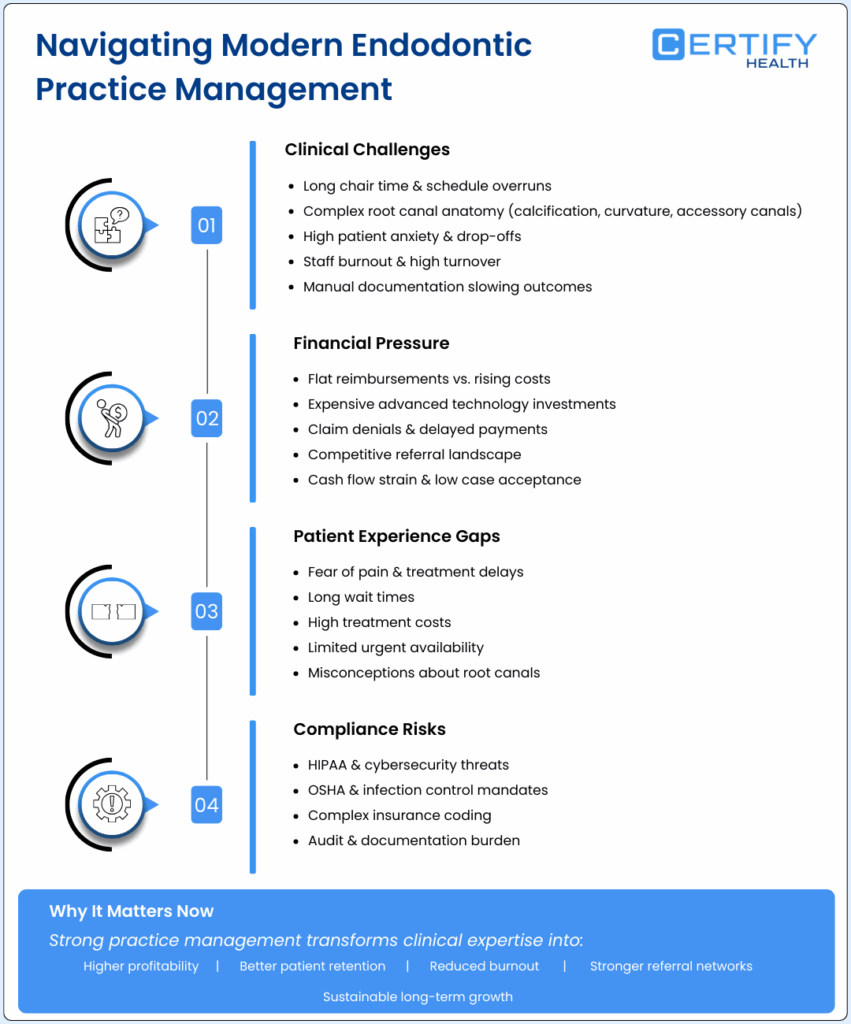
1. Clinical Operational Challenges
Endodontic treatment involves root canal identification, like accessory canals, calcification, intricate curvature, etc. This leads to longer endodontic procedure times and more complex treatments, impacting staff, patients, and the overall practice:
- Extended chair time, lengthy appointments, and frequent schedule overruns.
- Frequent visits, elevated anxiety, delayed reimbursements, and expensive treatment
- Operational scheduling constraints, increased technology spending, and elevated liability exposure.
- Patients quit treatment in between due to higher costs
- Staff burnout due to complex procedures, resulting in high turnover
- Manual, inefficient documentation leading to poor outcomes
2. Financial Challenges
Endodontic practices face several financial challenges, including flat reimbursement rates amid rising operating costs (staff wages and supplies), sustaining profitability in saturated markets, balancing cash flow demands for advanced equipment investments, and reducing financial obstacles that impact case acceptance.
- Significant overhead from advanced equipment and specialized personnel, pressuring cash flow stability.
- Slow reimbursement as a result of claim denials and the intricate billing procedure
- High competition leading to fewer referrals
- Patient facing an economic barrier is unable to keep up with treatment costs
- Keeping track of and auditing operating expenses is a major pain.
3. Patient Experience Challenges
Endodontic practice management involves handling patients with high anxiety, as the procedure involves pain and fear. Practice finds it hard to address fear, improve retention, and control discomfort. Here’s common issues faced:
- High anxiety and fear around root canal treatment, leading to delayed or avoided care
- Concerns about pre- and post-procedure pain, including lingering discomfort
- Long wait times and administrative delays affecting experience
- High treatment costs and limited urgent appointment availability
- Misconceptions about endodontic therapy reducing trust and satisfaction
- Additional stress for medically complex or high-risk patients
4. Compliance Challenges
Endodontic practices face compliance challenges due to complex procedures, detailed documentation requirements, heavy digital imaging use, strict infection control standards, and intricate insurance coding. High case intensity and evolving regulations increase the risk of errors, data breaches, audits, and regulatory penalties.
- HIPAA compliance and cybersecurity risks
- OSHA workplace safety requirements
- Strict infection control protocols
- Detailed documentation and informed consent
- Ongoing staff training and updates
- Complex insurance coding and billing
- Record maintenance and audit readiness
FAQ
Why does endodontic practice management matter now?
Endodontic practice management is the engine that converts advanced clinical skill into a sustainable, profitable, and patient-centered specialty practice.
In a competitive landscape shaped by CBCT, digital workflows, and increasing in-house treatment by general dentists, strong management protects margins and referral streams.
It drives financial performance through KPI tracking, improves efficiency with structured scheduling and insurance systems, reduces staff burnout, and strengthens referring-dentist relationships.
It also ensures compliance, patient safety, and seamless technology adoption.
Ultimately, effective practice management allows the endodontist to evolve from procedure-focused clinician to strategic leader, building a high-performance practice that delivers exceptional care while maintaining long-term growth and stability.
Feeling These Operational Pressures?
If scheduling overruns, referral leakage, or claim delays sound familiar, it may be time for software built specifically for endodontics.
What Is Endodontic Practice Management Software?
Endodontic practice management software is a specialty platform optimizing root canal workflows, unlike broad dental practice management software focused on general checkups. It supports referral workflows, emergency endodontic treatment slots, longer procedure blocks, high-value scheduling logic, and multi-location ops.
The best endodontic software integrates CBCT imaging, automates revenue cycle management, and ensures HIPAA compliance — features general tools often skimp on. In endodontic practice management, this means real-time syncs for provider calendars and secure case sharing, slashing inefficiencies.
FAQ
Endodontic software vs. general dental practice management software – what is the difference?
| Feature | Endodontic Software | General Dental Practice Management Software |
|---|---|---|
| Built For | Root canal specialists handling complex, referral-driven cases | General dentists managing hygiene, restorative, and preventive care |
| Clinical Charting | Detailed, procedure-specific charting for canals, retreatments, surgical cases | Broad templates designed for common procedures like fillings and crowns |
| Workflow Design | Optimized for multi-step, high-intensity endodontic procedures | Designed around hygiene recalls, exams, and restorative tracking |
| Referral Management | Strong referral tracking and communication tools built-in | Limited or basic referral features |
| Imaging Integration | Deep integration with CBCT, microscopes, and endo-focused radiography | Standard X-rays and general imaging support |
| Speed & Precision | Built for fast, detailed documentation during complex cases | Designed for high patient volume and routine workflows |
| Feature Focus | Removes irrelevant features (like hygiene recall systems) to stay specialty-focused | One-size-fits-all approach for entire general practice operations |
| Business Model Fit | Supports referral-based, specialist revenue models | Supports recall-driven, comprehensive care practices |
Essential Features of the Best Endodontic Software
TL; DR:
What Makes the Best Endodontic Software Truly Stand Out?
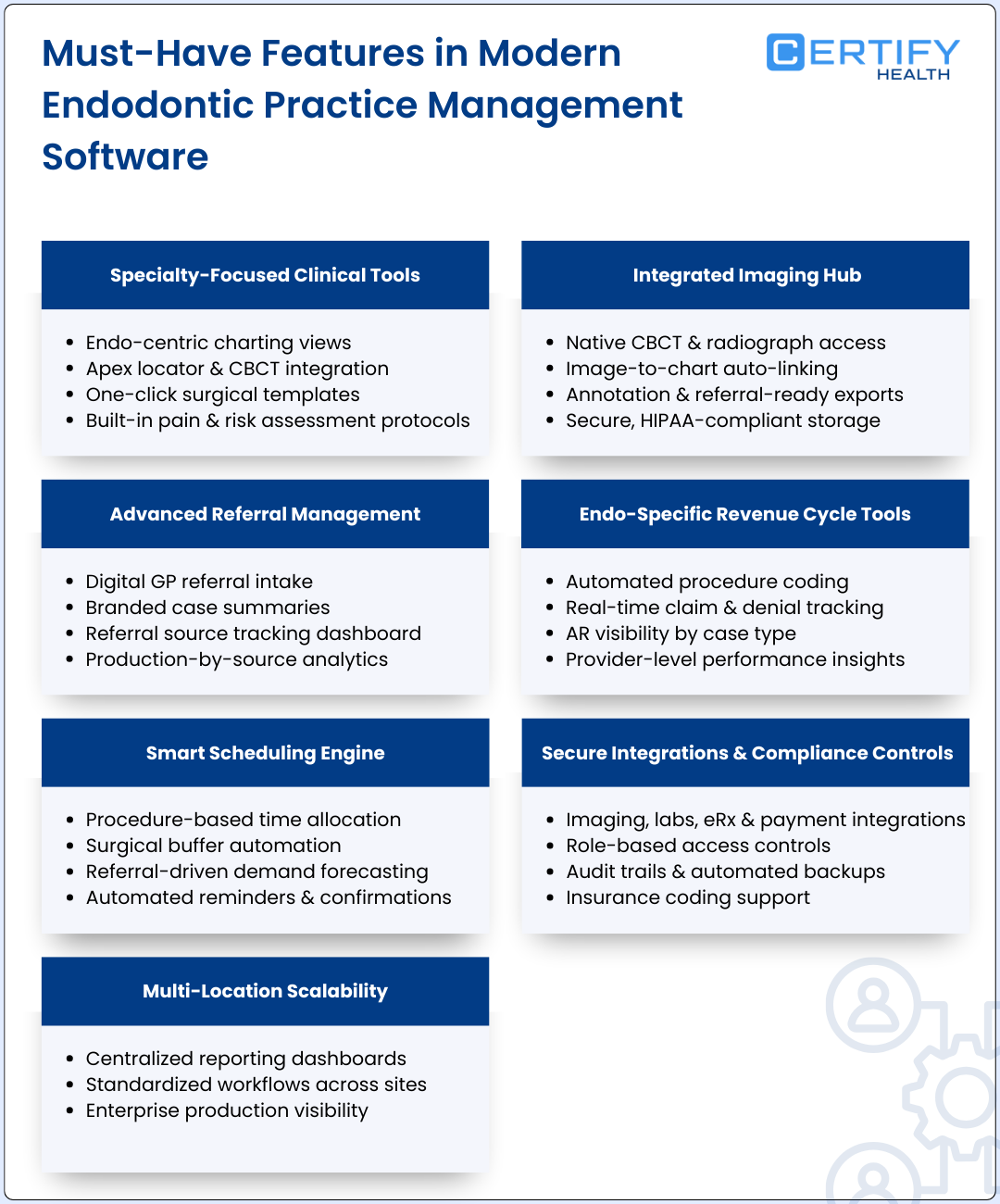
- Built for endo, not general dentistry: Specialty-focused workflows, surgical templates, and canal-specific charting designed for complex cases.
- Native imaging integration: Instant access to CBCT, periapicals, and microscope captures — no tab switching or manual uploads.
- Referral-driven growth tools: Embedded referral tracking, branded reports, and production insights that strengthen GP relationships.
- Endo-specific revenue cycle control: Smart coding, denial alerts, real-time claims tracking, and surgical case profitability visibility.
- Advanced scheduling + patient engagement: Procedure-based scheduling logic, automated reminders, and demand forecasting.
- Enterprise-ready scalability: Multi-location standardization, centralized reporting, secure integrations, and specialty-trained support.
Bottom line: The best endodontic software aligns clinical precision, operational efficiency, and revenue performance — all in one system.
Top endodontic practice management software packs intelligent tools for daily wins. Here’s what sets the best apart.
1. Tailored Clinical Workflows That Match Your Endo Rhythm
You’re deep into a complex retreatment, microscope humming, and CBCT scan open. The last thing you need is software that buries canal identification tools under irrelevant hygiene tabs or crown prep clutter.
Best endodontic software rises above these clinical challenges by offering customizable charting with endo-centric views — think layered tooth anatomy, apex locators integration, and one-click surgical endo templates.
It handles the nuances too: Automated fields for pain and anxiety management protocols, medical risk management checklists, and real-time monitoring protocols that flag complications before they escalate.
No reformatting notes or hunting for case history amid generic patient records. Everything flows intuitively, cutting case time by minutes that stack into billable hours.
Teams onboard faster, dodging training barriers and adoption barriers that plague bolted-on systems. In endodontics, where precision is non-negotiable, this workflow alignment isn’t luxury; it’s your competitive edge.
2. Frictionless Imaging and Diagnostics at Your Fingertips
Endo thrives on visuals, periapicals, CBCT volumes, and intra-op microscope captures. But fragmented challenges from siloed imaging apps create technology challenges: endless tab-switching, manual imports, lost files on network drives.
Top endodontic practice management software obliterates this with seamless, native imaging integration.
Launch a patient chart, and your scans appear instantly – zoomable, annotatable, linked directly to clinical notes and endodontic procedure timelines. Pair it with leading CBCT vendors for auto-sync, and you’ve got diagnostics that fuel faster treatment planning.
Referral reports? Generate them embedded with marked-up images, no exports required. This invisible efficiency tackles compliance challenges too, embedding HIPAA-compliant image handling with audit trails.
For high-volume practices, it’s a game-changer: Sharper diagnoses, airtight documentation, and zero headaches from tech silos.
3. Smart Referral Networks That Fuel Practice Growth
Referrals keep endo practices humming but tracking them via email chains or spreadsheets invites chaos — missed follow-ups, vague communications, untapped sources.
The best endodontic software embeds referral tools right into the core, streamlining the cycle from intake to closeout.
One-click branded summaries with embedded images and notes fly securely to referring GPs. Dashboards tag sources, revealing top partners for targeted nurturing. Tie it to revenue cycle insights, and you see which relationships drive production.
This builds trust with referrers, they get timely, visual updates, while giving you operational visibility into demand forecasting and capacity modeling. No more fragmented challenges; just stronger networks and steady case flow.
4. Revenue Cycle Mastery for Endo-Specific Billing Wins
Billing in endodontics isn’t plug-and-play. Complex procedures like apicoectomies or retreatments demand precise coding, claims tracking, and follow-up billing to combat revenue cycle hiccups.
Generic or dental practice management software falter here, exporting messy spreadsheets that hide leaks in collections or denials.
Endodontic practice management software shines with endo-tailored revenue cycle management: Automated billing optimization for procedure bundles, real-time claims tracking with denial alerts, and provider-level production breakdowns.
Visualize collections by case type: surgical vs. non-surgical, and spot bottlenecks instantly. Integrated with scheduling rules, it even forecasts demand to maximize slots without overbooking.
Compliance stays ironclad via role-based access controls and HIPAA-compliant ledgers.
The result? Optimized cash flow, fewer AR days, and data that turns revenue from headache to powerhouse.
5. Intuitive Scheduling and Patient Engagement That Scales
Overbooked slots, no-shows, last-minute reschedules; these amplify scheduling engine woes in busy endo offices.
Best endodontic software counters with automated scheduling engines enforcing scheduling rules for procedure durations, provider specialties, and buffer times for surgical cases.
Automated patient communication handles the rest: Personalized reminders via text/email, pain and anxiety management prep info, and post-op check-ins.
Capacity modeling predicts peaks from referral trends, while demand forecasting keeps your calendar humming.
Patients arrive calmer; procedures start on time, and your team gains operational visibility — no more reactive firefighting. This front-end polish reduces adoption barriers, letting staff focus on endo excellence over admin drudgery.
6. Rock-Solid Integrations and Security Without the Fuss
Your stack – ePrescribing, accounting, labs, should sync effortlessly, not spawn duplicate entry nightmares. The finest endodontic platforms boast 50+ integrations, from imaging to payment gateways, creating a cohesive ecosystem.
Security compliance is non-negotiable: HIPAA-compliant encryption, role-based access controls limiting views (e.g., front desk can’t peek at CBCT notes), and automated backups.
Tackle training barriers with intuitive interfaces and guided onboarding modules. No steep learning curves — just plug-and-play harmony that dodges technology challenges and fragmented challenges across your tools.
7. Support That Gets Endo, Inside and Out
Software’s only as good as its backup. Leading providers staff U.S.-based teams versed in endo realities — apicoectomies, canal identification quirks, compliance challenges.
Call for help on obturation charting or claims tracking, and you get swift, specialist fixes, not scripted runarounds.
This human touch builds confidence, accelerates adoption, and keeps your practice humming. It’s the full package: Tools that anticipate your moves, fortified by pros who have your back.
In endodontics, the best practice management software isn’t a tool; it’s your silent partner, conquering clinical challenges to revenue cycle management so you conquer root canals.
8. Multi-Location & Specialty Scalability
Endodontic practice management software built for growth enables standardized clinical and administrative workflows across multiple locations while maintaining specialty-specific precision.
Centralized reporting delivers enterprise-wide visibility into production, referrals, scheduling, and revenue performance.
Whether expanding to new sites or managing satellite offices, leadership gains real-time control without sacrificing consistency or clinical quality.
Want to See These Features in Real Time?
From CBCT integration to referral automation and denial tracking, experience how CERTIFY Health performs inside a live endodontic workflow.
How to Choose the Best Endodontic Practice Management Software
TL; DR:
How Do You Choose the Right Endodontic Practice Management Software?
- Specialty-built over generic: Designed for endo workflows, not retrofitted general dental tools.
- Seamless imaging integration: CBCT and microscope images inside patient charts without switching apps.
- Endo-specific charting: Built-in templates for root canals, surgeries, and retreatments.
- Referral-driven features: Automated, image-embedded reports and partner tracking.
- Cloud scalability & KPIs: Unified multi-site operations supported by live visibility into case volumes and revenue metrics.
- User-friendly interface backed by expert guidance: Simple onboarding and a design built to support your team from day one.
- Demo test wins: Validate real-world tasks in minimal clicks before buying.
Pick software that speeds endo care, strengthens referrals, and drives financial clarity — without adding complexity.
Opt for specialty built over general dental practice management software for true endodontic fit, referral-heavy logic and emergency handling.
Check integration capabilities with imaging, compliance readiness like HIPAA and role-based access controls, deep automation, and growth scalability.
Avoid training barriers by picking intuitive platforms with adoption support. Evaluate operational challenges, financial needs, and clinical demands.
What key factors should endodontists evaluate when choosing the best software for 2025-2026?
Selecting top endodontic software means prioritizing platforms designed for high-precision workflows over generic dental tools. Focus on features that streamline specialist procedures like root canals, retreatments, and surgeries while enhancing efficiency and referrals.
Critical Factors to Consider
- Imaging Integration: Seek seamless embedding of 3D/CBCT, 2D periapical, and microscope images directly into patient records. This eliminates app-switching, speeds diagnostics, and supports immediate treatment planning—vital for time-sensitive endo cases.
- Specialty-Specific Charting: Choose built-in templates matching exact endodontic sequences (e.g., RCT steps, apical surgeries). These reduce manual entry errors, ensure protocol compliance, and accelerate documentation during busy clinics.
- Referral Management: Look for automated tools generating branded post-op reports with embedded images. They strengthen referring dentist relationships, track sources, and drive repeat business—key for endo practice growth.
- Deployment Model: Opt for cloud-based systems offering 24/7 remote access, auto-updates, and scalability, or server-based for full data control. Cloud excels in multi-location flexibility; servers suit IT-managed environments.
- Endo-Specific Reporting: Demand KPIs on procedural types (surgical vs. non-surgical), case tracking, and productivity. These insights optimize operations, forecast revenue, and pinpoint workflow bottlenecks.
- User Experience & Support: PMS you choose should have intuitive and user-friendly interface, reducing staff training time. Ensure vendor support understands endo nuances for quick resolutions.
Pitfalls to Avoid
Steer clear of general dental software causing clunky workflows, sluggish CBCT handling, or generic support lacking endo expertise—these inflate costs and frustrate teams.
Actionable Demo Tests
Request personalized demos showing: rapid 3D CBCT import, imaged referral letter creation, and emergency RCT charting in minimal clicks. These reveal real-world speed and fit.
Introducing CERTIFY Health as an Endodontic Solution
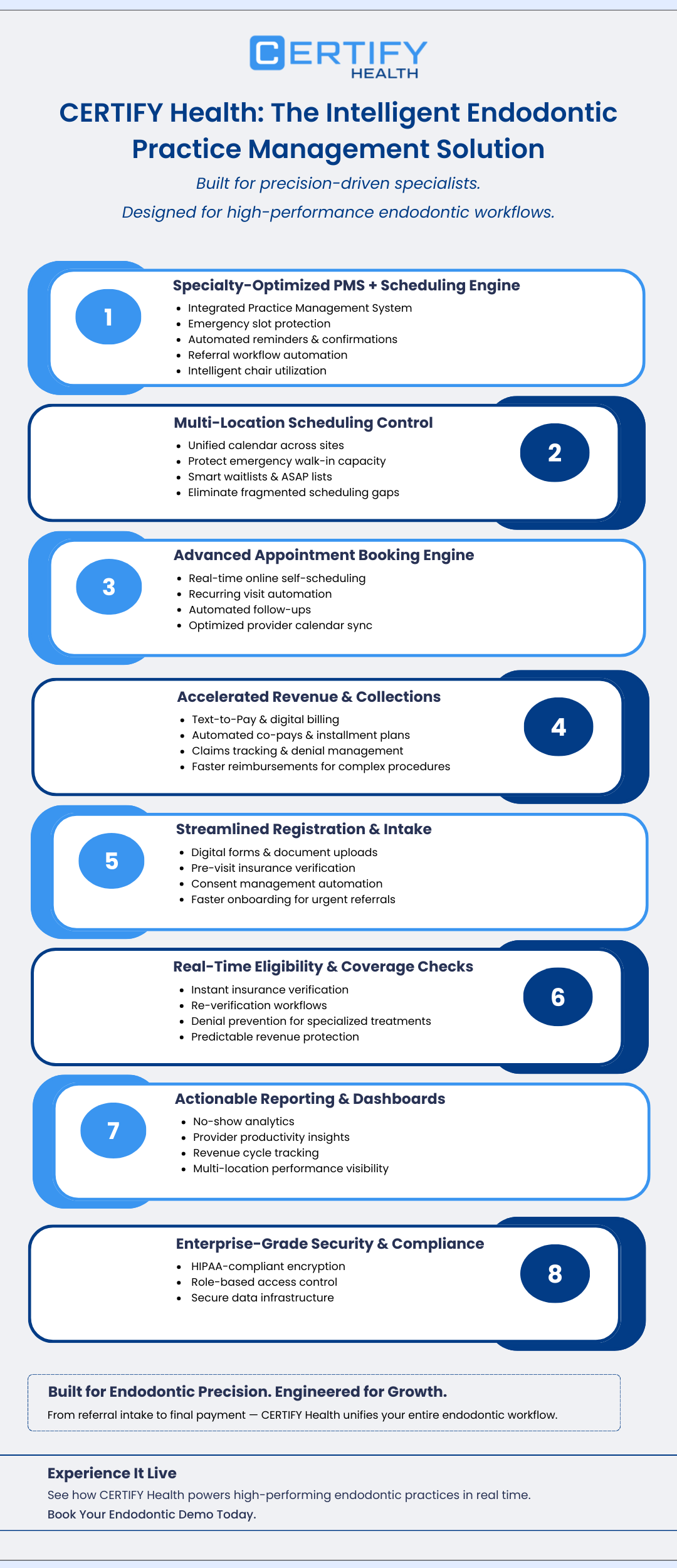
CERTIFY Health shines as a top endodontic solution, blending integrated PMS with an intelligent scheduling engine for endodontic practice management. Its specialty-focused automation handles referral workflow management, emergency capacity protection, and automated reminders/confirmations flawlessly.
Secure, HIPAA-compliant infrastructure includes role-based access controls and encryption, tackling security compliance head-on. Designed for high-value endodontic software performance, it unifies patient intake, payments, and revenue cycle management — boosting collections and cutting no-shows.
Perfect for overcoming adoption barriers with seamless scalability.
Key PMS Features Offered by CERTIFY Health
CERTIFY Health’s PMS empowers endodontists with specialized tools that address unique challenges like urgent root canal referrals, intricate insurance for procedures, and multi-location coordination.
- Multi-Location Scheduling: Enables unified scheduling across sites from one system, helping endodontic groups protect emergency slots for walk-ins while filling routine appointments via waitlists and ASAP lists—reducing lost revenue from fragmented calendars.[image from attachment shows this feature]
- Appointment Booking Engine: Powers fast, accurate online self-booking with recurring visit automation and follow-ups, streamlining patient acquisition for specialist care and syncing real-time with provider calendars to optimize chair utilization.
- Text-to-Pay Collections: Automates co-pay services, installment plans, superbills, denial management, and claims tracking, accelerating reimbursements for complex endodontic treatments like apicoectomies and boosting cash flow without added staff burden.
- Registration & Intake: Handles uploads, pre-visit insurance verification, consent forms, and document management, expediting new patient onboarding for referrals and minimizing front-desk delays during peak emergency hours.
- Eligibility & Coverage Verification: Enables real-time eligibility verification, comprehensive benefit visibility, and automated revalidation, minimizing procedure-based denials while helping endodontic practices maintain consistent, predictable revenue.
- Reporting & Dashboards: Equips practices with data on appointment gaps, productivity metrics, denials, and claims tracking, enabling operational improvements and sustainable growth across multi-provider endodontic teams.
Conclusion
Modern endodontic practice management is your growth engine. The right platform transforms revenue cycle complexity into predictable cash flow, aligns clinical workflows with precision-driven care, and keeps compliance airtight without slowing your team down.
With integrated, specialty-built solutions like CERTIFY Health’s endodontic practice management software, you don’t just manage cases, you maximize production, strengthen referrals, and unlock scalable growth.
Stop wrestling with systems that weren’t built for endo.
See what purpose-built performance looks like. Visit certifyhealth.com or schedule your personalized walkthrough today.