
Table of Contents
Key Takeaways:
- The front desk shapes the entire endodontic experience. Manual scheduling, patient intake, and check-in increase anxiety, no-shows, and case drop-offs before treatment even begins.
- Poor patient journeys directly hurt revenue and referrals. Low case acceptance, negative reviews, and weakened dentist trust reduce lifetime patient value.
- Digitized, patient-first workflows improve outcomes. Streamlining scheduling, communication, and follow-ups boosts retention, staff efficiency, and patient satisfaction.
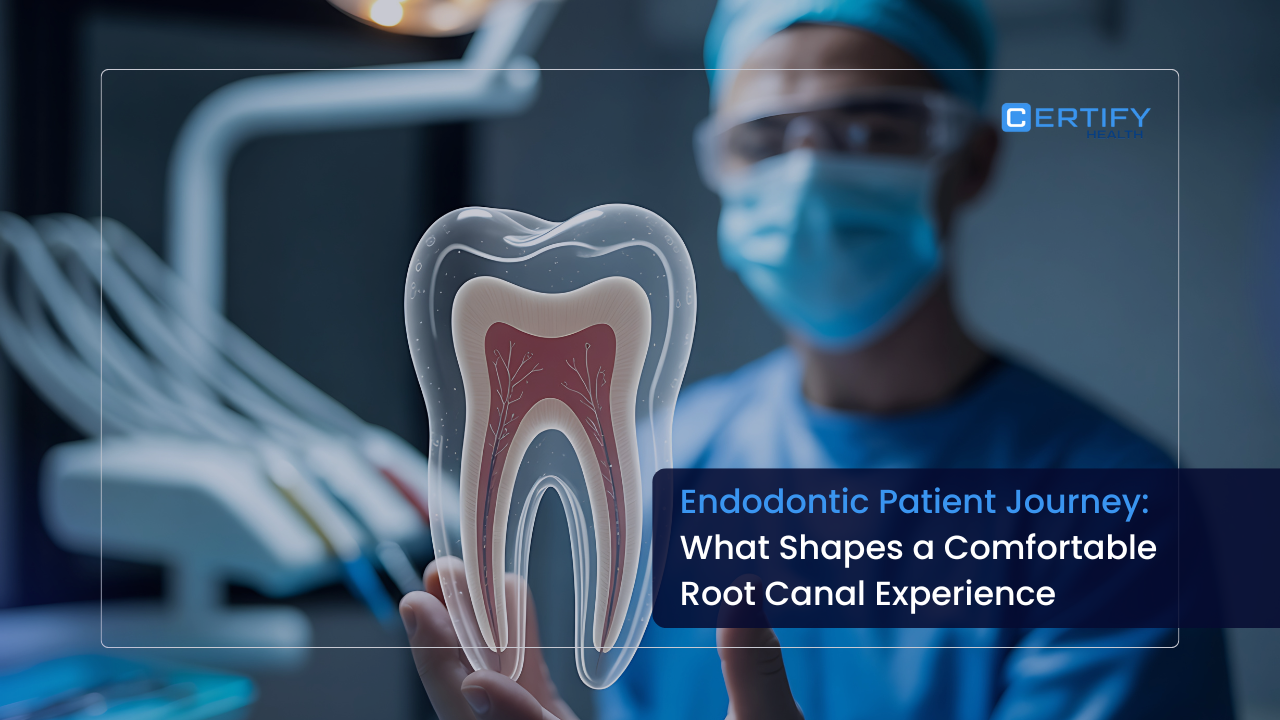
Your patient has severe tooth pain and has finally landed an endodontic appointment for a root canal. But rather than a seamless start, they get to hear hold music, go through stacks of forms, and, upon visit, experience a frazzled front desk barking, “Next patient!”
15 million root canal cases are seen in the U.S. annually, and in most cases (61% of them) patient quit their journey before even seeing the specialist, that’s because of severe dental anxiety, something commonly seen in endodontic practices.
Practices nailing the patient journey improves 80-90% patient retention rates. Screw it up? You lose referrals, revenue, and your reputation. In this blog, we will understand Endodontics patient journey, and unpack the chaos, the costs, and how to craft root canal experiences patients actually rave about.
Inside the Current Patient Journey: Front Desk Failures in Endodontics
TL;DR:
Why does the endodontic front desk become a bottleneck?
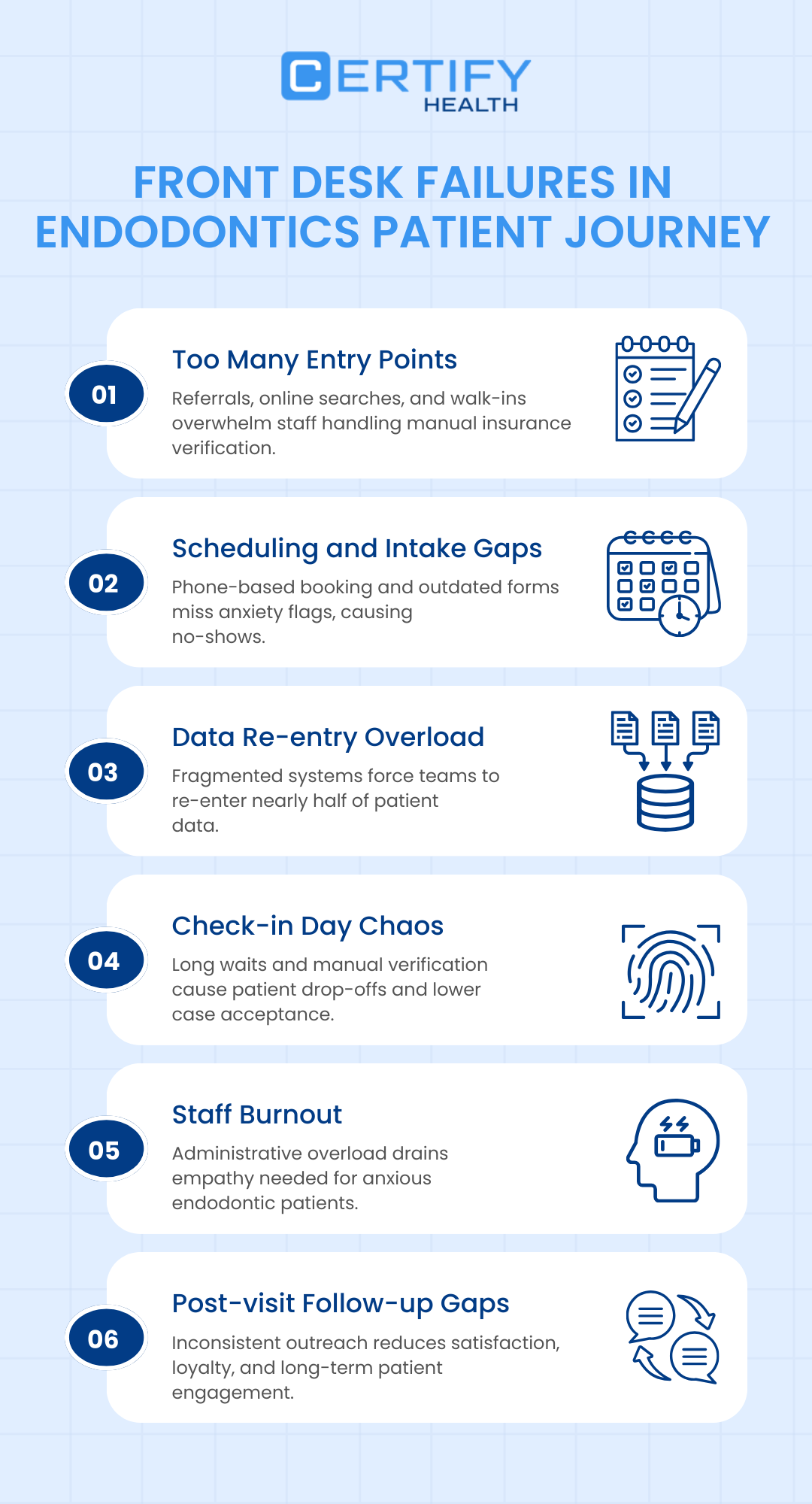
- Too many patient sources (referrals, online, walk-ins) overwhelm front desks doing manual insurance checks (~15 minutes per patient).
- Phone-based scheduling and outdated patient intake miss key details like dental anxiety, leading to no-shows and rework.
- Nearly half of patient data gets re-entered due to fragmented workflows, wasting staff time.
- Long waits and manual check-ins cause patient drop-offs and reduce case acceptance.
- Heavy admin work increases staff burnout, reducing empathy for anxious root canal patients.
- Post-visit follow-up is inconsistent, hurting satisfaction, loyalty, and re-engagement.
Ever wonder why your Endodontics practice feels like a bottleneck? It starts with patient acquisition. Sure, a good number of new endodontic patients come via referrals, but online searches and walk-ins pile on. The front desk? They’re drowning in manual verification of insurance, clocking 15 minutes per patient on average, riddled with errors.
Let’s see what endodontic patient journey challenges look like:
1. Scheduling and Patient intake Nightmares
When patient scheduling still relies on phone calls or outdated booking systems, staff get overwhelmed and patient intake forms that miss key flags like dental anxiety don’t help.
Dental Anxiety Impact (Study Insight)
- About 19% of endodontic patients feel significant anxiety before their appointment
- Anxiety-driven no-shows account for over 8.4% of missed appointments
Also, without streamlined workflows, practices often end up re-entering nearly half of collected data, creating unnecessary work and distracting from patient care.
2. Check-In Day Chaos
Front-desk check-in means long waits and manual verification of IDs/insurance, driving drop-offs before treatment.
The importance of front desks can’t be overstated; they’re the trust gatekeepers in Endodontics. Botch patient flow and case acceptance plummets 30%.
Staff burnout creeps in here too, with endless admin diverting empathy from anxious root canal patients.
3. Post-Visit Black Hole
Follow-up remains inconsistent. Manual verification calls and surveys reach only a portion of patients within the ideal post-visit window.
Without a centralized way to track recovery or collect feedback, patient satisfaction suffers, loyalty declines, and re-engagement efforts fall short.
Why Improve Bad Root Canal Experiences? The Hidden Costs in Endodontics
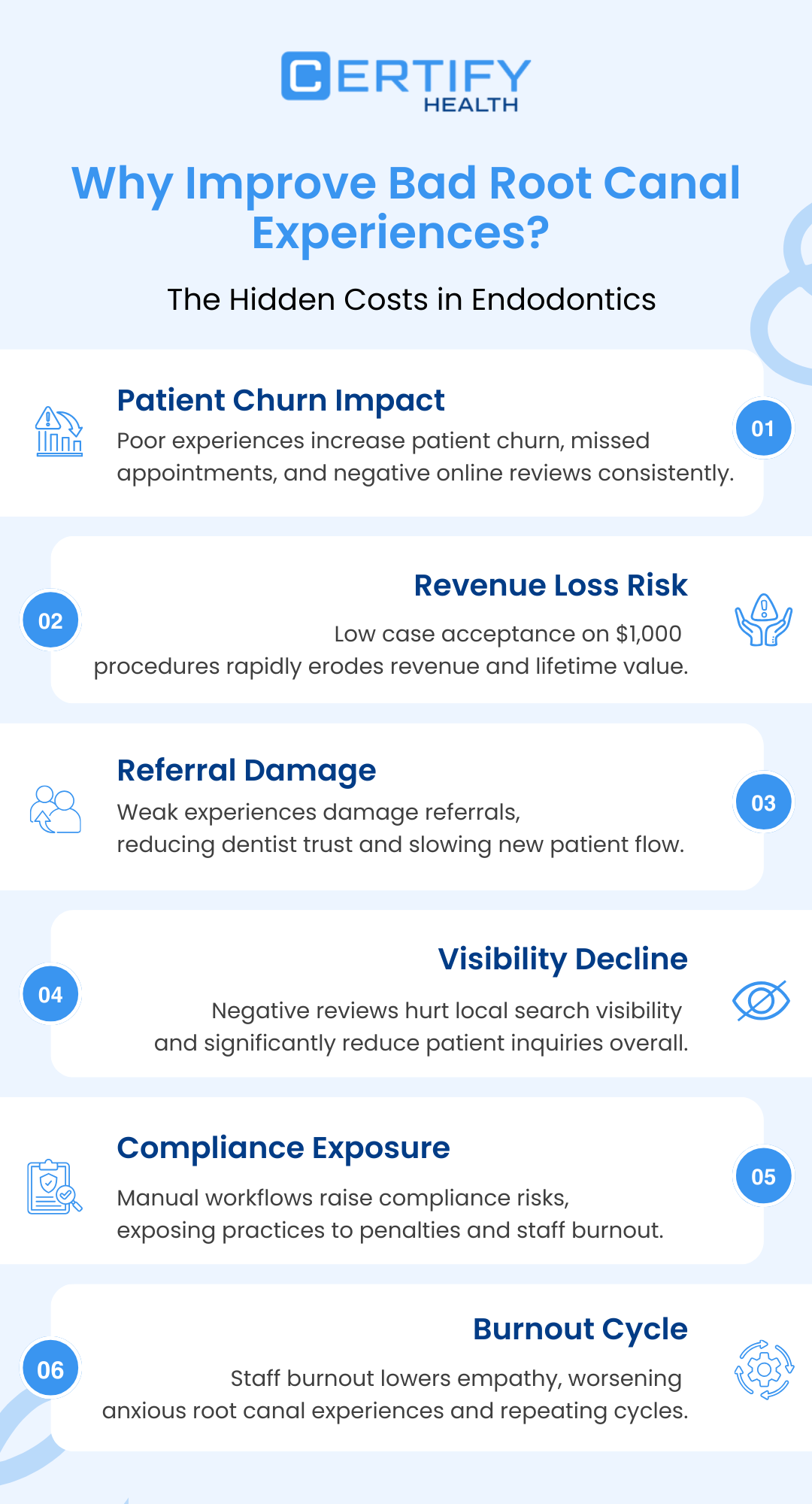
TL; DR:
Why do bad root canal experiences hurt practices?
- Poor experiences drive patient churn, no-shows, and negative reviews.
- With $1,000+ procedures, low case acceptance quickly cuts revenue and lifetime value.
- Endodontics depends on referrals; bad experiences weaken dentist trust and new patient flow.
- Negative reviews reduce local visibility and patient inquiries.
- Manual workflows increase compliance risk and staff burnout.
- Burnout reduces empathy, worsening anxious patient experiences and repeating the cycle.
A bad root canal experience does more than upset patients; it scares them away. Fix it, and you turn anxious visits into smooth ones, keep patients coming back, get glowing reviews, and protect your revenue.
Patient Churn & Revenue Loss
Long waits, poor communication, and administrative errors drive a significant share of negative patient feedback and missed appointments.
- Online reviews: long wait times and front-desk issues are among the top drivers of negative healthcare reviews.
- No-shows: Dental practices frequently see 20-30% no-show rates when reminders and pre-visit communication are lacking.
- Revenue impact: Inefficient scheduling, low case acceptance, and missed visits can conservatively cost a single specialty practice tens of thousands of dollars annually.
In Endodontics, where root canal procedures often exceed $1,000 per case, low case acceptance and treatment delays significantly reduce lifetime patient value and referral potential.
Damage to Referrals & Reputation
Endodontics depends heavily on professional referrals and patient trust.
- Referral dependence: A majority of endodontic patients originate from general dentist referrals.
- Review impact: Poor reviews can reduce local search visibility and click-through rates by 15-25%.
Reputation damage compounds quickly. A single highly visible negative story, especially around pain, delays, or billing confusion, can reduce new patient inquiries and weaken referring dentist confidence.
Regulatory and Compliance Risks
Operational breakdowns increase compliance exposure.
- MIPS penalties: Endodontic practices can lose around 9% of their CMS reimbursement due to gaps in value-based performance like MIPS.
- HIPAA risk: HIPAA risk: Manual procedures and patient intake mistakes are a major contributor to HIPAA breaches, which can result in fines that range considerably but often exceed tens of thousands of dollars per event.
- Patient experience scores: Poor patient intake workflows and patient confusion can materially lower satisfaction and quality scores, which increasingly influence reimbursement and payer relationships.
In Endodontics, compliance is not optional, especially when handling referrals, imaging, and protected health information (PHI).
Staff Burnout & Efficiency Drain
Front-desk and clinical staff absorb the friction patients feel.
- Administrative burden: Manual insurance verification and repetitive patient intake tasks consume 10–15 minutes per patient, increasing error rates and staff stress.
- Burnout: Healthcare burnout consistently links administrative overload to higher turnover and lower patient empathy, critical factors in anxiety-heavy procedures like root canals.
Burned-out teams struggle to deliver calm, reassuring experiences, creating a cycle where patient dissatisfaction and staff stress reinforce each other.
CERTIFY Health Solutions: Streamlining the Endodontics Patient Journey
For root canal patients, every touchpoint matters: pain is high, urgency is real, and expectations for convenience are non‑negotiable. CERTIFY Health’s Patient Experience Platform digitizes the entire endodontic journey, from referral and urgent booking to post‑op recovery and return to the general dentist, so front-desk teams can focus on reassurance, not paperwork.
1. Awareness, Referral & Initial Contact
- Digital patient intake: Multi-channel patient intake captures referral details, insurance, and photo ID instantly.
- Communication – Two-way messaging & multi-lingual Support: Front desk texts patients immediately to confirm acceptance and share next steps.
Front-desk empowerment
Staff focus on reassurance instead of chasing data, accelerating referral-to-schedule conversion.
2. Appointment Access & Scheduling
- Appointment Access – Online self-scheduling & ASAP List: Patients book urgent slots via link; waitlist automation fills gaps.
- Digital Check-ins – Walk-in management & kiosk check-in: Triages high‑pain walk‑ins efficiently.
- Instant Insurance verification – Automatically verifies coverage and patient identity at the time of scheduling, before the endodontic visit.
Front-desk empowerment
No more manual waitlists, staff prioritize clinical urgency and empathy.
3. Pre‑Visit Preparation
- Reminders & Nudges – Automatically reinforce pre-visit instructions such as imaging requirements and medication guidance for endodontic visits.
- Communication – Two-way messaging: Handles last‑minute questions securely.
Front-desk empowerment
Reduced phone volume; more fully prepared patients arrive on time.
4. Arrival, Check‑In & Clinical Visit
- Self-service check-in options: Mobile and in-office kiosks allow endodontic patients to check in quickly without front-desk delays.
- Insurance Verification (on-site) – Insurance capture & eligibility verification: Captures outstanding balance, co-pay, and deductibles.
- Consistent brand touchpoints: Personalized language and branded kiosks help reassure anxious endodontic patients at check-in.
Front-desk empowerment
Staff greet and triage patients face‑to‑face, not from behind a desk.
5. Post‑Op Instructions, Billing & Follow‑Up
- Aftercare communication: Sends clear, language-preferred follow-ups and treatment summaries after endodontic visits.
- Reminders & Nudges – Payment & reactivation nudges: Supports collections and rechecks.
- Post-Visit Experience – Automated surveys: Captures Feedback, NPS and outcomes.
- Patient portal hub: Centralizes visit summaries, feedback collection, and follow-up care for ongoing endodontic engagement.
Front-desk empowerment
Automated follow‑through means fewer callbacks and higher patient loyalty.
Conclusion
Friction in patient scheduling, intake, communication, and payments doesn’t just annoy, it guts case acceptance, kills referrals, and erodes lifetime value in Endodontics.
Flip it: Smoother patient journeys drive higher treatment completion, skyrocket retention rate, and deliver predictable revenue.
CERTIFY Health powers the Endodontics patient journey from acquisition to loyalty. Ready for comfortable root canals that patients love?
Book a Demo Today and see how we simplify, streamline, and scale your practice operations.