
Table of Contents
Key Takeaways
- Automation drives ROI: Cuts into the $83B admin cost burden with faster reimbursements and reduced burnout.
- Connected workflows boost performance: Automates scheduling, intake, and billing, reducing claim denials by up to 30%.
- Compliance meets satisfaction: Ensures audit readiness, secures data, and improves patient satisfaction scores by 35%.
Introduction
Ever wondered how much time and money your practice loses to paperwork and manual workflows?
Across U.S. healthcare, administrative tasks eat up $83 billion every year in staff time and 97% of those costs fall on providers. But it’s not just about lost revenue. These inefficiencies directly impact access to care: nearly one in four patients (24%) report difficulties getting care due to administrative barriers like billing or prior authorizations.
For practices, that means more staff burnout, delayed payments, and patients slipping through the cracks.
Now imagine if those hours and dollars were redirected toward better care delivery, happier patients, and smoother operations. That’s the promise of healthcare workflow automation: transforming the way your practice runs by replacing repetitive manual work with intelligent, connected processes.
What Is Healthcare Workflow Automation?
Healthcare workflow automation is used to streamline and automate manual front-desk and clinical tasks, such as scheduling, intake, insurance verification, communication, billing, and record management. It is automated using tools like Robotic Process Automation (RPA), Artificial Intelligence (AI), and integration platforms.
Did you know?
The healthcare automation market is booming, with market size to reach USD 23.70 billion by 2032. This growth is driven by practices just like yours looking to cut costs, improve care, and deliver a better patient experience.
How Does Automation Affect Healthcare Practice Management?
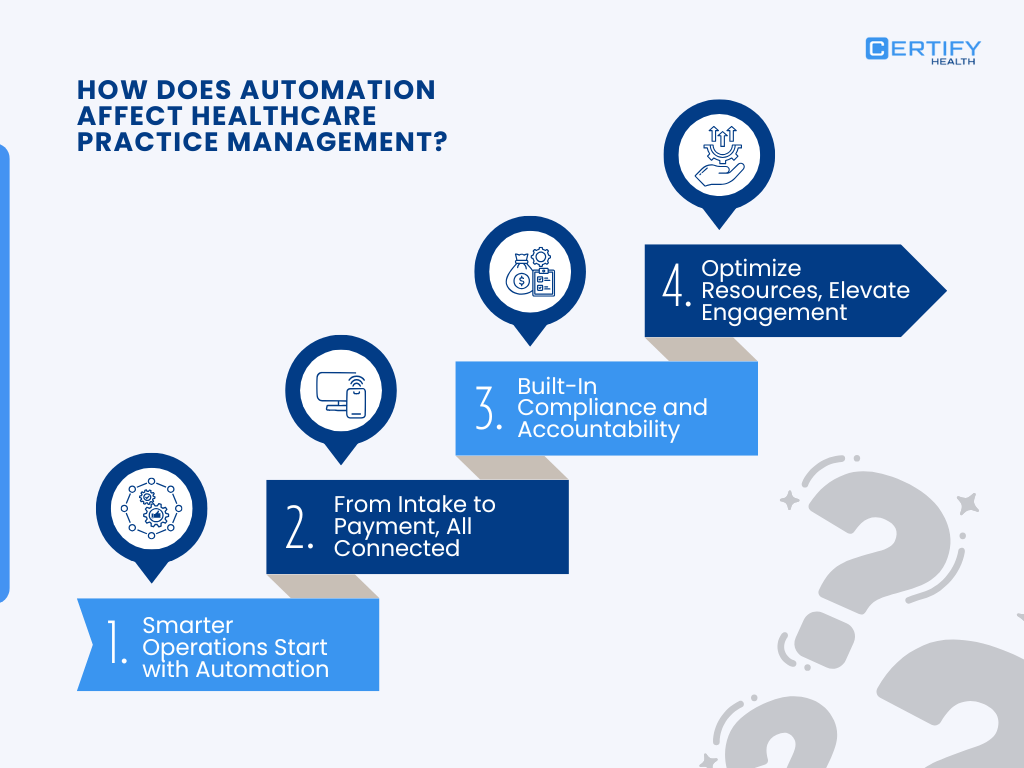
Smarter Operations Start with Automation
Healthcare teams spend too much time on admin and not enough on patient care. Automation changes that. It digitizes manual processes; helps practice streamline patient scheduling, eliminate double bookings, and fill open slots automatically.
Appointment management becomes effortless, improving attendance rates, and freeing staff from constant follow-ups.
From Intake to Payment, All Connected
Automated patient intake simplifies data collection, verifies insurance, and manages consent forms before patients even arrive. That means faster check-ins, cleaner data, and fewer billing issues down the line.
On the back end, automation accelerates claims and billing, improving revenue cycles and reducing administrative costs.
Built-In Compliance and Accountability
Automation also strengthens your compliance posture. With automatic documentation and secure data workflows, your practice stays audit-ready and ensures improved compliance with HIPAA and other regulatory standards.
No more chasing paperwork or worrying about missing documentation.
Optimize Resources, Elevate Engagement
Automation enables optimized resource allocation, helping you assign staff, rooms, and equipment more efficiently. And with personalized reminders, faster check-ins, and seamless communication, patients experience better engagement from start to finish.
When your workflows are connected, so is your team and patients.
You might also like to read: Why Healthcare Administrative Costs Spiral Out of Control (And How to Tame Them)
Did you know?
As per research, most of the manual tasks (45%) in healthcare can be automated? Automation technology like natural language processing (NLP) and chatbots enables you to streamline scheduling, documentation, and communication workflows.
Why Patients Notice the Difference
Healthcare workflow automations have direct impact on improving patient satisfaction:
- Patients can book and reschedule appointments online anytime, reducing back-and-forth calls.
- Advanced scheduling algorithms cut down wait times, so your patients spend less time in the lobby and more in the exam room.
- Automated text and email reminders help reduce no-shows.
- Patient portals offer transparent access to medical records and billing info, building trust and convenience.
What About the Challenges in Practice Management Automation?
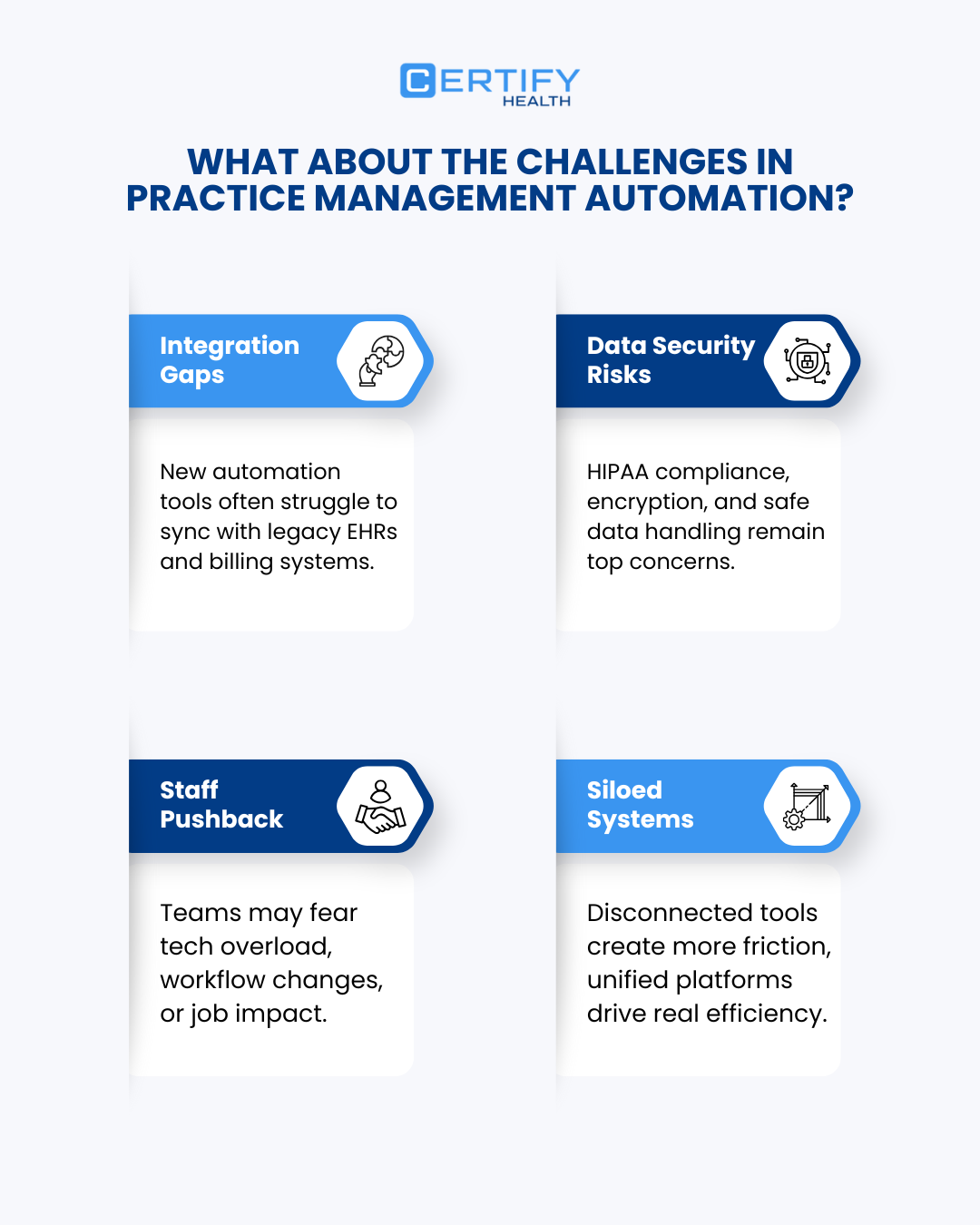
Of course, shifting to automation isn’t always smooth sailing. Common hurdles a practice may face are:
- Integration issues: New tools don’t always work well with outdated EHRs and billing systems.
- Data security: Maintaining HIPAA compliance and safeguarding patient information are essential.
- Employee concerns: It’s normal for teams to be concerned about technological overload or job displacement.
- Siloed systems: Unified platforms are the solution; fragmented automation destroys efficiencies.
The secret? Choose flexible vendors, invest in staff training, and communicate openly. Empowering your workforce to embrace technology is key.
Advanced Automation Features Driving Tomorrow’s Healthcare Practice Management
Looking ahead, here’s what the future holds for healthcare practice automation:
- AI-driven clinical decision support tools that offer real-time patient insights.
- Predictive analytics for smarter capacity and revenue planning.
- Remote patient monitoring that feeds continuous data back into your practice.
- RPA taking mundane, repetitive tasks off your staff’s plate—completely freeing them to focus on care.
Your Roadmap to Healthcare Workflow Automation Success
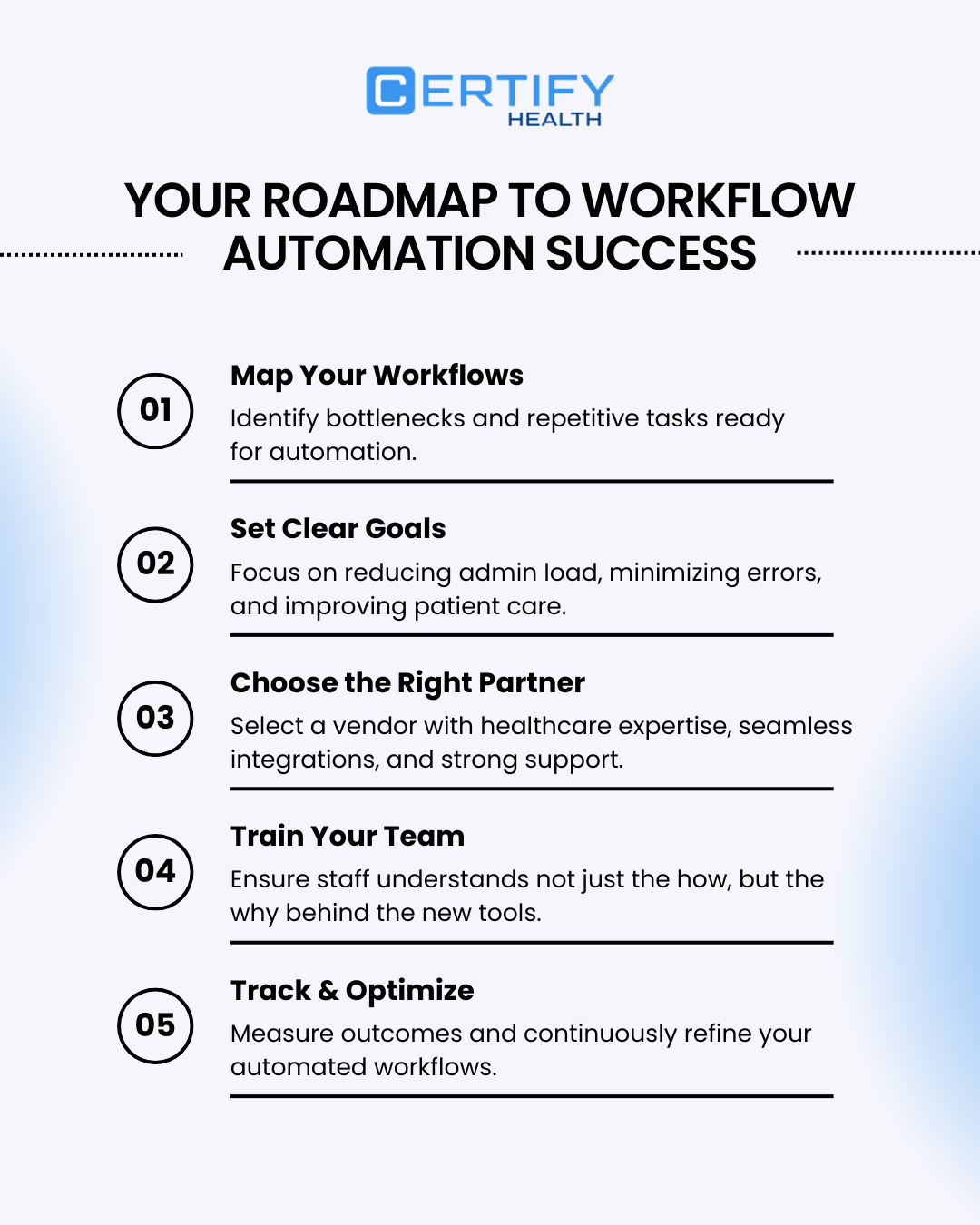
- Map out your current workflows: spot the bottlenecks and repetitive tasks ripe for automation.
- Set goals: Reduce admin burdens, slash errors, and elevate patient care.
- Pick a partner: who understands healthcare, offers flexible integrations, and supports your growth.
- Train your staff thoroughly: not just how to use new tools but why they matter.
- Monitor results: keep tweaking to get more value over time.
You might like to read: 10+ Questions to Ask When Selecting Practice Management Software
Why is CERTIFY Healthcare Practice Management Software the Best?
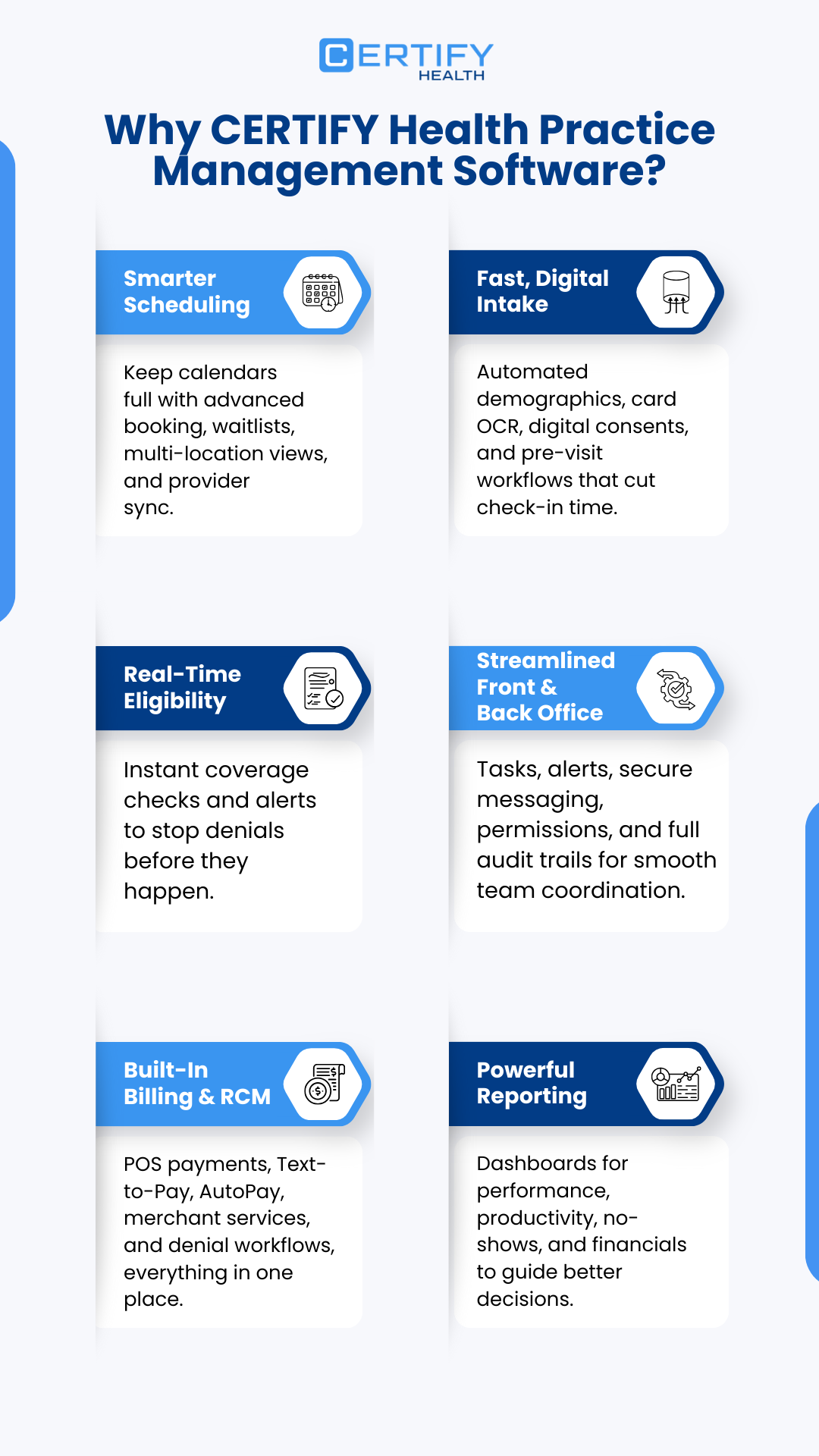
CERTIFY Health’s Practice Management Software is your “operating system” for modern clinical operations, combining scheduling, intake, eligibility, billing and reporting into one seamless platform. Certify Health Whether you’re a solo clinic or a multi-location group, it’s designed to reduce silos, boost automation, and let your team focus on care.
Key Features
With a robust booking engine, ASAP wait-lists, recurring appointments, multi-location scheduling, provider calendar sync and slot-logic rules, your practice keeps the schedule filled and efficient. That means fewer gaps, fewer double-books and more throughput.
From automated demographic capture and insurance-card OCR + verification to digital consent forms and pre-visit workflows, this feature set accelerates check-in and minimizes errors. Result: faster patient arrival, fewer bottlenecks.
Real-time eligibility checks, co-coverage alerts and re-verification workflows protect revenue before care begins. You stop claim denials before they happen.
Front & Back Office Operations
With task assignment, alerts, secure staff messaging, role-based permissions and full audit logging, your team stays coordinated and accountable. The back office runs as smoothly as the front.
Co-pay collection, point-of-service payments (mobile/kiosk/staff), Text-to-Pay, AutoPay, merchant services, denial-management and claims tracking, all embedded. This transforms billing from a bottleneck into a revenue engine.
Reporting & Ops Insights
Dashboards for practice performance, claim statuses, no-show tracking, staff productivity and financial outcomes give you clarity and control. Leaders can make faster, data-driven decisions.
Wrapping Up
Healthcare workflow automation is necessary to survive in today’s healthcare landscape. Not only does it help you reduce admin costs or empower your staff, but it contributes to improving patient satisfaction through automating our workflows.
Why wait then? To find out how we can assist you in making this reality for your practice, get in touch with CERTIFY Health right now! Book a demo now!