
Table of Contents
The Staffing Crisis is Real. But Bad Workflows Make it Worse.
In 2026, the U.S. is short nearly 96,000 full‑time physicians. That alone would be enough to strain any system. On top of that, more than half of healthcare workers are thinking about leaving their jobs. Many health systems have already cut headcount by 15–20% this year. Nonprofit systems have removed dozens of roles across sites, just to stay afloat.
So yes, the staffing crisis is real. But that’s not the whole story. The deeper issue is how practices actually run day to day. When workflows crack, even a full team feels short‑staffed.
At the same time, patient demand has not disappeared. What’s slipping is capacity. Fewer people are available to register patients, schedule visits, verify coverage, and collect payments. Each gap slows flow. When flow slows, patient volumes dip and revenue follows.
The Industry is Chasing AI. Patients are Not Convinced.
Many health system leaders now see workforce shortages as a reason to move faster on AI. Some even talk about “replacing staff” with “AI”. New tools launch almost every week. They can draft notes, support nursing workflows, and handle simple admin tasks.
But jumping straight to AI doesn’t fix the shortage. It creates a new risk. Only 42% of U.S. patients say they are comfortable with AI in their care, and that share has dropped over the last few years. That signals a trust problem, not a technology problem.
Patients frequently don’t think of “efficiency” when they hear “AI.” “Are you taking people away from my care?” They wonder. If they feel replaced instead of supported, engagement falls. That shows up as missed appointments, delayed care, and lower satisfaction, right when you need their trust the most.
So, the question is not “AI or no AI.” The better question is: Do we need machines to replace people, or a practice management system that removes busywork so people can do the work only they can do?
The Real Constraint is not AI. It is Operational Capacity.
There’s a clear gap between what patients value and how staff spend their time. Patients want eye contact, clear explanations, and a steady, calm visit. Staff spend much of their day on tasks that don’t require clinical skills at all.
That list is long:
- Answering phone calls to book or reschedule visits
- Handing out clipboards and paper intake packets
- Typing the same data into multiple systems
- Calling payers to verify insurance
- Tracking no‑shows
- Running cards at the front desk.
These tasks are manual, repetitive, and high volume.
They don’t just slow the day. They drain people. Burnout rarely starts in the exam room. It starts with the feeling of never catching up on admin work.
So no, the answer is not to replace humans. The problem is not the people. The problem is the manual work wrapped around them.
Where the Breakdown Shows up First
1. Scheduling
In many practices, staff spend 30–40% of their day on appointment work: new bookings, reschedules, cancellations, and waitlists. When headcount shrinks, phones ring longer, voicemails pile up, and open slots go unused. Patients wait. Providers sit with gaps in their day. Revenue becomes less predictable.
A modern healthcare scheduling software and patient self‑scheduling system changes that. Patients can book online, move their own appointments, and join a waitlist without calling. When a slot opens, someone else can grab it in real time. Staff still oversee the schedule, but they are no longer bottlenecks.
2. Intake and check‑in
Paper‑based intake and manual check‑in often add 10–15 minutes to every visit. With reduced staff, that time turns into a front‑desk jam. Lines build, waiting rooms fill, and the day starts late and stays behind.
Digital intake shifts that work upstream. Before they arrive, patients fill out forms on their phones. They can confirm demographics, upload insurance cards, and sign consents on their own time. By the time they reach the front desk, the data is already there. Staff can focus on greetings, not paperwork.
3. Insurance eligibility verification
Manual insurance verification is one of the biggest hidden drains on admin time. Checking benefits by phone or payer portal can take 10–15 minutes per patient. Mistakes lead to claim denials, rework, and delayed payments.
Real‑time, automated eligibility changes the math. The system checks coverage in the background, at scheduling, a day before the visit, or at check‑in. Staff see a clear answer and can talk through costs with the patient. Less time on hold. Less surprises on the back end.
Taken together, these are not “AI problems.” They are workflow problems. And they call for automation that supports staff, not replaces them.
AI Adoption Stalls When Operations Are Not Ready
Many organizations are already piloting AI. The pattern is familiar. The demo looks strong. The pilot starts. Then everything stalls.
The reason is simple: AI needs structure. It needs clean data, digital workflows, and systems that talk to each other. If your scheduling is on one tool, intake on paper, and verification in a separate portal, an AI layer on top just adds one more thing to log into.
That’s why so many AI projects lose steam after early trials. Not because the tech is “bad.” Because the operational foundation is not ready.
What actually needs to happen first is more basic: unify the core workflows.
Why Unified Practice Management Software is the First Fix
Using four or five disconnected systems is not sustainable in a staffing crunch. Each extra tool means more clicks, more double entry, and more “Let me check in the other system.”
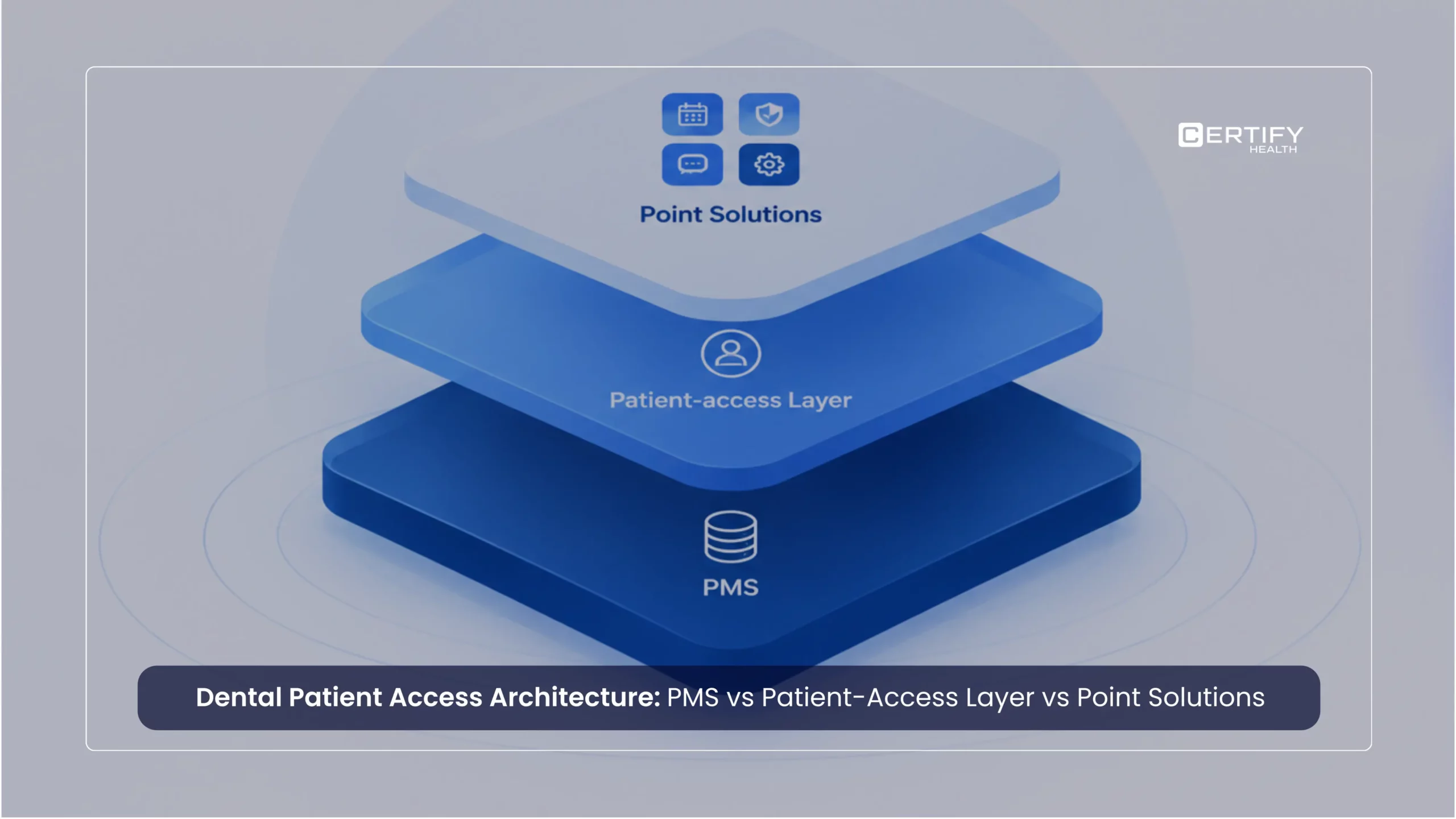
A unified practice management software pulls those pieces into one place. Scheduling, self‑scheduling, digital intake, insurance verification, patient messaging, and payments live on a single system that connects to your EHR, EMR, and billing tools.
CERTIFY Health is a unified practice software: it ties together the front‑end workflows that shape patient access and staff workload on one platform. That means fewer screens, fewer manual handoffs, and fewer points of failure.
Practices that move to a unified platform can often absorb a 20–30% staffing reduction without losing patient flow or eroding trust. They are not asking staff to work harder. They are asking the system to carry more of the load.
The Questions That Every Leader Needs to Ask Right Now
If you want to know whether staffing is the main problem, or workflows are, start with a few simple counts:
- How many calls per day are tied to scheduling?
- How long does it take the average patient to check in?
- How many staff hours are spent on eligibility verification each week?
If those numbers are high, the issue is not just “not enough people.” It is that your people do not have the right system around them.
You don’t need more sticky notes or more overtime. You need a practice management platform that turns manual tasks into background workflows.
Want to see what that looks like in your own environment?
Schedule a workflow assessment to pinpoint where automation can cut workload, protect staff, and keep patient flow steady.