
Table of Contents
Healthcare data integration solutions are changing how clinics care for patients.
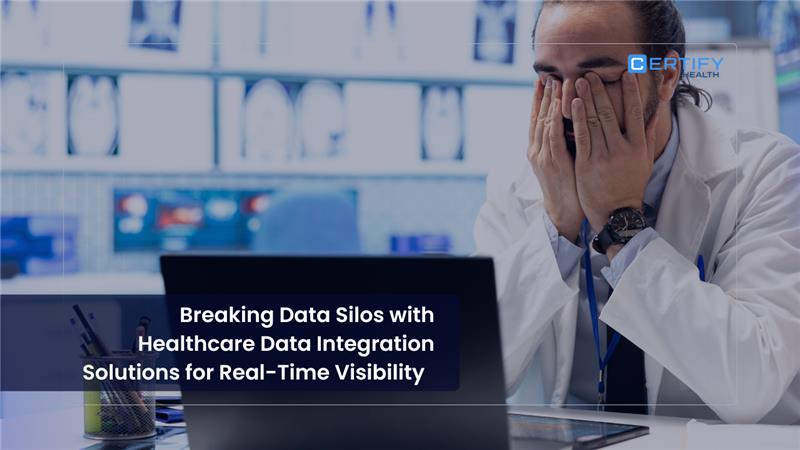
This use case shows how an outpatient clinic fixed data silos in healthcare.
Their journey from disconnected to connected systems with CERTIFY Health’s Healthcare Interoperability Platform
A Growing Clinic Under Pressure
This clinic had 8 providers, 35 staff members, and 120–150 daily visits.
Patient volume grew by 20% each year.
Now that’s where the problem is. They had more patients, but their systems could not keep up.
Staff constantly moved between the EHR, scheduling, billing, and other systems.
This slowed down critical operations: Scheduling, Patient Intake, Check-ins, Eligibility Verification, & Billing.
Soon, they realized that the problem wasn’t a staff shortage but point-solution healthcare.
Data Silos in Healthcare Caused Daily Chaos
Data Silos in healthcare, a major problem, forcing staff to:
- Updating spreadsheets
- Calling patients for details
- Re-entering data
- Logging into many systems
The list of problems is quite lengthy, and the results were a bunch of errors, wasted time, and lost patient trust.
That’s the story of every outpatient clinic these days.
There’s no healthcare system integration.
Nothing worked together.
No Real-Time Visibility Created Bigger Problems
Without healthcare interoperability, the clinic had no clear view.
Front desk teams spent time chasing data instead of helping patients.
Common healthcare challenges:
- Slow check-ins
- Double bookings
- Missing insurance checks
- Claim delays
- Long wait times
Managers had no answers to simple questions:
- Who finished intake?
- Who needs eligibility checks?
- Where are the delays in patient flow management?
No centralized way to track patient activity. Patient workflow automation did not exist.
Staff guessed updates using calls and emails. This wasted about 30% of staff time.
The Root Cause
It was not staff. It was data silos in healthcare.
- Each system worked alone.
- Data moved slowly.
- Teams stayed disconnected.
Schedulers could not see the intake. Intake re-entered data. Billing teams waited for updates.
The clinic needed real healthcare data integration solutions that unified everything without rip-and-replace costs.
The Fix: CERTIFY Health's Healthcare Interoperability Platform
After reviewing multiple vendors, the clinic chose CERTIFY Health’s healthcare interoperability solutions.
This healthcare data integration tool connects with 234+ systems, including:
- EHRs and EMRs
- Practice management systems
- Scheduling apps
- Billing platforms
- In-house tools
It supports bi-directional data flow, so information moves smoothly across systems—without manual work.
Created a smooth hub that resulted in:
- Syncing scheduling with intake for instant updates.
- Linking insurance portals for real-time eligibility.
- Automating data flows to billing without re-entry.
- Better outcomes. Better patient experiences.
They did not replace systems. They connected them.
CERITFY Health enabled patient workflow automation, slashed administrative burden in healthcare, and built a connected healthcare system.
Staff gained one dashboard for all, ending data silos in healthcare for good.
From Manual Work to Connected Healthcare System
With CERTIFY Health’s healthcare interoperability platform, this outpatient clinic has not had to wait months for change.
It went live in just 4–8 weeks (can vary based on your current systems and workflows).
That means:
- Faster rollout
- Faster results
- Less disruption to your team
Stay Compliant, Without the Stress
They no longer have to worry about changing rules.
The platform aligns with:
- HL7
- TEFCA framework
- FHIR v5
So, you get a solution platform that is:
- Connected
- Compliant
- Growth-ready
Get Compliant & Interoperable Solution – Talk to Our Experts
Give Your Team Time Back (Every Single Day)
No more spreadsheets. No more switching systems.
With one simple dashboard, they can:
- See patient status across systems in real time.
- Pull intake and eligibility from one screen.
- Get alerts for missing documents or authorizations.
- Prep rooms early using a patient tracking system.
- Check-in time dropped,10 to just 3 min.
With better patient flow management, delays disappear, and schedules stay on track.
Powered by healthcare data integration solutions, your team cuts manual work in half, so they can focus on care, not admin.
And with a healthcare interoperability platform behind it all, you don’t just fix today’s chaos; you build a system that runs smoothly as you grow.
Real-Time Visibility with Patient Tracking System
Managers tracked:
- Full-cycle patient workflow visibility
- Appointment readiness
- Insurance status
- Claim progress
If there was a delay, alerts fixed it fast.
This improved:
- patient flow management
- staff efficiency
- patient experience
It also helped improving patient wait times.
Fast and Measurable Results Seen
Within months, the clinic saw strong results:
- Check-ins became 40% faster.
- Scheduling errors dropped by 60%.
- Administrative burden in healthcare dropped by 35%.
- Claim denials are reduced with auto checks.
- Staff spent 25% more time with patients.
Patient workflow automation made daily work easier.
Revenue growth improved through cleaner claims and optimized workflows.
CERTIFY Health’s healthcare interoperability solutions quickly proved their value.
Need Custom Integrations? Book a Demo
FAQ
What is healthcare data integration?
Healthcare data integration is the process of combining information from disconnected systems, such as EHRs, labs, pharmacies, billing, imaging, and patient portals, into a single, unified view of the patient and the practice.
It relies on interoperability standards like HL7 and FHIR so different systems can share data in real time, supported by technologies such as ETL (Extract, Transform, Load) and Master Data Management (MDM) to clean, standardize, and keep data consistent.
This unified view creates a single source of truth that reduces manual re‑entry, minimizes errors, and speeds up tasks like scheduling, eligibility checks, and billing. Clinicians and staff can make faster, better‑informed decisions, while operations become more efficient, patients experience smoother journeys, and organizations strengthen both clinical outcomes and financial performance.
What is a healthcare interoperability platform?
A healthcare interoperability platform is a unified digital environment built to seamlessly connect to different systems. So, they can securely exchange data, interpret it consistently, and work together in real time.
It normalizes information from disparate sources into consistent formats, often using standards like HL7 and FHIR, so clinicians and staff see a single, accurate view of the patient across settings.
Such platforms support multiple levels of interoperability, from basic data exchange to structural formatting, semantic understanding, and organizational‑level governance, while enabling APIs, master‑data controls, and secure transport.
This reduces manual re‑entry, cuts errors, and improves care coordination, patient safety, and operational efficiency, all within a compliant, standards‑driven framework.
How does CERTIFY Health’s PMS support interoperability?
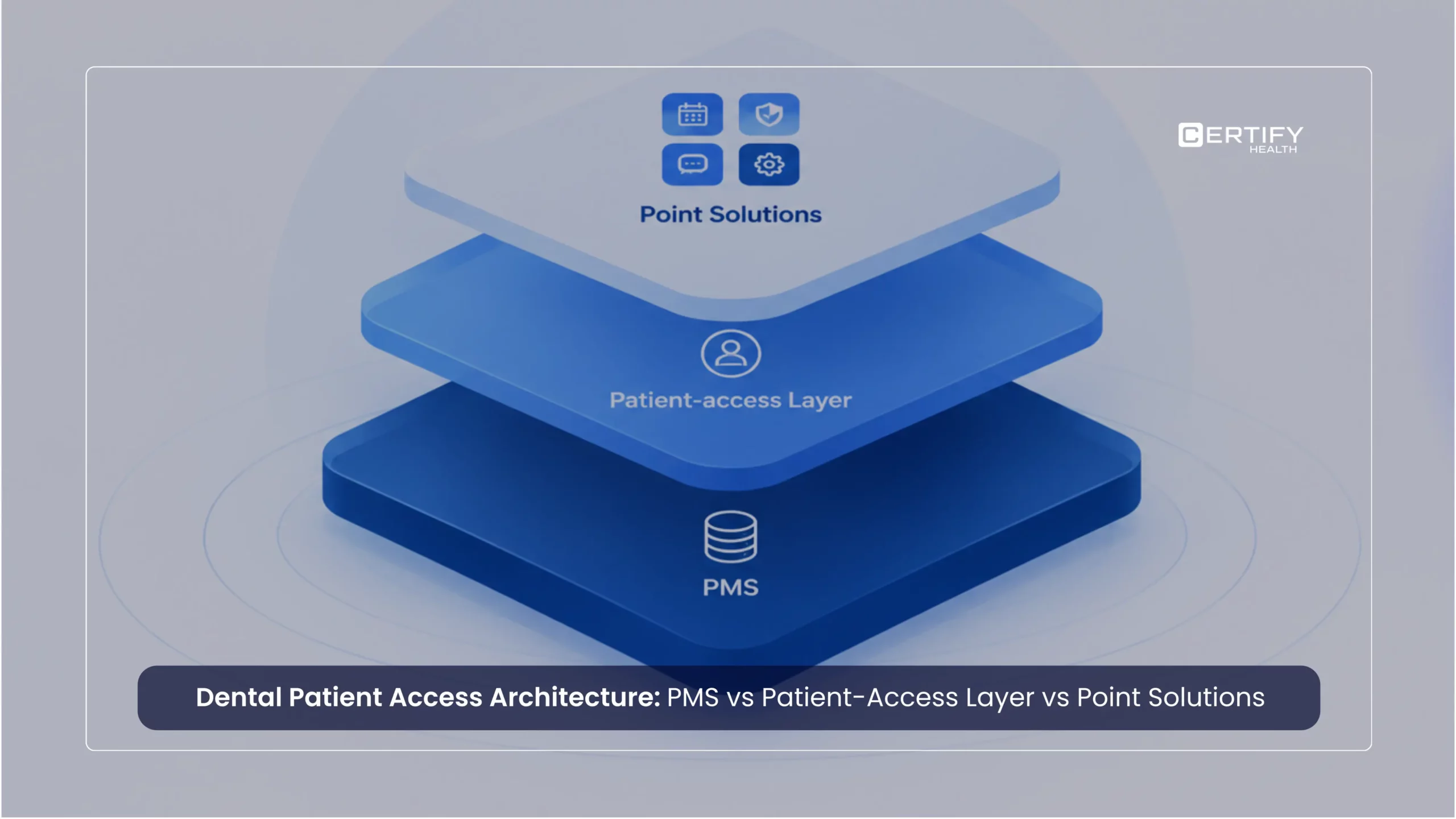
CERTIFY Health’s Practice Management System (PMS) supports interoperability by acting as a central hub that connects your EHR, scheduling, billing, payment, lab, and imaging tools so they can share data and work together seamlessly.
Instead of forcing you to replace any system, the PMS uses open APIs, cloud‑based workflows, and standardized messaging (including HL7 and FHIR‑aligned formats) to keep information in sync across clinical and administrative platforms.
This approach cuts manual data entry, reduces duplicate records, and ensures real‑time consistency in patient details, appointments, eligibility, and billing status. When a patient’s insurance or appointment changes in one system, that update flows automatically to the others.
Clinicians see fresh data in the EHR, front‑desk teams see the same details in the PMS, and finance teams see it in billing, without anyone switching screens or copying data by hand.
Is CERTIFY Health compliant with healthcare data standards?
Yes. CERTIFY Health meets core healthcare data and security standards, so your practice can stay compliant and interoperable.
The platform uses FHIR R4‑based APIs to share clinical data with EHRs, EMRs, and practice management systems. It supports SMART on FHIR for secure patient access and follows IHE‑style profiles for workflow‑specific integrations like referrals, orders, and results.
It also meets HIPAA‑compliant requirements for Protected Health Information (PHI), strong encryption, and strict access controls across patient engagement, intake, identity, and payment workflows. The cloud‑native, API‑first design keeps data secure, consistent, and ready for real‑time use across systems.
How does CERTIFY Health break data silos in healthcare?
CERTIFY Health breaks data silos by connecting EHRs, practice management, scheduling, billing, and eligibility systems into a single interoperability hub.
Data flows bi‑directionally in real time, so intake, insurance checks, and billing updates sync automatically instead of living in separate tools.
Staff see one unified view of each patient across systems, eliminating spreadsheets, manual re‑entry, and guesswork.
This creates full‑cycle visibility, smooth patient workflows, and measurable gains in efficiency, no‑show rates, and revenue, without replacing existing systems.
How does real‑time visibility improve patient workflow management?
Real‑time visibility improves patient workflow management by giving staff instant, accurate data on patient status, appointment readiness, insurance checks, and room availability across systems.
Instead of guessing where patients are or which tasks are stuck, teams see live updates on a single dashboard, so they can act quickly on delays, imbalanced loads, or missing documents.
This reduces wait times, cuts bottlenecks, and lets staff prep rooms, prioritize patients, and adjust schedules in the moment, so workflows stay smooth, resources are used efficiently, and patients move through the clinic faster and with fewer frustrations.
Is CERTIFY Health compliant with healthcare data standards?
Yes. CERTIFY Health is designed to meet healthcare data standards by protecting patient information, supporting interoperability, and following key regulations.
It aligns with HIPAA and other privacy and security requirements, uses secure APIs to connect EHRs, EMRs, and practice management systems, and ensures data flows consistently and safely across the care workflow.
How long does CERTIFY Health implementation take in a typical clinic?
For a typical clinic, CERTIFY Health can be implemented in about 4–8 weeks, depending on your current systems and workflows.
This includes configuration, integration with EHRs, practice management, and billing tools, and staff training, so you see real‑time visibility, reduced silos, and smoother workflows without long‑term disruption.
Can this platform support growing outpatient clinics?
Yes. CERTIFY Health can support growing outpatient clinics by scaling smoothly from small practices to multi‑location groups.
It keeps workflows consistent, centralizes real‑time visibility across sites, and tracks performance metrics so leaders can manage growth without adding complexity or losing control over operations.
Do we need to replace our EHR or PM system to use CERTIFY?
No. You do not need to replace your EHR or practice management (PMS) system to use CERTIFY Health. The platform integrates directly with your existing EHR, EMR, and PMS through secure, bi‑directional connections.
Takeaway
CERTIFY Health’s healthcare interoperability solutions break data silos in healthcare, delivering real-time visibility.
Ditch workarounds for a connected healthcare system that works.
See how CERTIFY Health’s healthcare data integration solutions can:
- Reduce administrative burden.
- Improve patient flow management.
- Reduce claim denials.
- And improving patient wait times.