

Collect forms, consent, demographics, ID, insurance information, and visit-specific details before the front desk has to reconstruct the visit at arrival.
Scanned from the patient's phone
3 days before the visit
Visit-specific · e-signature
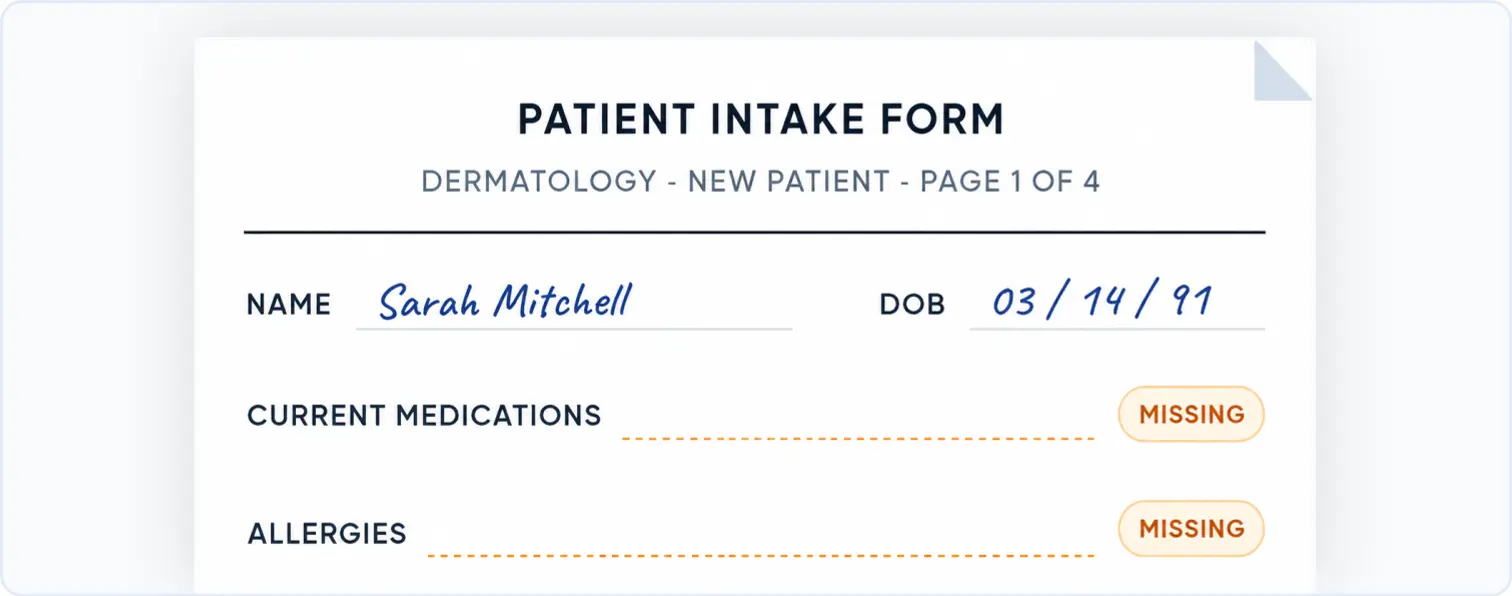
A routine medical follow-up, cosmetic consultation, and procedure-related visit can require different forms, consents, insurance details, and payment context. Paper packets and generic workflows push that complexity onto staff.
Staff spend arrival time finding missing fields instead of moving the visit forward.
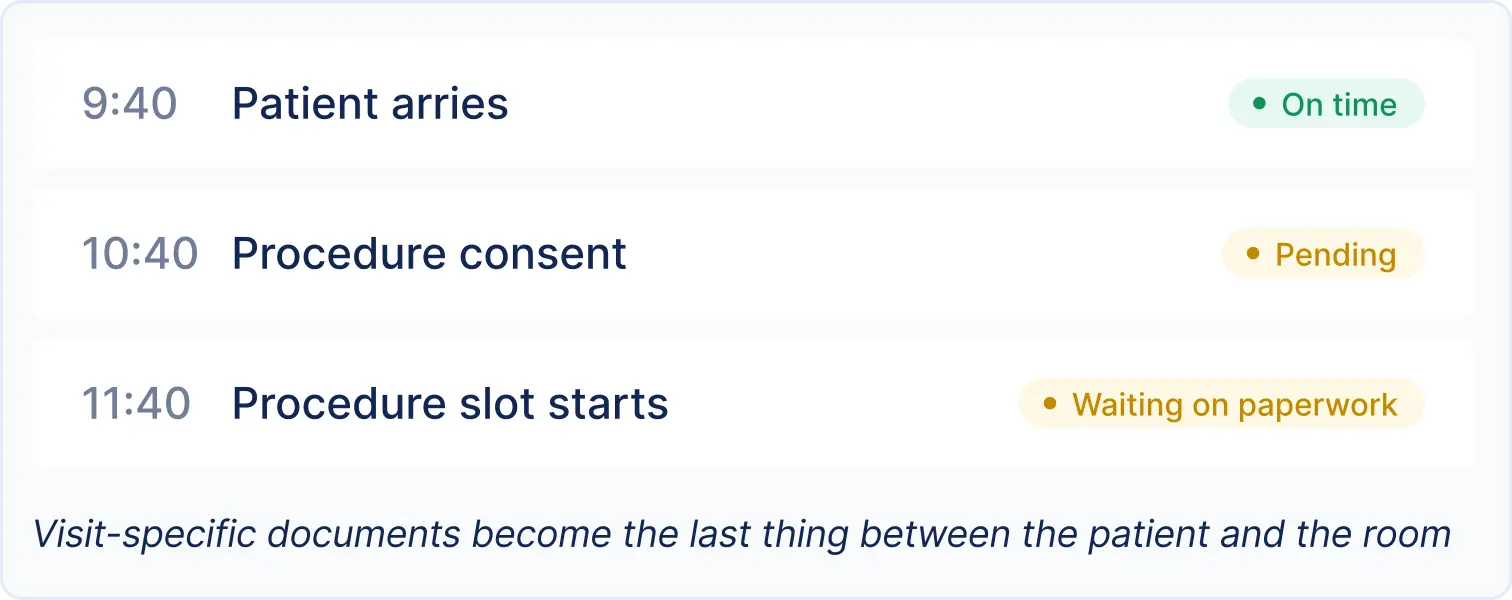
Procedure and visit-specific documents become a same-day bottleneck.
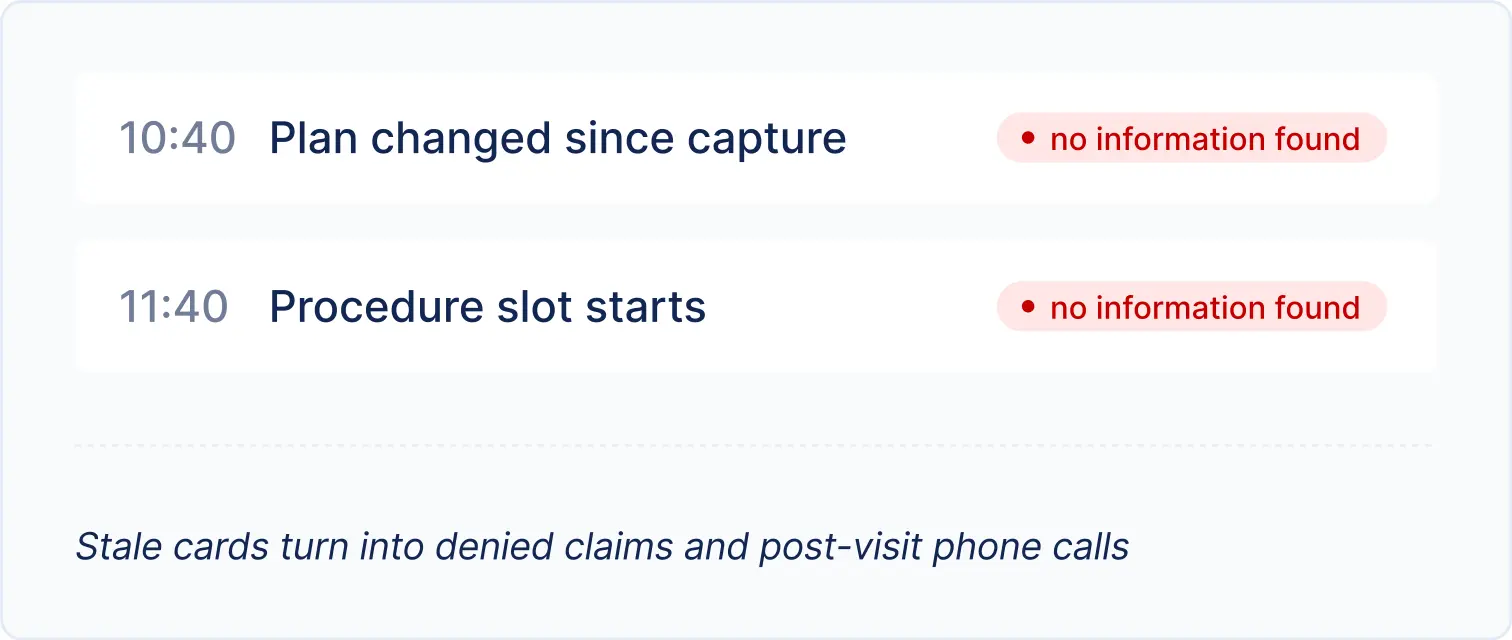
Card updates and coverage questions surface too late for clean follow-up.
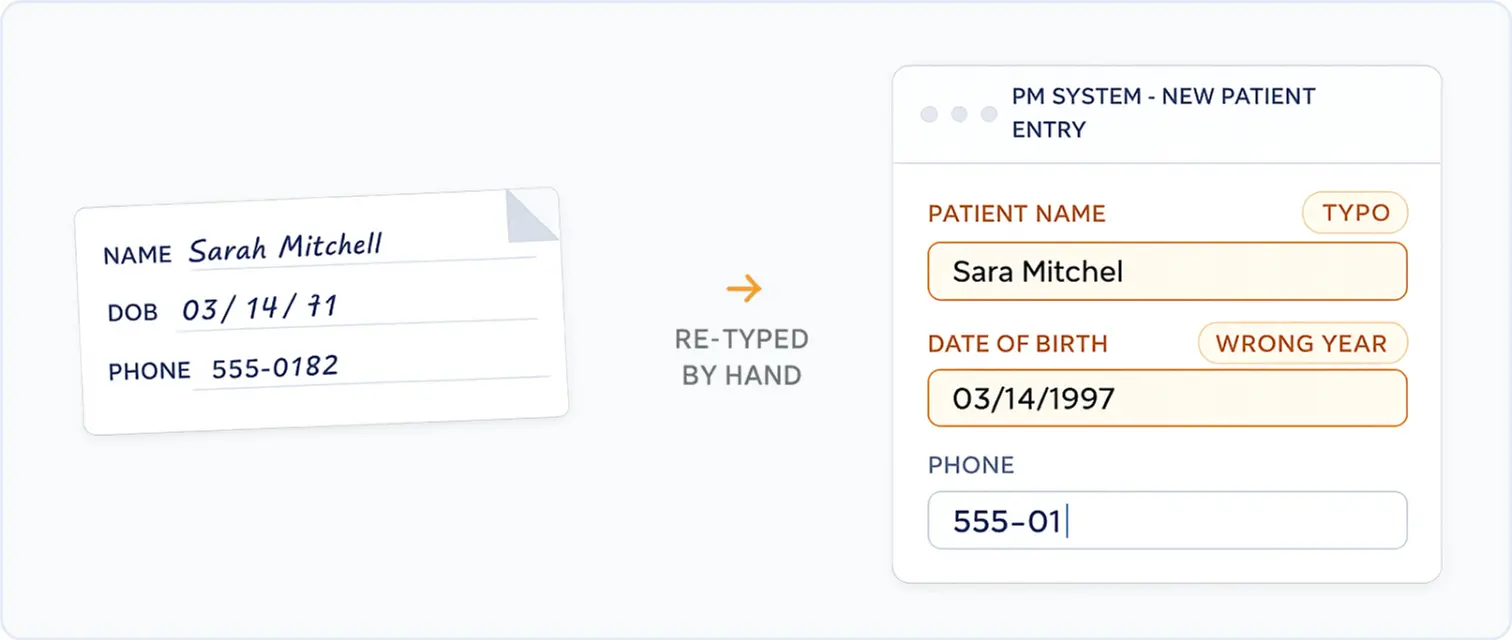
Manual transcription adds time and introduces avoidable error.
Different visit needs are harder to manage when one intake flow serves everything.
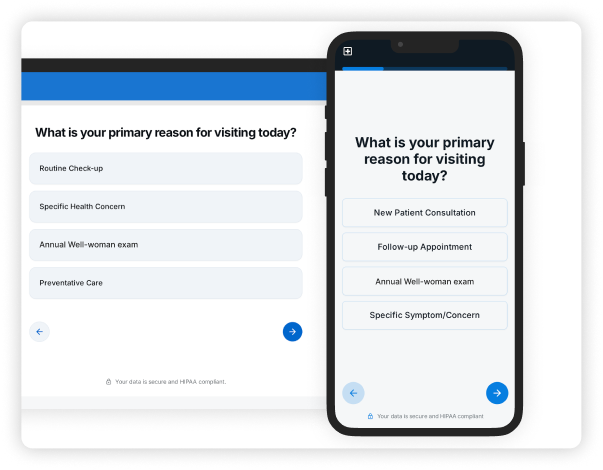
Let patients complete required information before arrival on a familiar device.
Give on-site patients a self-service path when pre-registration is incomplete.
Collect required signatures electronically and keep completed documents available to staff.
Let patients scan or upload cards through supported workflows.
Review coverage information earlier where configured.
Give staff a clearer view of what is complete, incomplete, or still needs attention.
From the moment the appointment exists to the moment the patient reaches the desk, every step hands off to the next.
Patients receive a link by text or email after the appointment is created or when staff trigger the workflow.
sent automatically on creation OR triggered by staff, any time
Patients complete demographics, forms, consent, and insurance updates based on the configured path.
ID and insurance cards can be uploaded or scanned where enabled.
Reminders and staff visibility help focus follow-up on incomplete items.
Maria P.Full-body exam · 2:00 PM
100%
ready
James T.Biopsy · 2:30 PM
66%
consent pending
Anita K.Cosmetic consult · 3:10 PM
83%
insurance updated
Patients can move to kiosk, tablet, QR/contactless, or staff-assisted workflows without treating intake as a separate process.
Outcomes from a high-volume, multi-location outpatient deployment. The metrics below show how connected workflows performed at scale; results reflect a specific deployment and are not a guarantee of future performance.
Completion reached 88% for new patients, 87% for returning patients, and 73% among patients age 75+, showing adoption across age groups.
Form completion rose from below 25% to nearly 90%, moving required information earlier and reducing paper-driven follow-up.
Contact-data accuracy improved from roughly 50% to 98%, giving teams a cleaner base for reminders, outreach, and follow-up.
Patients chose self-service check-in at scale, reducing dependence on staff-assisted intake while maintaining a clear path for people who still need help.
Use workflows that reflect the information and consent needs of different visit types.
Move patient-submitted information into connected workflows instead of re-keying paper.
See what is incomplete before the waiting room becomes the deadline.
Support patients who prefer mobile, web, kiosk, tablet, or staff help.
CERTIFY Health dermatology patient intake software connects digital intake, visit-type forms, eConsent, ID and insurance capture, eligibility context, reminders, check-in, communication, and payment readiness for medical, cosmetic, procedure, and follow-up visits.
The dermatology EHR, clinical charting, triage, diagnosis, and treatment documentation stay in the clinical system. CERTIFY Health strengthens the patient-facing intake workflow around those systems so staff can see what is complete, missing, or changed before arrival.
Medical, cosmetic, and procedure-related visits can require different forms, consent, insurance details, and preparation steps.
The value is not simply digital submission. Teams need visibility into incomplete or changed information before arrival.
Mobile, web, kiosk, tablet, portal, and staff-assisted workflows should support the same operating process.
Forms, insurance capture, eligibility, check-in, communication, and payments should move as one workflow instead of isolated tasks.
Bring visit types, current forms, consent requirements, insurance-update process, check-in channels, systems in use, and the intake points that create the most manual follow-up.