
Prepare the first visit well, then keep updates and next steps visible across a recurring series without replacing the therapy documentation system.
90 seconds · nothing rebuilt
From the couch, night before
Series intact · 5 for 5
Outpatient rehab depends on repeated attendance. First-visit paperwork matters, but so do recurring reminders, changing insurance information, consent, and patient responsibility across the episode of care.
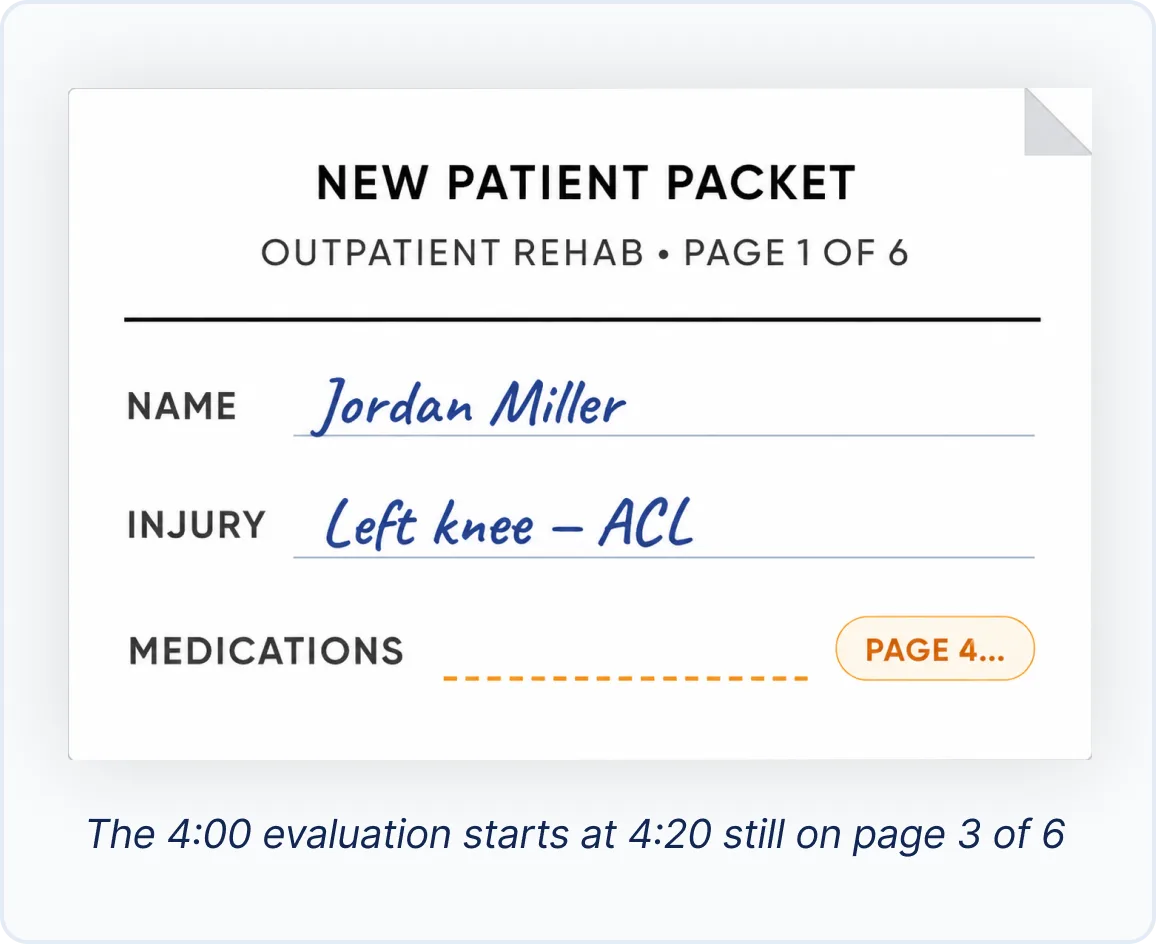
Long forms consume arrival time and delay an already structured schedule.
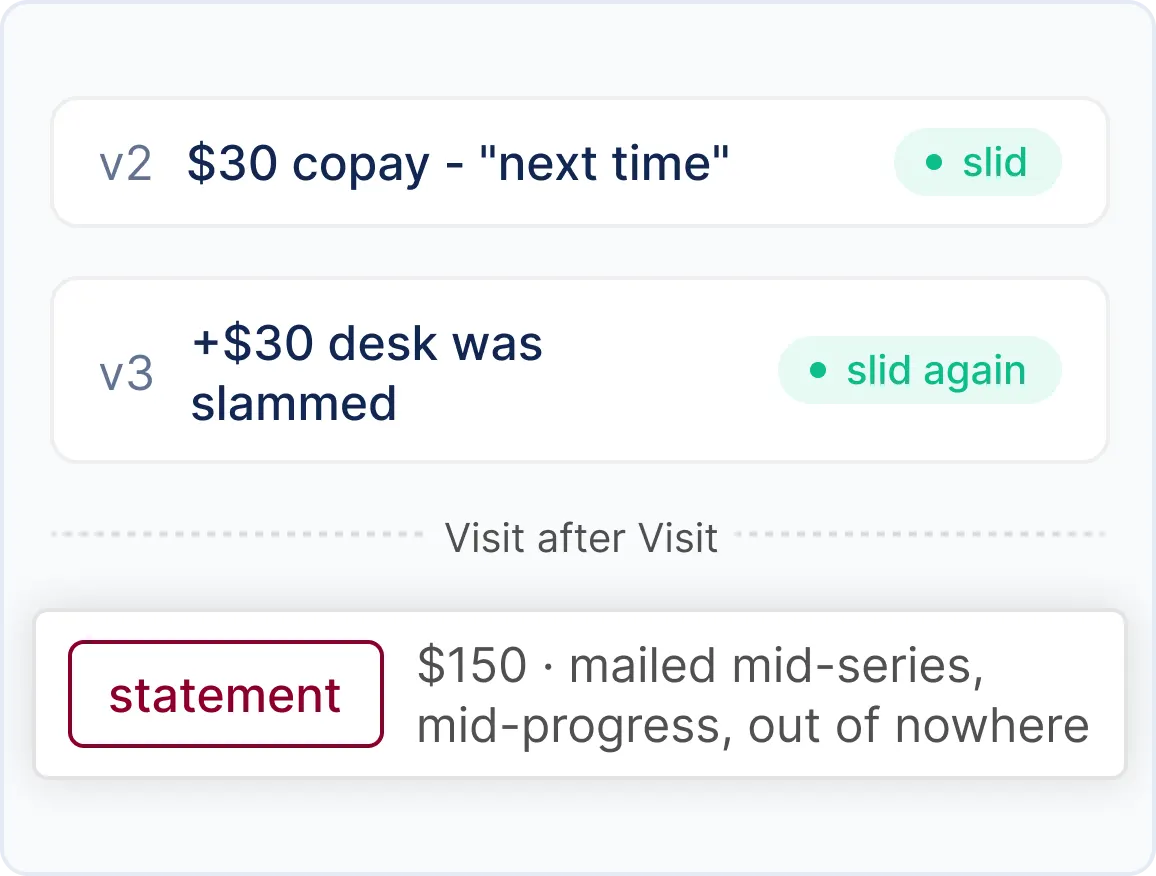
Balances become harder to address when payment communication is disconnected from the visit series.
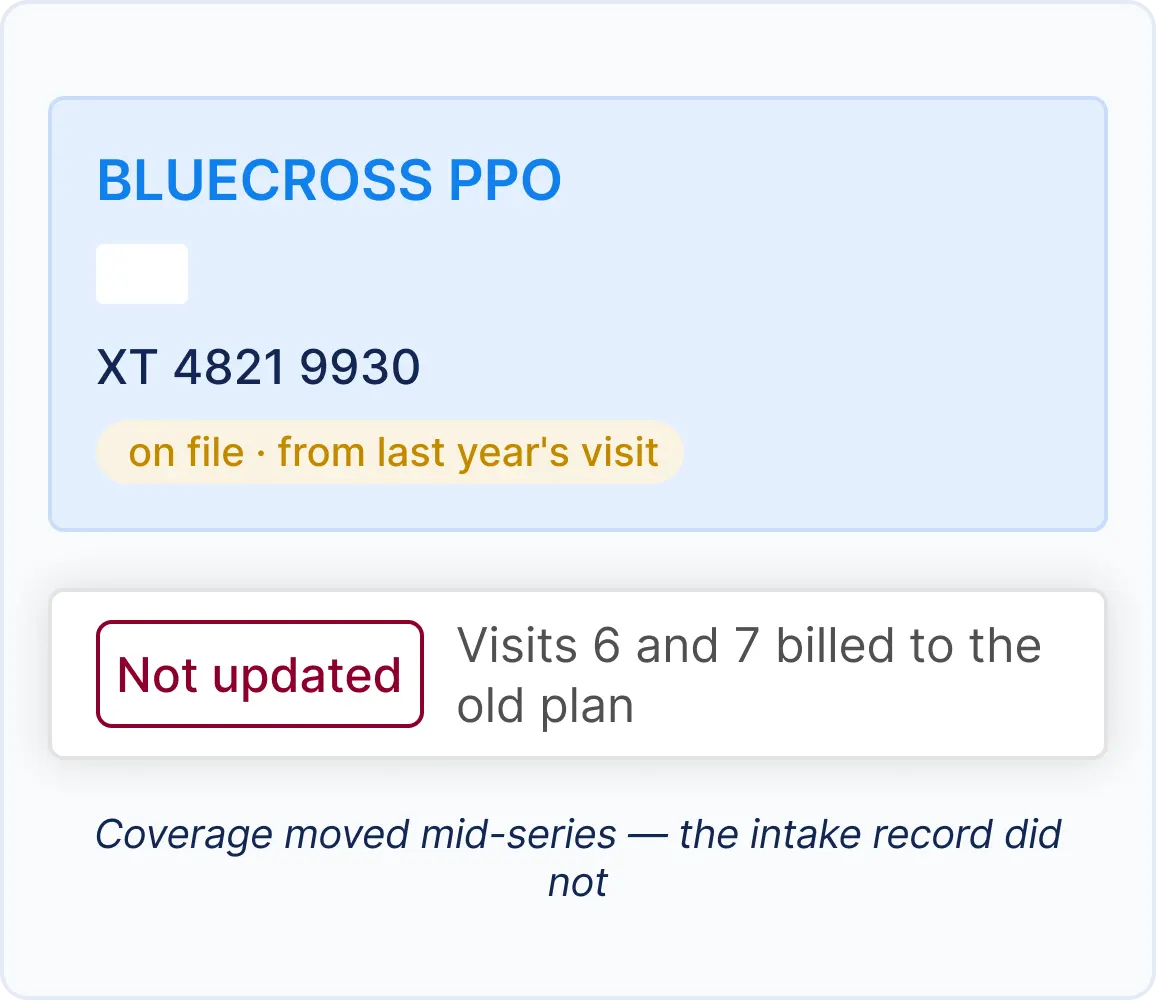
Insurance or authorization context can change while visits continue.
Patients and staff revisit the same information without a clean update path.
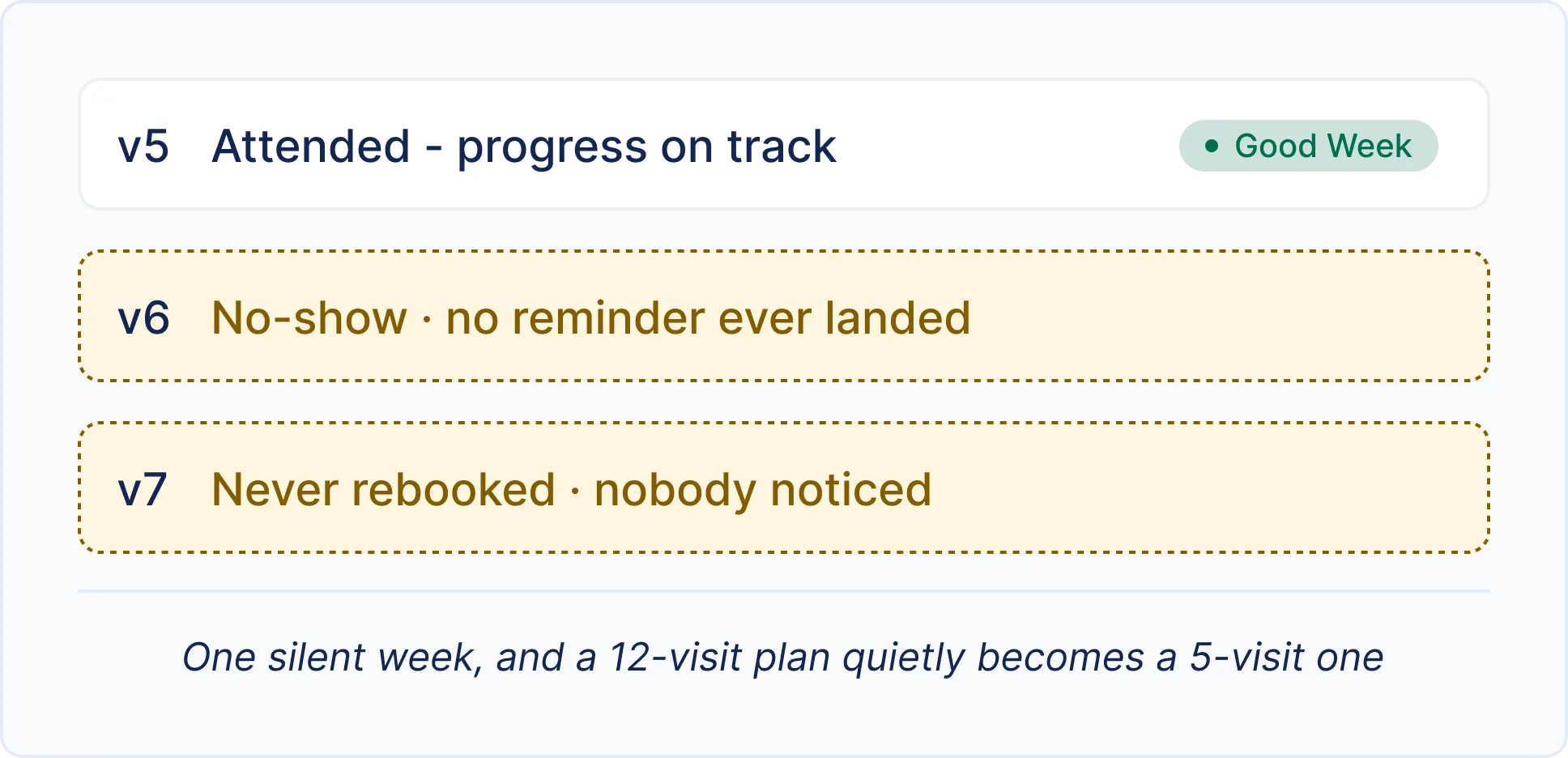
A recurring schedule creates more opportunities for drop-off.
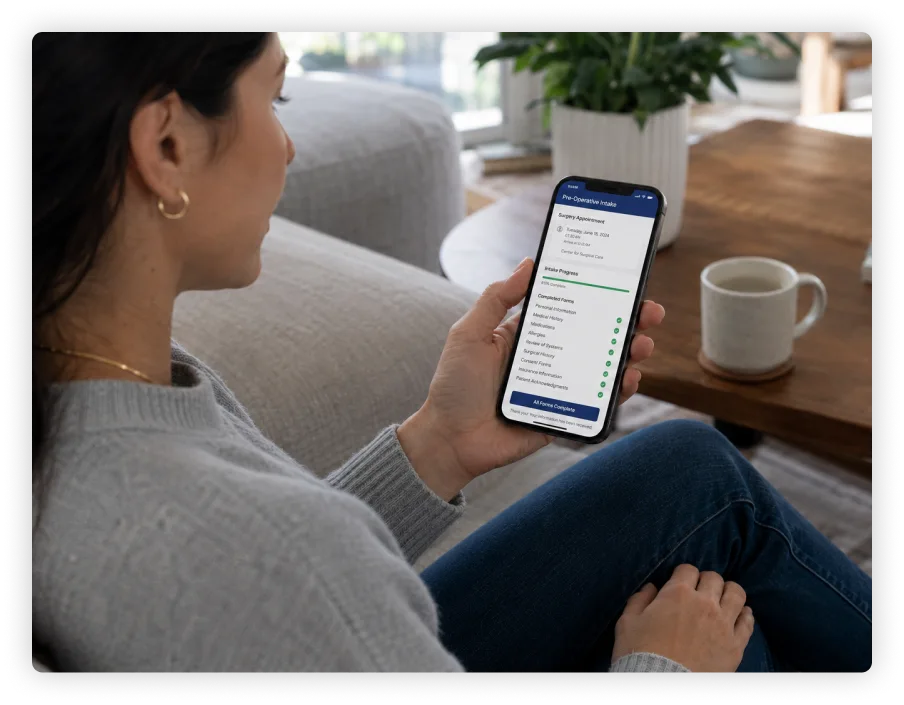
Collect demographics, forms, consent, and insurance information before arrival.
Coordinate repeat visits where configured.
Give patients a path to update coverage information during the episode.
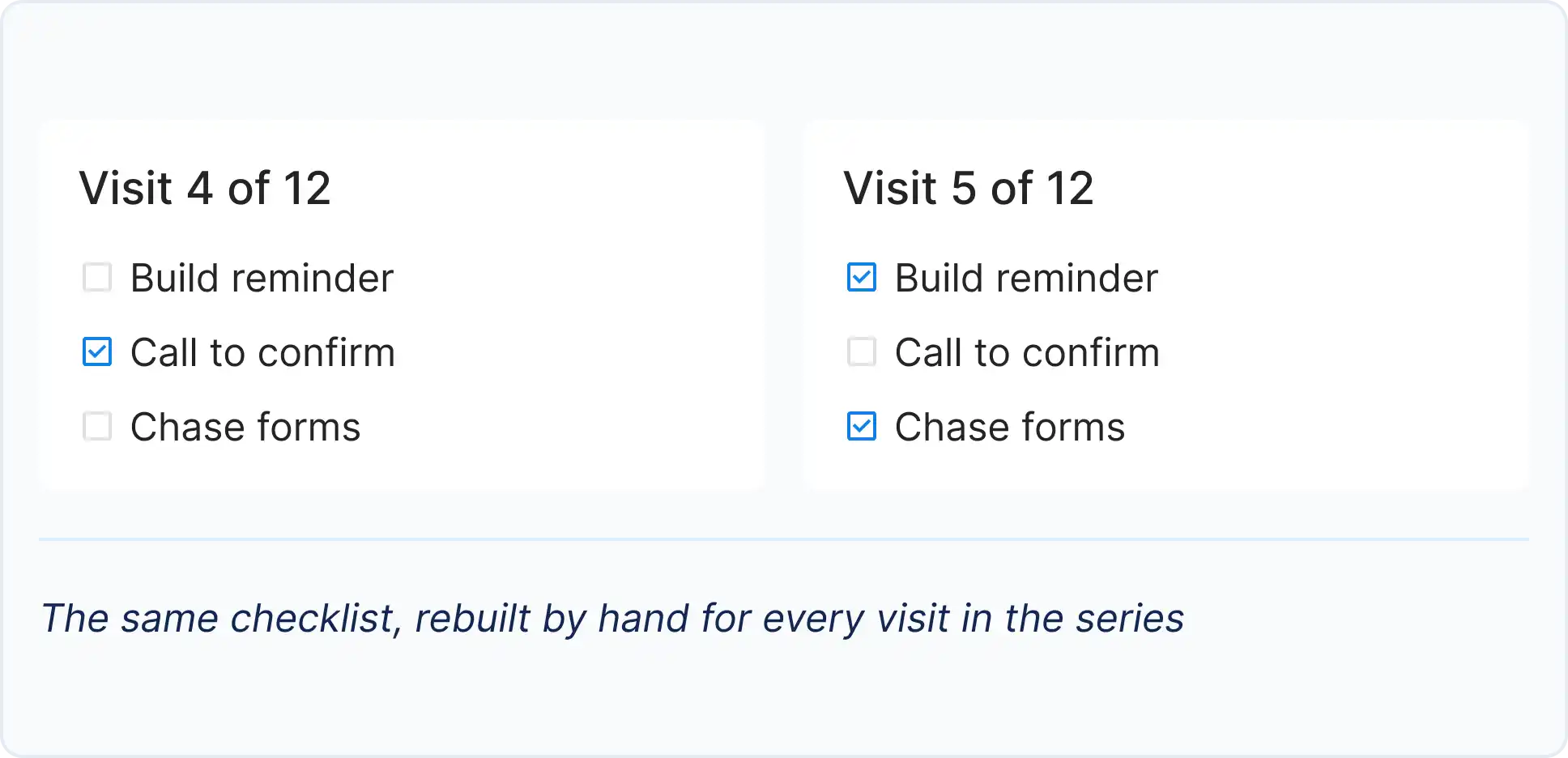
Keep recurring appointments and unfinished tasks visible.
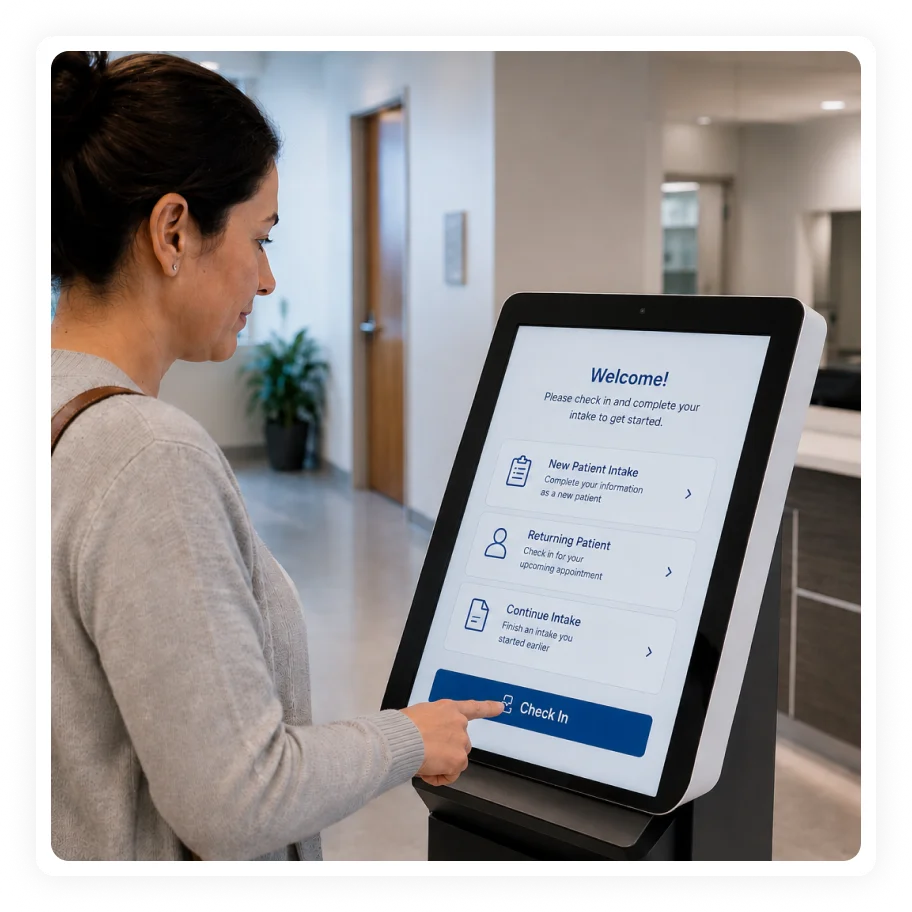
Support mobile, kiosk, tablet, QR/contactless, and staff-assisted workflows.
Carry copays, balances, payment links, and other configured payment steps through the patient journey.
Send forms, consent, and insurance workflows before arrival.
Staff see pre-registration status and focus on missing items.
Maria P.Evaluation · 4:00 PM
100%
Ready
James T.Evaluation · 4:40 PM
82%
1 form open
Anita K.Evaluation · 5:20 PM
64%
consent pending
Patients use the available channel to finish what remains.
Reminders and communication support the next appointment in the series.
Insurance and patient details can be reviewed without rebuilding the intake process from zero.
Outcomes from a high-volume, multi-location outpatient deployment. The metrics below show how connected workflows performed at scale; results reflect a specific deployment and are not a guarantee of future performance.
Completion reached 88% for new patients, 87% for returning patients, and 73% among patients age 75+, showing adoption across age groups.
Form completion rose from below 25% to nearly 90%, moving required information earlier and reducing paper-driven follow-up.
Contact-data accuracy improved from roughly 50% to 98%, giving teams a cleaner base for reminders, outreach, and follow-up.
High-volume communication ran at scale with more than 50% open rates, supporting reminders, follow-up, and next-step completion.
Move forms and consent earlier.
Give patients a better way to review changing information.
Use reminders and status visibility across repeated visits.
Link eligibility and payment readiness to the patient journey where configured.
CERTIFY Health physical therapy intake software connects digital intake, patient history, forms, consent, ID and insurance capture, eligibility context, reminders, recurring appointments, check-in, communication, and payment readiness around the therapy episode.
The therapy EMR, plan-of-care documentation, outcome tracking, clinical notes, and billing system stay in their clinical and billing workflows. CERTIFY Health strengthens intake around those systems so recurring care starts with cleaner information, fewer manual handoffs, and better visit readiness.
Forms, consent, demographics, ID, and insurance information should not consume the evaluation slot.
Returning patients should be able to review or update what changed without rebuilding the entire record.
A repeated visit series needs clear communication and visibility into missing steps across the episode.
Coverage changes and recurring responsibility are easier to manage when they are not separated from intake and communication.