

Medical Practice Management Software: The Complete Guide for 2026
Physicians spend two extra hours daily on EHR and desk work. Patient care suffers. Practices lose revenue.
Medical practice management software was built to fix that.

Physicians spend two extra hours daily on EHR and desk work. Patient care suffers. Practices lose revenue.
Medical practice management software was built to fix that.

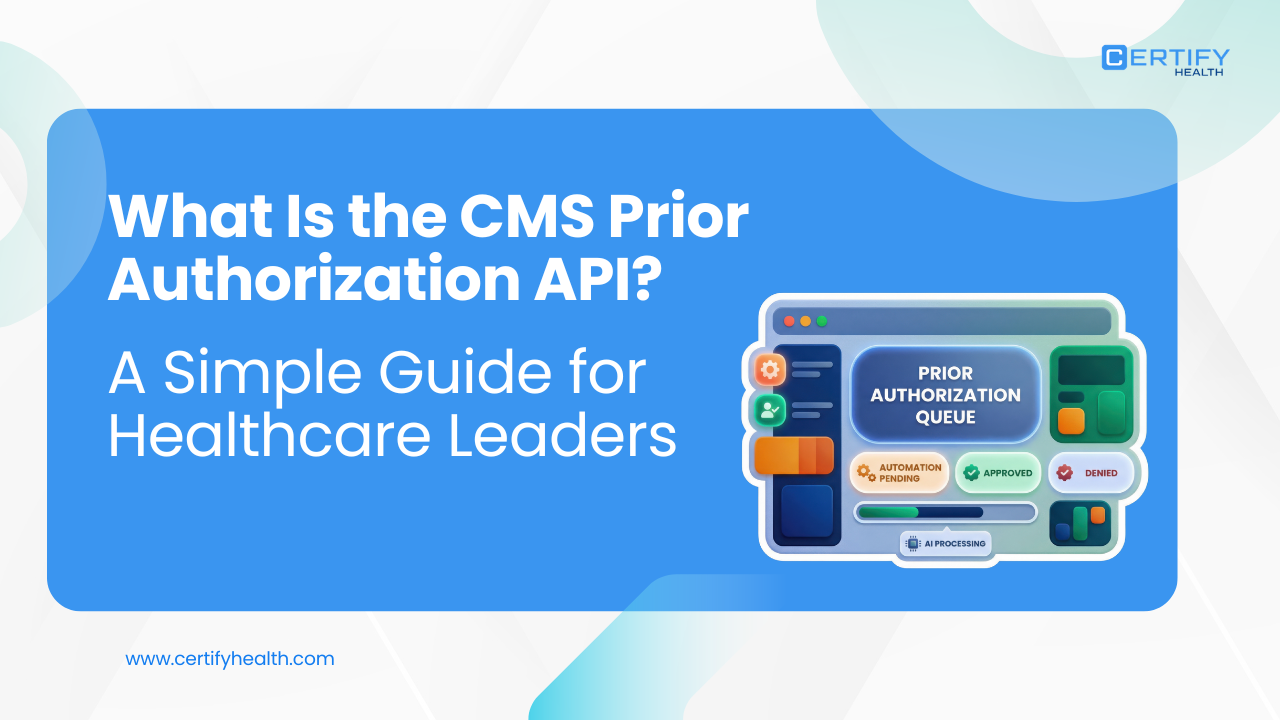
Prior authorization is bleeding American healthcare dry. The system loses $34.5 billion every year to PA-related admin work. Physicians spend 45 hours a week chasing approvals. That’s a full workday – every single week – just on paperwork.
By 2034, about 7.5 million more people may lose their health insurance. That’s due to new work rules and eligibility checks. States must follow these changes.

Healthcare data integration solutions are changing how clinics care for patients.
This use case shows how an outpatient clinic fixed data silos in healthcare.
Their journey from disconnected to connected systems with CERTIFY Health’s Healthcare Interoperability Platform

In 2026, the U.S. is short nearly 96,000 full‑time physicians. That alone would be enough to strain any system. On top of that, more than half of healthcare workers are thinking about leaving their jobs. Many health systems have already cut headcount by 15–20% this year. Nonprofit systems have removed dozens of roles across sites, just to stay afloat.

75% of physicians report more prior auth denials over the past five years.
The fix? Using interoperability standards in healthcare and prior authorization automation.
That’s where FHIR comes in.
FHIR (Fast Healthcare Interoperability Resources) is a next-generation standard for healthcare data exchange. It helps systems share data through FHIR APIs. These APIs make FHIR data exchange fast and reliable.

43. That’s how manyprior authorization requests the average physician completed every single week in 2024.

At HIMSS 2026, leaders said it over and over. “We have the data. We can’t see everything in one view.”

Healthcare in the U.S. loses an estimated $1 trillion annually to inefficiency, with roughly ~25% of spending tied to waste that improved healthcare interoperability and shared electronic platforms could cut.

Healthcare organizations generate massive volumes of clinical data, but much of it remains trapped in disconnected systems. A national study analyzing 2,420 U.S. hospitals found that while 71% of hospitals can electronically access patient information from external providers, only 42% routinely use that data in clinical care due to persistent interoperability barriers.

Healthcare interoperability is the ability of different healthcare systems, applications, and devices to exchange, interpret, and use data in a coordinated way that supports patient care, operations, and reporting. Healthcare interoperability is not just about moving data; it is about making that data understandable and actionable wherever a patient shows up.