
Table of Contents
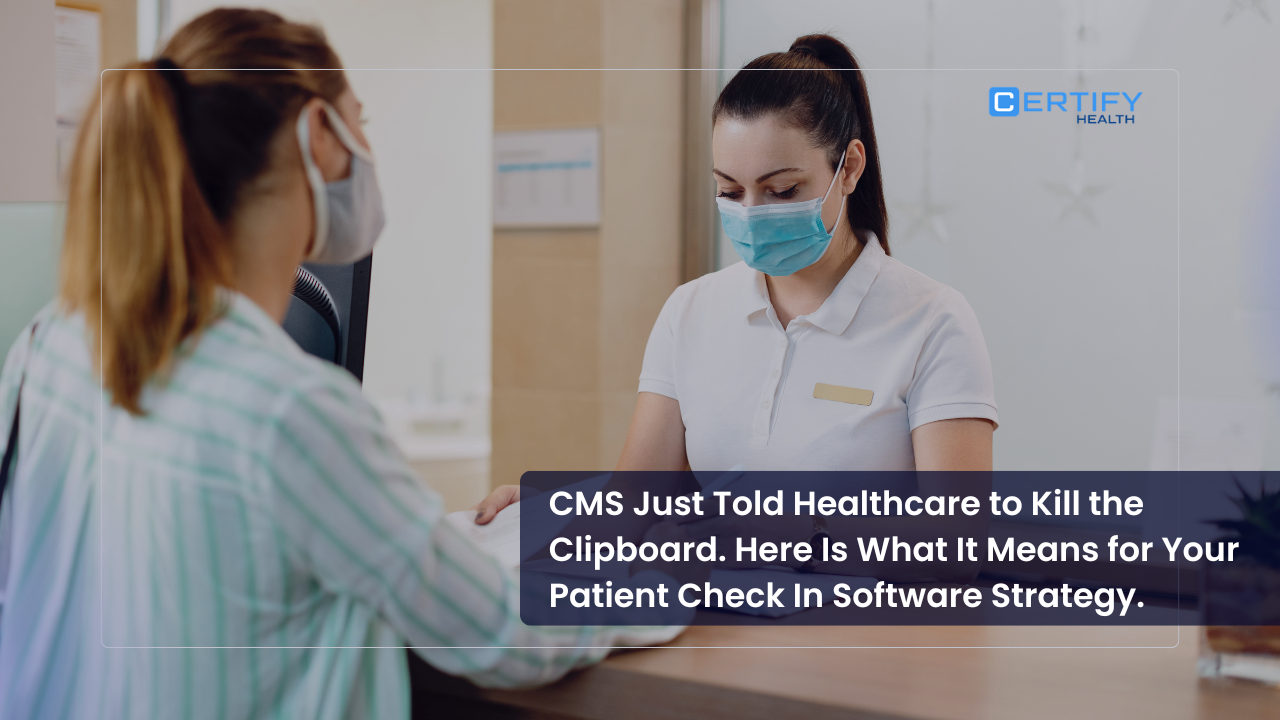
Paper intake forms now have an end date. CMS released the first wave of its HealthTech Ecosystem on April 9, 2026, as part of a nationwide effort to transition healthcare away from clipboards, fax machines, and repetitive paperwork. They called it “Kill the Clipboard.“
More than 700 organizations have committed support. Over 50 companies demonstrated tools at the April 9 launch. Over 120 digital health products are active or nearly finished. This is neither a pilot nor a proposal. The federal government is delivering a clear message: paper-based intake is running out of time.
If your clinic still gives patients clipboards at the front desk, now is the time to pay attention. The right patient check in software is no longer a back-office upgrade – it is what the federal government is now pointing your patients toward.”
What CMS Actually Launched
The CMS HealthTech Ecosystem connects the federal government and the health technology industry. The basic concept is straightforward: people should obtain their health records and share them with any provider – no printing, no filling out the same form twice.
The “Kill the Clipboard” commitment is the important component. Groups that sign on agree to allow patients to share health data at check-in via QR code or Smart Health Card. No paper. No re-entry. No one typed in what the patient wrote in their automobile.
CMS head Dr. Mehmet Oz said it plainly at the launch: “For too long, Americans have had a health system that falls behind the tools they use every day.”
That is not directed at software corporations. It is aimed at practices that still use paper in 2026. The message is clear: patients expect more, and the old manner is no longer effective
What This Means for Your Patient Check In Software and Front-Desk Workflow
Federal ambitions often seem far distant. This one isn’t. It has immediate, practical implications for outpatient and clinic workflows.
Patient expectations are changing fast. Patients check in at airports using their phones. They schedule laboratory testing online. They receive text reminders. When CMS launches a nationwide push for digital check-in, it accelerates a trend that was already underway. Patients who encounter a paper clipboard at your front desk will take attention. This difference is significant in a competitive market.
Front-desk hold-ups are a workflow problem, not just a patient one.
Paper forms always produce the same sequence of delays. The patient completed the form. Staff read the handwriting. Someone types the information in. Errors creep in. Records become thin. The doctor goes in without knowing the whole tale. Digital patient intake addresses this issue. Patients enter their information before they arrive. It goes directly into the chart. Your employees can focus on the tasks that require them.
Staffing pressure makes this more urgent.
Most practices are lean. Front-desk workers handle phone calls, check-ins, scheduling, and billing all at once. Manual data entry is simple to automate. When practices go digital, this is generally the first place they look to reclaim staff time.
Why Upgrading Your Patient Self Scheduling Software Is Pivotal
Healthcare follows a similar tendency when it comes to new instruments. A new workflow appears. Early adopters attempt it since the case is clear. The results improve. The rest of the field follows, some driven by data, others by patients or payers.
A rule prevented practices from implementing patient self-scheduling software at an early stage. They did it to reduce no-shows, call volume, and fill more spots. The results came following the move. The same holds true here.
Practices that employ digital check-in workflows now, before they become the norm, will have a smoother launch, higher staff buy-in, and a head start on the advantages. Practices that wait will implement the same tools under increased stress, with less opportunity to learn and change.
CMS is not yet enforcing anything. However, 700 groups supporting a federal drive is significant news. It is the industry informing you where things are going.
How CERTIFY Health's Patient Check In Software Delivers This Today
CERTIFY Health designed its patient check-in software around the same model that CMS now supports. Patients complete their paperwork online before arriving. The check-in procedure takes seconds. No clipboards. No repeated questions. There is no need for personnel to re-key data that the patient previously provided.
Patients who want to check in on-site can do so using the platform’s self-service kiosk, which is completely digital and requires no preparation. And because CERTIFY Health integrates with your practice management software, your scheduling, intake, and invoicing are all in sync. Your staff will never need to touch that data again.
CMS is now pushing the rest of the industry to replicate what CERTIFY Health has previously accomplished. That is not a coincidence. It demonstrates where the sector has been heading – and where CERTIFY Health has worked for years
The Bottom Line
The “Kill the Clipboard” button sends a clear signal. Federal agencies do not conduct nationwide campaigns over minor issues. When CMS draws in 50+ firms, receives 700+ pledges, and brands a movement, the message is clear: digital intake is not optional. It is the direction.
You do not have to wait for a rule to make the change. Digital check-in is a self-sufficient payment method. Reduced wait times. Cleaner data. Less stress for your employees. Provide better care for your patients. The CMS push only makes the case harder to ignore.
From patient self scheduling software to digital intake, the practices moving fastest are the ones building the full pre-visit journey.
The clipboard’s days are numbered. Practices that move now will be ready.
Get to know how CERTIFY Health’s digital intake already delivers what CMS is promoting.