

Table of Contents
Key Takeaways:
- Ambulatory clinics that personalize communication, care plans, and digital workflows see higher satisfaction, stronger adherence, and better long-term outcomes.
- Tools like portals, reminders, two-way messaging, and automated follow-ups reduce no-shows, boost clarity, and help patients feel informed and supported.
- From SDOH-driven personalization to secure communication and automated workflows, CERTIFY Health helps practices deliver continuous, connected, patient-first care.
Introduction
As per study, patients in public hospitals are 2.9× more likely to say their care isn’t patient-centered.
And patients who don’t receive medication information? They’re 2.88× more likely to rate their experience as poor.
Moreover, when simply getting to the hospital feels difficult, patients are 2.76× more likely to feel the care isn’t centered around them.
These numbers say one thing clearly: Today’s patients expect care that treats them as individuals and not just as an appointment on a schedule.
Patient-centered care (PCC) is the foundation of modern ambulatory outpatient care, shaping everything from patient satisfaction scores to clinical outcomes, and giving practices a real competitive edge.
Do you also want to transform patient relationships, outcomes, and your business? Then you are at the right place, here we will tell you exactly how patient-centered care works, why it matters for every ambulatory clinic, and proven tactics that today’s leading practices use to drive measurable benefits.
Patient-Centered Care Definition in Ambulatory Healthcare
What does patient-centered care mean in ambulatory settings?
The short answer: Patient-centered care means treating people like partners, not just patients. Instead of providers making all the decisions, both sides work together to choose care that fits the person’s goals, lifestyle, and values.
In the context of ambulatory outpatient care, this means giving patients more control, more choices, and more consistent feedback loops, essential for everything from chronic care management to post-op recovery.
Practices that prioritize patient-centered care see big jumps in satisfaction and retention, directly impacting the bottom line.
Importance of Personalized Care to Improve Patient Satisfaction and Outcomes
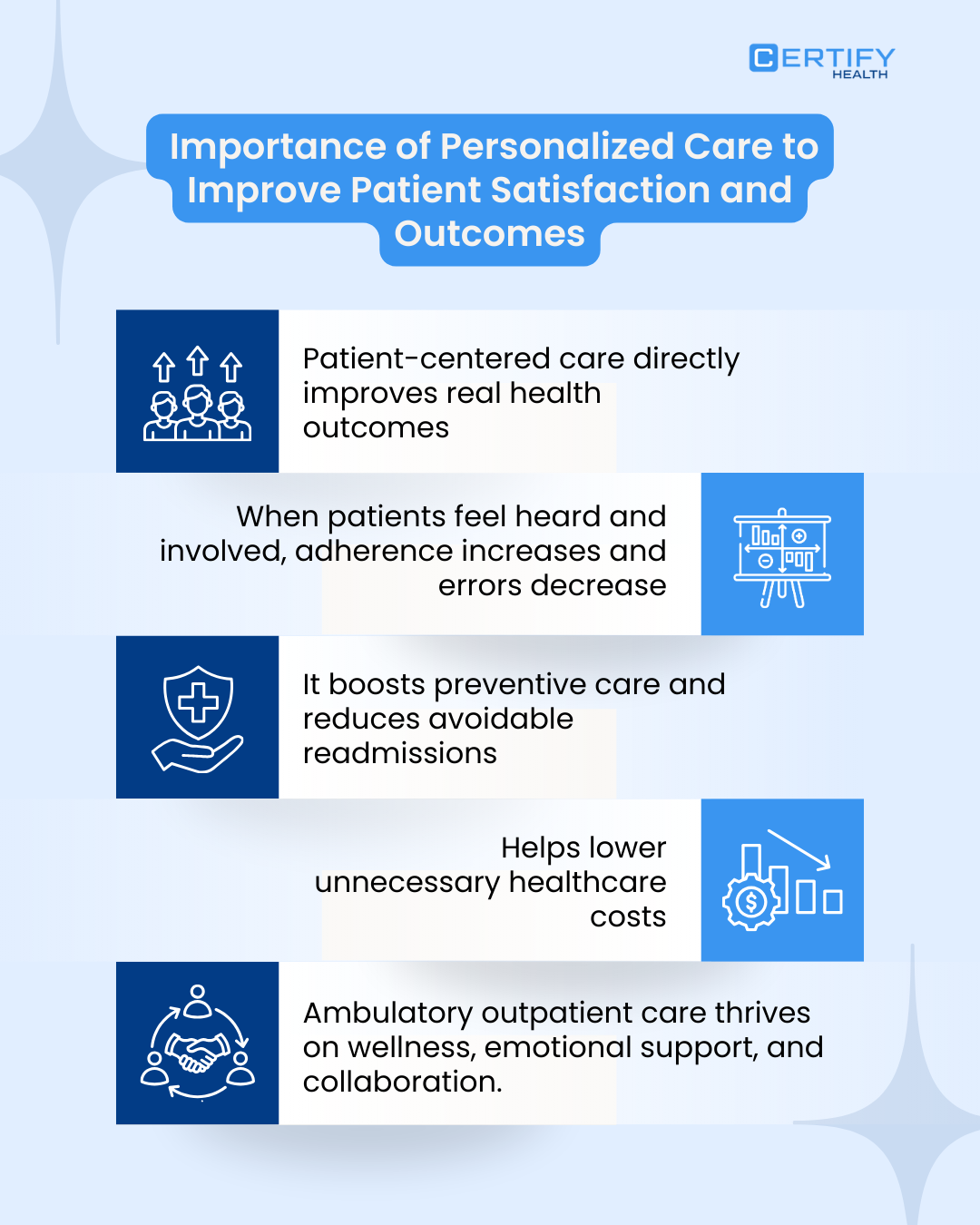
Personalized patient-centered care isn’t just a feel-good philosophy; it’s an evidence-based approach that shapes real health outcomes.
According to the Journal of Evidence Based Medicine and Healthcare – When patients feel genuinely heard, informed, and involved in decisions, they’re more likely to follow treatment plans, experience fewer errors, stay healthier, and remain loyal to their care providers.
Patient-centered care also strengthens preventive care and care coordination, reducing avoidable costs and lowering the risk of unnecessary readmissions.
Ambulatory outpatient care thrives on these core values of person-centered care: individual wellness, emotional support, and collaboration.
Best Practices: Technology and Digital Engagement Elevate Patient Centered Care in Ambulatory Setting
TL; DR:
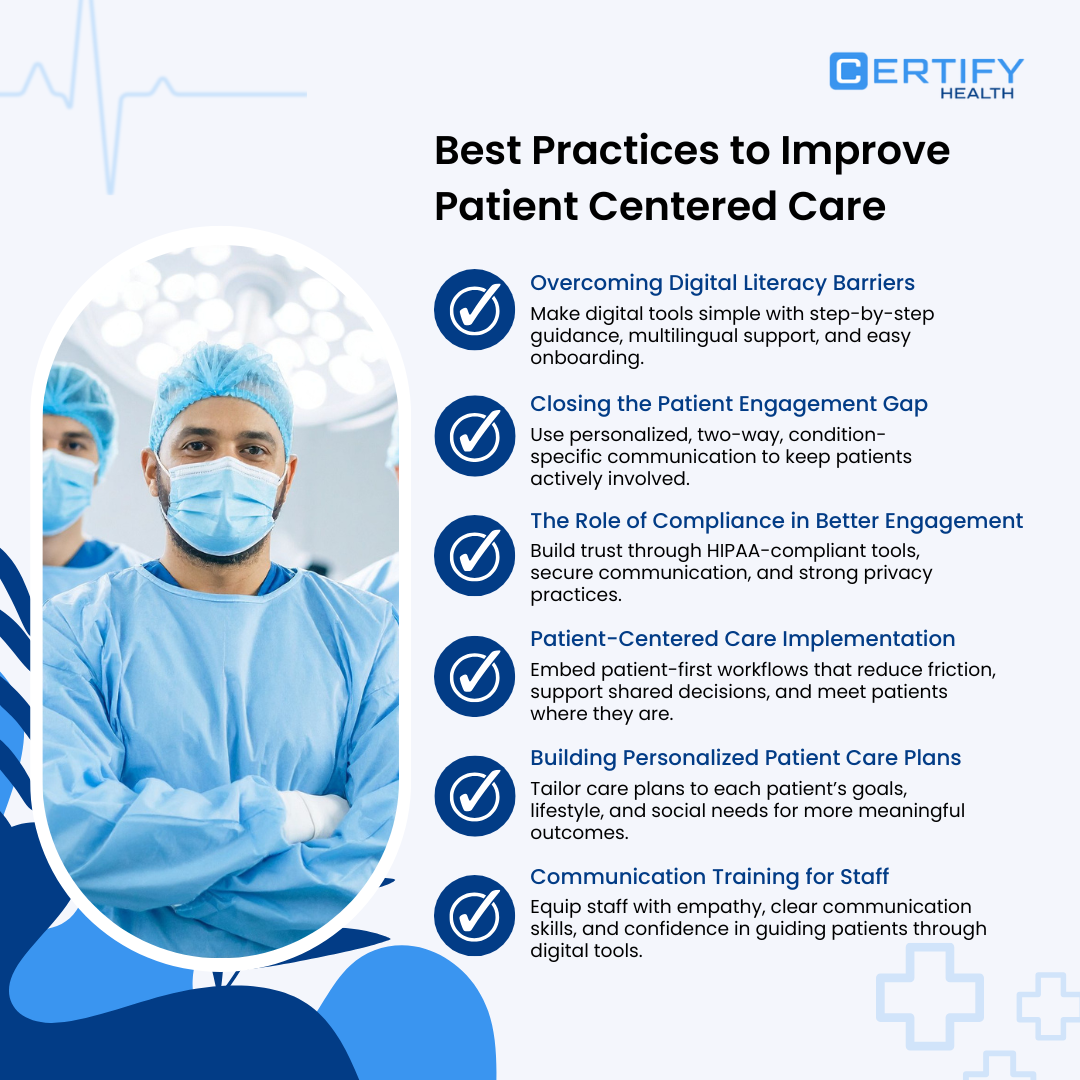
Best Practices to Improve PCC in Ambulatory outpatient care:
- Offer easy onboarding and simple guides to close digital literacy gaps.
- Send personalized, two-way reminders and targeted follow-ups.
- Build multi-channel access (phone, text, portal) to meet patients where they are.
- Capture SDOH and preferences up front to tailor individual care plans.
- Enforce HIPAA-grade security and regular compliance training to build trust.
- Train staff in empathy, plain language, and digital support skills.
- Use integrated tech (portals, remote monitoring, automated workflows) to reduce no-shows and boost outcomes.
Patients today expect healthcare to work like their favorite retail or travel apps – fast, intuitive, and personalized. In ambulatory care, embracing digital engagement is no longer optional; it’s the key to delivering care that feels human, connected, and convenient.
Here’s how modern practices can close patient engagement gaps and build a strong patient-centered ecosystem.
1. Overcoming Digital Literacy Barriers
Not every patient is comfortable with apps, portals, or online forms—and that’s one of the biggest roadblocks to engagement.
Best Practices:
- Offer step-by-step onboarding for portals and apps
- Provide multilingual “how-to” videos and simple digital guides
- Give patients live support or kiosk assistance at check-in
- Use plain language, not medical jargon
How CERTIFY Health Helps: Accessible patient portals, mobile-friendly workflows, and guided intake tools reduce friction for all age groups.
2. Closing the Patient Engagement Gap
When communication feels generic or inconsistent, patients tune out.
Best Practices:
- Send personalized reminders based on visit type, condition, or patient preferences
- Use two-way messaging to allow patients to ask questions in real time
- Deliver relevant post-visit follow-up content, not one-size-fits-all messages
How CERTIFY Health Helps: Intelligent messaging, multilingual reminders, and automated follow-up sequences keep patients connected between visits.
3. The Role of Compliance in Better Engagement
Trust fuels patient-centered care and nothing builds trust like strong privacy and compliance.
Best Practices:
- Ensure all digital interactions meet HIPAA and state-level regulations
- Train teams regularly on secure communication practices
- Use platforms with built-in audit trails and encryption
How CERTIFY Health Helps: It is built with enterprise-grade security, HITRUST standards, audit logs, and encrypted communication.
4. Implementing Patient-Centered Care Across the Clinic
A patient-centered strategy isn’t a single initiative; it’s a way of operating.
Best Practices:
- Embed “What matters to you?” into daily workflow conversations
- Encourage shared decision-making during treatment planning
- Offer multi-channel communication (phone, text, email, portal) to meet patients where they are
- Build workflows that minimize wait times and maximize clarity
5. Creating Individual Care Plans That Feel Personal
Every patient’s goals, lifestyle, and challenges are different.
Best Practices:
- Tailor care plans based on health goals, lifestyle needs, and cultural preferences
- Address social determinants like transportation, housing, and financial constraints
- Include family or caregivers when appropriate
How CERTIFY Health Helps: Digital intake captures SDOH (Social Determinants of Health), preferences, and care history upfront, powering more personalized care.
6. Communication Training for Staff
A patient-centered model fails without staff who know how to deliver it.
Best Practices:
- Provide training on empathy, active listening, and plain-language communication
- Teach staff how to guide patients through digital tools
- Reinforce a culture of curiosity: “What questions do you have?”
How Does Patient-Centered Care Improve Quality?
Key Ways Quality Gets Better:
- Earlier intervention through remote monitoring and symptom reporting
- Faster clarification of health concerns
- Reduced communication gaps between providers
- Fewer misunderstandings about treatment instructions
Conclusion
Patient-centered care isn’t a future goal, it’s today’s competitive advantage. As patient expectations accelerate, clinics that fail to modernize will fall behind.
With CERTIFY Health’s patient experience and practice management software leveraging digital engagement and workflow automation, practices can deliver faster, more personal, more connected care, right when patients need it most.