

Table of Contents
Walmart just made routine care easier to access. Through its Better Care Services platform, patients book a telehealth visit for $99. They speak with licensed doctors who review their health needs. If appropriate, the doctor writes a prescription – including GLP-1 medications. They pick up their medication the same day at one of nearly 4,600 Walmart pharmacies. Ninety percent of Americans live within 10 miles of a Walmart. That is a patient access problem for traditional practices-and it starts with whether your practice management software removes friction or creates it.
Walmart doesn’t need to replace complex clinical care. It only needs to be easier to access than your practice for routine needs. For many patients, it already is.
How Walmart Got Here
Walmart already tried the physical clinic model. It built health centres that offered primary care, lab services, X-rays, and mental health support. Then it closed all 51 of them by 2024. That looked like a failure. It was not. It was a reset.
Instead of running expensive clinics, Walmart leaned on what it already owned. A massive logistics network. A trusted consumer brand. Pharmacy locations in nearly every zip code. Better Care Services layers telehealth on top of that. Patients get a GLP-1 prescription or a chronic condition consult from their phone. They pick it up at Walmart the same day.
This model will not replace your cardiologist. But it does not need to. It competes for routine, high-volume visits-and those are the financial core of most outpatient practices. Think weight management consults. Prescription refills. Preventive care follow-ups. Chronic condition check-ins. That is the revenue at risk.
Where Your Practice Is Exposed
Here is what a patient does to book a routine visit at most practices today. They call during business hours. They wait on hold. They answer intake questions on the phone-and then again on paper at the front desk. They wait 10 to 14 days for an open slot. They leave not knowing what they owe. A bill arrives weeks later.
That process worked when patients had no other option. They have one now. And it takes five minutes on a phone.
The friction lives in three places, and each one costs you patients.
First, Scheduling Access. Patients who cannot book online will not wait – they will go elsewhere. Healthcare scheduling software that requires a phone call loses patients at step one. Patient self-scheduling software fixes this by letting patients’ book when it suits them, not when your front desk is free.
Secondly, Intake delays compound the problem. Paper forms waste time, and pre-visit phone calls waste more. When a form arrives after a patient check in, the entire check-in queue stalls. Every patient behind that one waits longer. Intake and scheduling need to connect, and when they do not, staff fill the gap by hand – which means more errors, more delays, and more cost every single day.
Pricing opacity is the third gap. Walmart charges $99, and patients know that before they book. If a patient cannot find out what they owe before their visit, they will simply pick the option that tells them upfront. Transparency is no longer a courtesy – it is a competitive requirement.
These are not minor inconveniences. They are the reason a $99 telehealth visit looks like the better choice
What You Need to Fix
You do not need to be Walmart. You just need to be easier to use than Walmart. That starts with removing the friction your patients run into before they ever arrive.
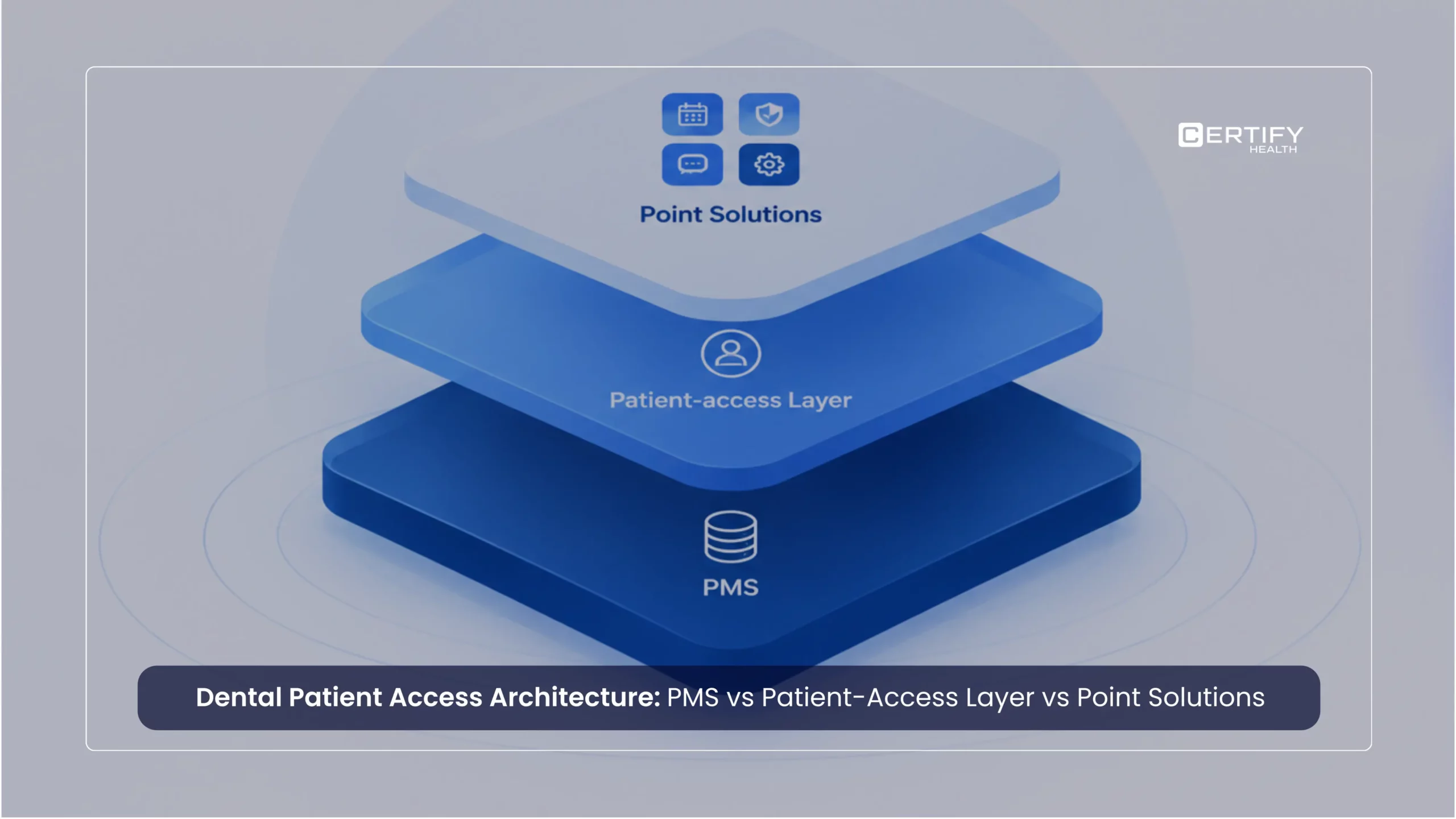
That is what practice management software does. It ties scheduling, intake, communication, and billing into one flow. Patients book online. They fill out forms before they arrive. They get reminders automatically. They know what they owe before the visit. No phone calls. No paperwork chases.
The problem starts when these tools do not connect. Staff end up filling the gaps by hand. At 20 patients a day, that is doable. At 60, it breaks down. Every manual step creates a delay. Every delay backs up the patients behind it. That is how disconnected systems lose you volume-slowly, then all at once.
Your systems either solve this or they do not. Patients are comparing options. There is no in-between.
Scheduling is the first thing a patient hits. If it requires a phone call, they may not call. If it means a 10-day wait, they may not wait. Online self-scheduling is not a bonus feature anymore. It is the floor.
How CERTIFY Health Helps
https://www.certifyhealth.com/ gives practices a connected platform that covers the full patient journey. Patients book online at any time through the self-scheduling platform. They fill out forms before they arrive through the patient intake solution. They get reminders automatically. No staff follow-up needed.
https://pay.certifyhealth.com/ handles the money side. Patients see what they owe before the visit. They pay at the point of service through the patient scheduling and payment workflow. No surprise bills. No statements arriving weeks later.
This is how a traditional practice stays competitive. Not by cutting prices. By making every step-from booking to payment-easy to complete.
Who Feels This First
The practices most at risk are those with high chronic disease, weight management, or prescription-management volume. That is exactly who Walmart’s GLP-1 platform targets.
If a patient can book tonight, get a prescription tomorrow, and pick it up on the way home-all for $99-your routine visit has to justify the extra steps. That case gets harder every month the convenience gap stays open.
The practices that act now will hold their volume. The ones that wait will face a harder reversal-because patient habits, once formed, are difficult to change.
Schedule a patient experience assessment to see where your practice can close the convenience gap.