
Vs SolutionreachSolutionreach and CERTIFY Health both support patient-facing communication, but they solve different problems.
Solutionreach is often evaluated for patient engagement, reminders, recall, texting, campaigns, reputation, surveys, and communication workflows.
So the real question is simple: do you mainly need stronger patient outreach, or do you need communication tied to the operational work patients and staff must complete?
Solutionreach is worth a closer look when the main need is reminders, recall, two-way texting, patient campaigns, surveys, reputation, and no-show reduction.
CERTIFY Health is worth a closer look when reminders, recall, two-way texting, and patient campaigns need to move patients into completed intake, verified coverage, check-in readiness, consent completion, payment responsibility, and staff-visible next steps.
That difference matters. Messaging can get a patient to respond, but the practice still needs the visit workflow behind that message to move cleanly.
Understand how each platform fits your outpatient or ambulatory workflow before you scope a project.

Often evaluated for patient engagement, reminders, recall, texting, reputation, surveys, campaigns, and communication workflows.

Often evaluated when outpatient teams want scheduling, intake, check-in, eligibility, communication, and payments to work together around existing systems.

Strong communication and recall-market presence, especially where outreach and reminders are central.

Turns patient outreach into workflow completion across intake, eligibility, check-in, identity verification, payment prompts, and post-visit revenue follow-up.

Depends on integration and schedule sync with the practice management or EHR environment.

Works alongside existing EHR, EMR, and practice management systems without requiring rip-and-replace.

Includes communication-heavy workflows, with public positioning around scheduling, check-in, intake, and eligibility to verify by scope.

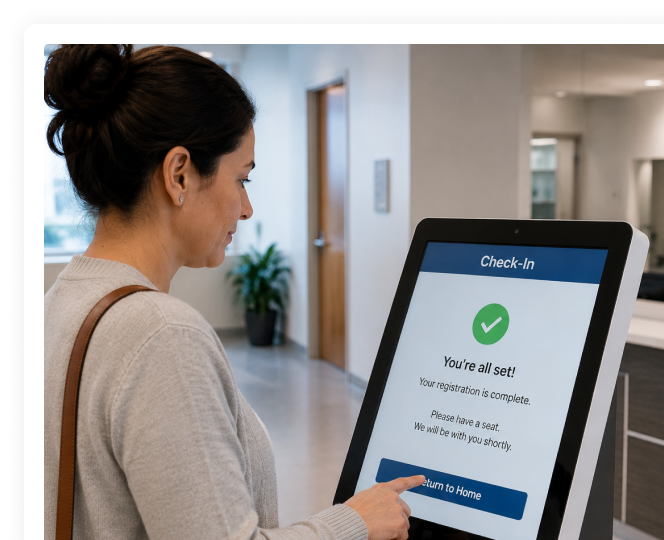
Supports mobile, web, kiosk, tablet, patient portal, and staff-assisted intake and check-in tied to scheduling, eligibility, insurance capture, and readiness.

Payment technology appears in public positioning, but payments are not the center of gravity.

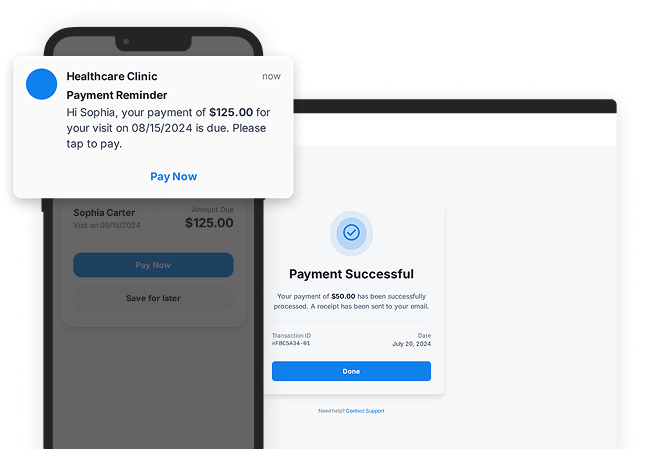
Supports patient payments through CERTIFYPAY, including Text-to-Pay, online payments, in-office payments, payment plans, card-on-file, and reminders where configured.

Practices whose primary problem is recall, reminders, texting, campaigns, and patient relationship workflows.

Practices that need communication tied to intake, check-in, eligibility, payment, and front-desk workflow.

On a feature checklist, both platforms can appear to cover reminders, communication, scheduling, intake, payments, and engagement. The practical difference is whether communication is the workflow or only one part of the workflow.
For some practices, the main issue is simple: patients miss appointments, do not respond, or fall out of recall. A communication-first platform can help. But for many teams, the message is only the first step. Patients still need to complete intake, verify coverage, check in, sign forms, and pay.
CERTIFY Health is built for that connected path. It helps communication support the work that has to happen before, during, and after the visit.
CERTIFY Health’s strongest fit is the outpatient workflow between the first patient action and the final payment. The capabilities that matter most in this comparison are:
Patients can complete intake through a secure web portal, mobile link, kiosk, tablet, patient portal, or staff-assisted workflow. Intake can include demographics, insurance, medical history, digital forms, and eConsents.
Submitted information can be routed into connected practice systems based on the integration and workflow configuration.
Patients or staff can capture insurance card images, and coverage can be checked during scheduling, pre-registration, or check-in when the workflow is configured for it.
Automated reminders can prompt patients to finish forms, confirm arrival steps, complete mobile check-in, make payments, or use kiosk and staff-assisted options when needed.
CERTIFYPAY supports payment links, Text-to-Pay, card-on-file, payment plans, payment reminders, online payments, and in-office payment options where configured.
Photo ID capture can be part of intake and check-in. FaceCheck can be used as an optional identity assurance layer where the practice needs added control.
CERTIFY Health is built to work with existing healthcare systems through scoped EHR/PM integrations, HL7, FHIR, EDI, payment gateway connections, identity tools, and communication services.
Choose the evaluation path based on the problem you are trying to solve.
CERTIFY Health does not need to replace Solutionreach as a communication-first or recall-first platform. The difference is what happens after the message is sent. If the main need is reminders, recall, reputation, surveys, and patient outreach, Solutionreach may be the right lane. If communication needs to drive digital intake, eConsent, eligibility review, check-in readiness, identity verification, payment prompts, and staff-visible follow-up, CERTIFY Health fits a broader operating need. Messaging can get a patient to respond. CERTIFY Health connects that response to the work that makes the visit ready.
Four questions that separate a quick communication fix from a real workflow decision. Step through them and tick off the ones you’ve thought about.
QUESTION 01/04
QUESTION 02/04
QUESTION 03/04
QUESTION 04/04
It can be evaluated as an alternative when the buyer needs more than communication and recall. CERTIFY Health connects communication with intake, check-in, eligibility, payments, and patient readiness workflows.
Solutionreach may make more sense when reminders, recall, texting, reputation, and campaigns are the main need. CERTIFY Health may make more sense when those messages need to connect with operational tasks around the visit.
Yes. Keep public wording tied to selected modules and configured communication workflows.