
Table of Contents
Key takeaways:
- Accurate patient identification is essential for safety, compliance, and operational efficiency.
- Misidentification leads to costly errors, duplicate testing, and patient distrust.
- Using two patient identifiers and technology like biometrics minimizes human error.
- Regulatory standards such as HIPAA and Joint Commission mandates enforce ID verification.
- Modern platforms like CERTIFY Health’s FaceCheck simplify secure, compliant, and efficient identification.
Introduction
Accurate patient identification in healthcare is the foundation of safe, effective, and compliant patient care. Yet, even with advanced systems, misidentification remains a major issue. Nearly 400,000 patients in the U.S. face preventable harm each year from medical errors, often caused by misidentification, manual data entry mistakes, or incomplete information. The World Health Organization adds that 1 in 10 patients globally suffer harm in healthcare settings each year, causing an estimated 3 million deaths.
The question is not only what is patient identification, but also how to make it accurate, compliant, and integrated across all patient touchpoints for medical practices of all sizes, from small clinics to enterprise health systems.
Need a cleaner patient identity and check-in verification workflows?
CERTIFY Health helps outpatient practices address manual identity checks, duplicate records, fraud risk, and slower check-in so teams can strengthen patient identity checks without slowing the visit.
What Is Patient Identification?
Patient identification in healthcare is the process of verifying a patient’s identity to ensure that the individual receiving care is the intended recipient, accurately matching them with the right medical records, treatments, and test results.
The patient identification definition goes beyond a name check; it ensures that every point of care, from intake to discharge, connects to the correct person.
This helps practices to ensure:
- Enhance Patient safety
- Prevent medical errors
- Accurate administration of treatment, medication, or any other medical process.
- Ensure accurate record keeping and patient monitoring
- Compliance with healthcare regulations.
Common patient identifiers in healthcare:
- Patient’s full name
- Date of birth
- ID number
- Biometrics like fingerprints or facial recognition
Many healthcare organizations follow what’s known as the “2 patient identifiers” joint commission rule, using two distinct identifiers before administering medication, performing tests, or sharing medical information.
This red rule for patient identification reduces risks of mix-ups that can lead to medication errors or misdiagnoses. In essence, accurate identification supports clear documentation, clinical precision, and patient safety at every stage.
Why Accurate Patient Identification Matters
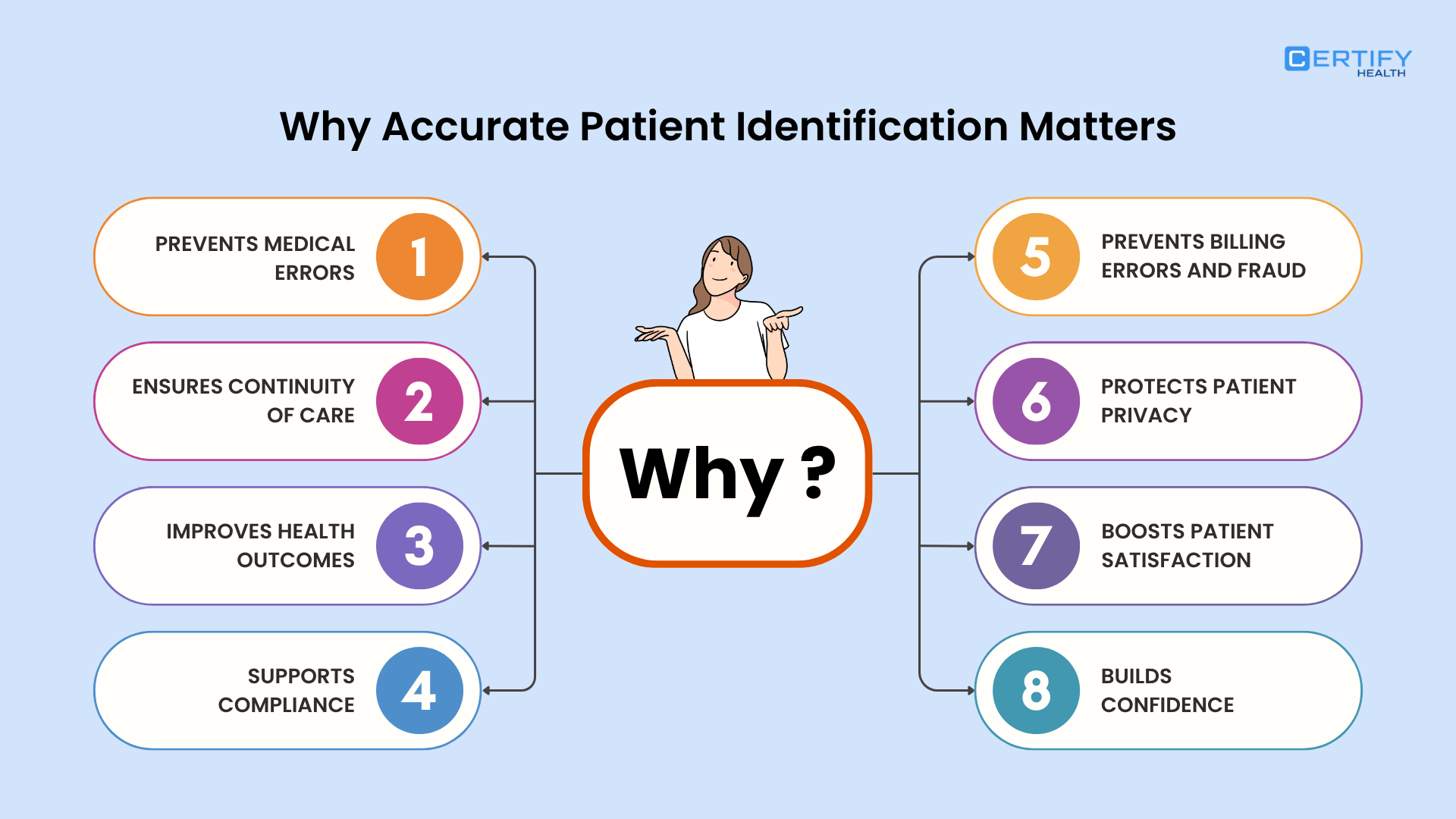
As discussed earlier for every healthcare provider, accurate identification can be the difference between a compliant, efficient workflow and a costly error. It matters for several reasons:
Improved Quality of Care & Patient Safety
- Prevents medical errors: Accurate patient identification ensures that the right person receives the right treatment, procedure, or medication, thereby avoiding life-threatening risks.
- Ensures continuity of care: A well-matched database of patients allows providers to access their details and make informed decisions, ensuring continuity of care.
- Improves outcomes: Accurate patient identification is also crucial for maintaining clean data without errors or duplicates, which helps care teams coordinate effectively and improve treatment outcomes.
Administrative Accuracy and Regulatory Compliance
- Supports compliance: Most major healthcare regulations, including HIPAA, the Joint Commission’s Patient Safety Goals, and CMS participation standards, require healthcare providers to verify patient identity before providing care.
- Prevents billing errors and fraud: Proper identification ensures claims go to the correct patient and prevents unauthorized access or misuse of information.
- Protects patient privacy: Confirming identity ensures sensitive health data is shared only with the right person.
Patient Trust and Experience
- Boosts satisfaction: Patients satisfaction score improves when your patients are happy with your care quality which comes with accurate records and accurate treatments, and patient safety.
- Builds confidence: When patients see their identity verified at every step, they feel safer, valued, and more confident to continue care with a particular provider.
Did you know? As per a study, 30% of providers end up repeating tests due to mismatched patient records.
All this leads to lost time, lost revenue, and dissatisfied patients.
With FaceCheck from CERTIFY Health, you can stop these errors before they start—ensuring every patient is correctly identified, every time.
Risks and Challenges of Inaccurate Patient Identification
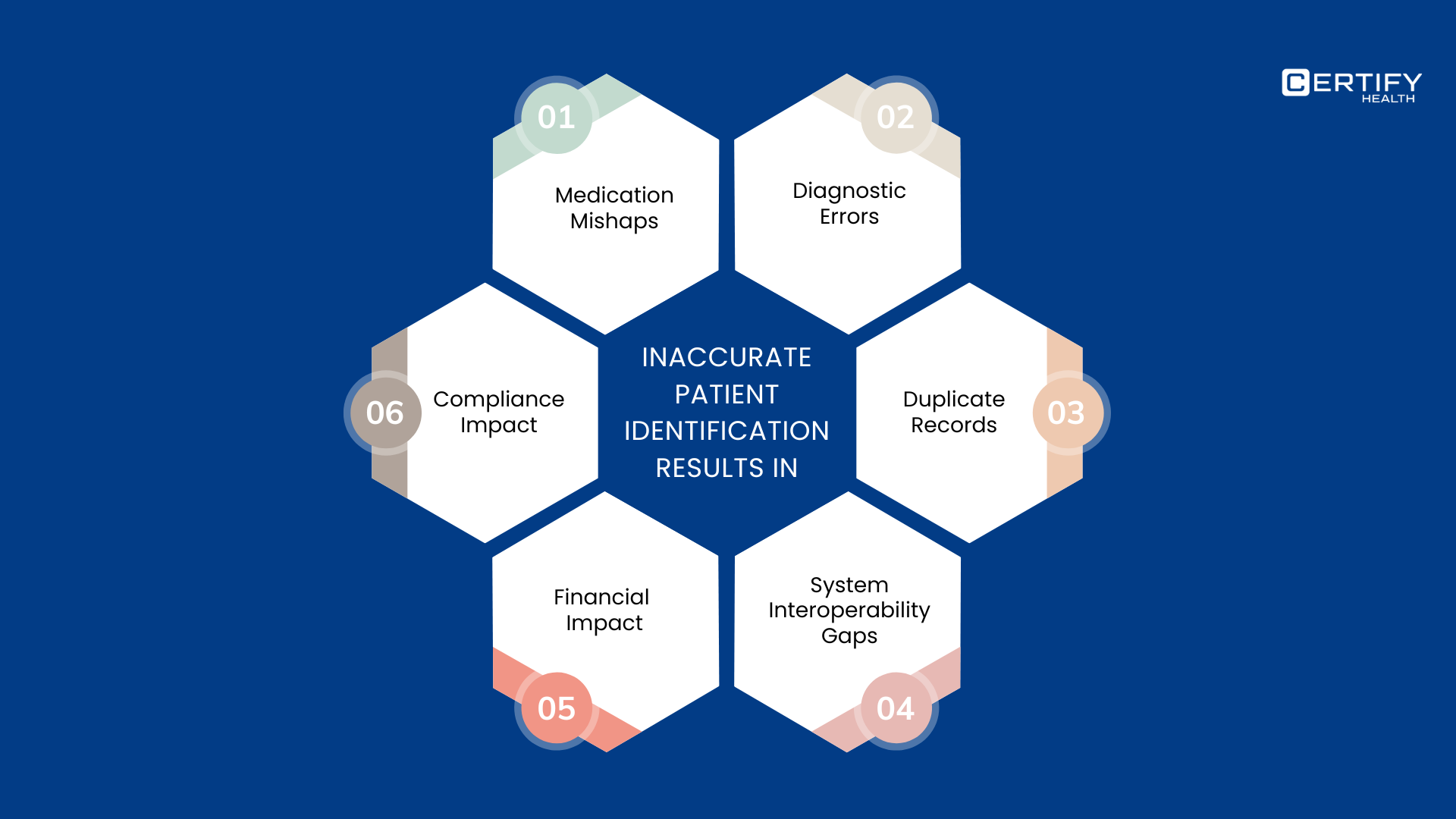
Inaccurate patient identification poses risks that ripple through safety, compliance, and financial performance.
Medication mishaps
When patients are misidentified, the wrong medication or dose can slip through and that’s not just a clerical error, it’s a serious safety risk. These mix-ups are still one of the biggest causes of preventable harm in healthcare.
Diagnostic errors
Imagine a lab result or scan getting linked to the wrong patient record. Suddenly, care decisions are delayed, distorted, or downright dangerous. It’s a small data error that can snowball fast.
Duplicate records
One patient. Three profiles. Zero clarity. Without consistent standards, duplicate records creep into your EHR, making it nearly impossible to track complete health histories or coordinate care.
System interoperability gaps
Disconnected systems mean disconnected care. When records don’t talk to each other, teams waste hours chasing data instead of treating patients leading to interoperability gaps.
Financial impact
Every mistaken record or repeated test costs more than time; it drains revenue. U.S. healthcare systems lose millions each year fixing errors, redoing tests, and dealing with denied claims tied to poor identification.
Compliance impact
Auditors are paying closer attention to ID workflows than ever before. Miss a verification step or fail to document the process, and your practice could face compliance risks that are completely avoidable.
When accuracy slips, both patient outcomes and organizational credibility are at stake.
Without improving how patient identity is confirmed at the front end, healthcare organizations remain vulnerable to downstream risks such as wrong-patient procedures, duplicate records, and billing errors.
Related workflow: Patient Identity Verification
Core Components of Patient Identification
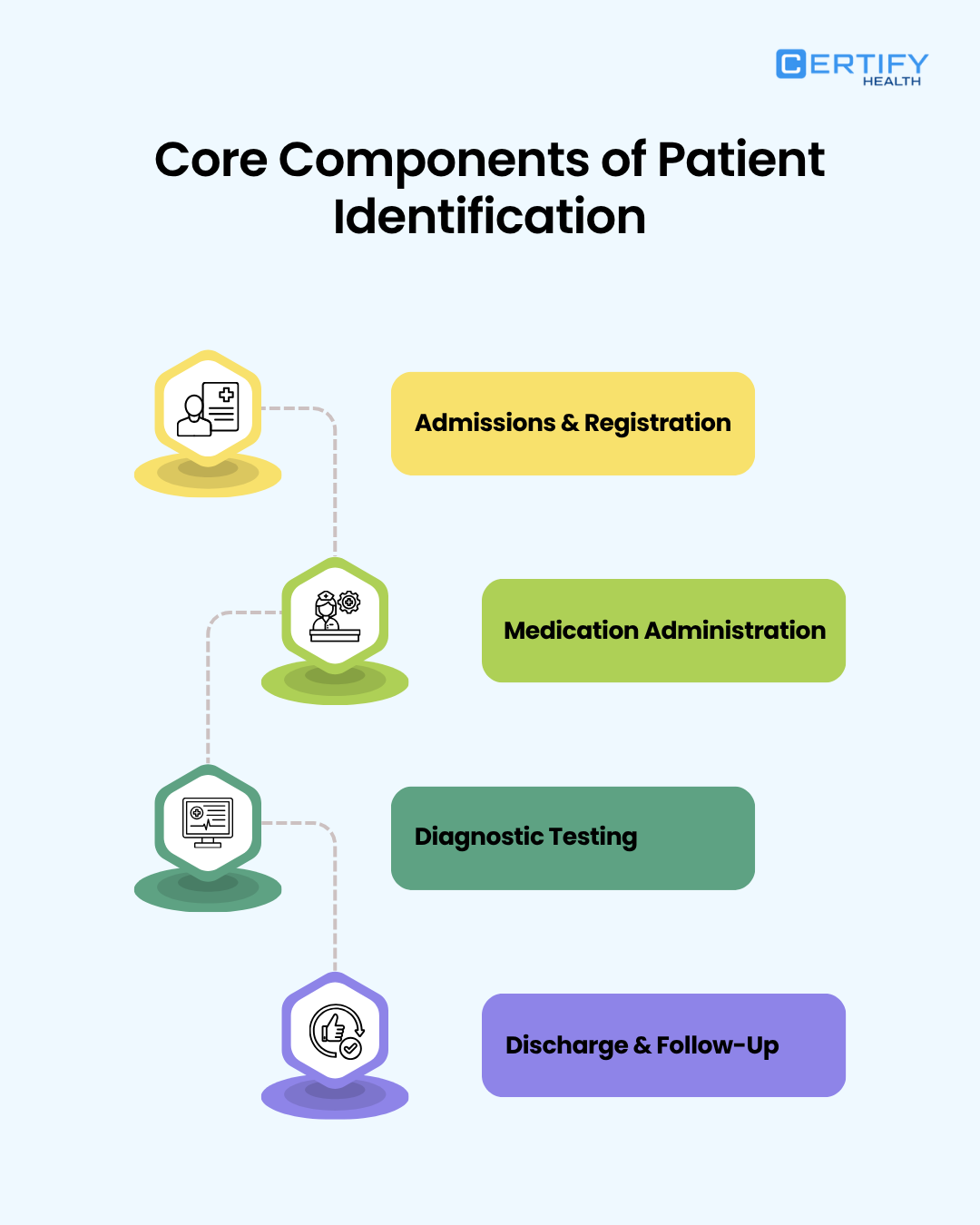
To strengthen patient identification, practices must verify identity across key patient touch points within the care journey:
Admissions & Registration
At the front desk, accuracy starts with identity. Staff should confirm each patient using at least two identifiers and a photo match, especially for new or infrequent visitors. It’s the first step toward error-free care.
Medication Administration
Before any medication reaches a patient, nurses double-check the wristband against the prescription. It’s a simple pause that prevents dangerous mix-ups and keeps treatment plans on track.
Diagnostic Testing
Every sample label must tell the same story as the EHR. Even one mismatched digit can send results to the wrong chart, so accuracy here is non-negotiable.
Discharge & Follow-Up
Before a patient walks out the door, verifying identity one last time ensures the right person gets the right instructions, reducing confusion and improving post-visit care.
Consistent application of these steps and staff accountability at each stage is what defines a robust patient identification process.
Best Practices for Accurate Identification
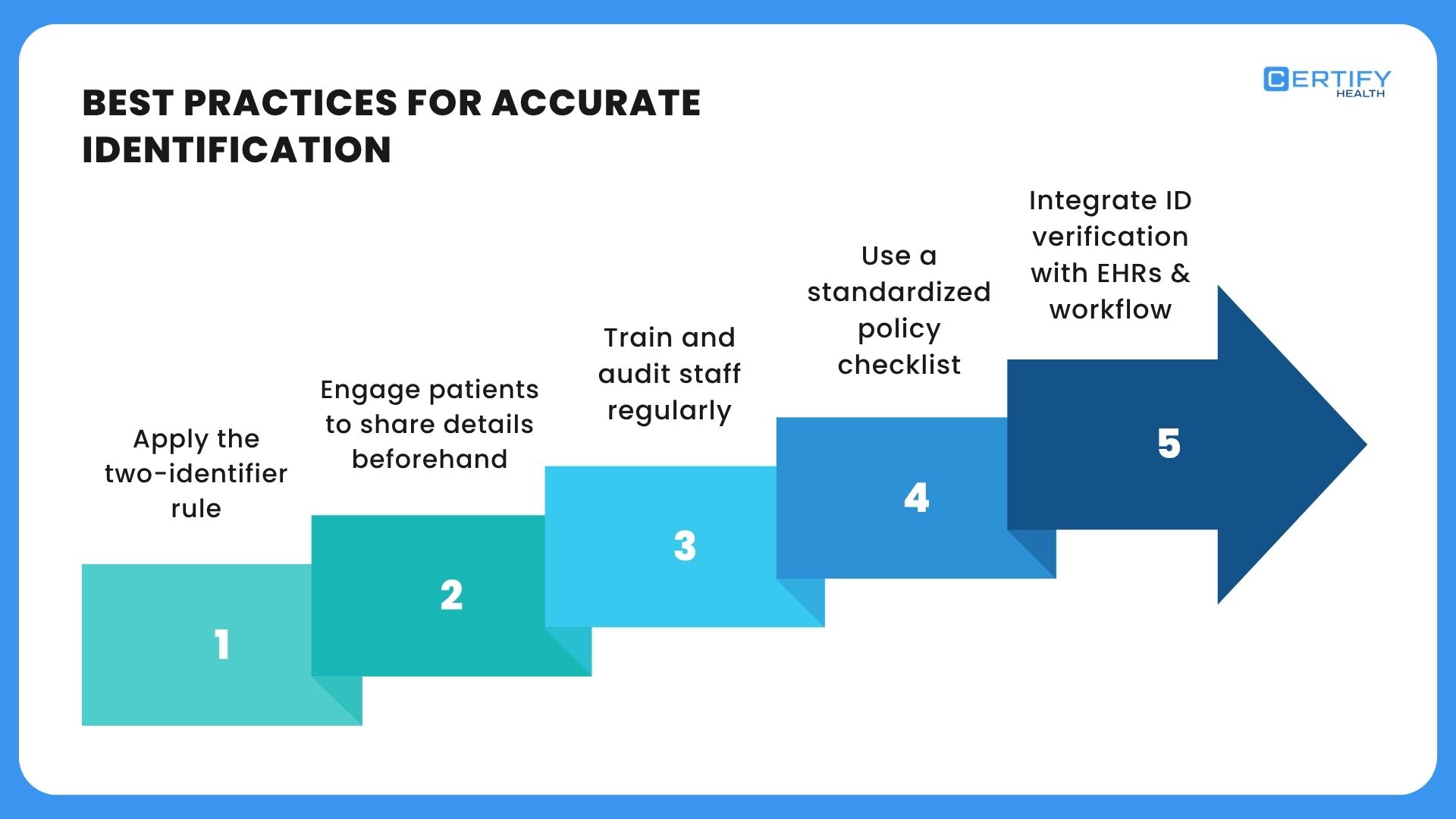
Healthcare organizations adopting industry standards see fewer errors and higher patient satisfaction. The following best practices can help:
- Apply the two-identifier rule consistently across all workflows.
- Engage patients – encourage them to confirm their own birth date or ID number before any procedure.
- Train and audit staff regularly, including temporary and rotating personnel.
- Use a standardized policy checklist to ensure compliance with local and national mandates.
- Automate where possible by integrating ID verification with EHRs and workflow tools.
Continuous improvement matters most. Regular process audits and mock drills reduce misidentification rates and create safer patient environments.
Multi-modal ID verification reduces identification errors by combining biometrics, photo ID, and demographic matching instead of relying solely on patient-reported information.
Related resource: Patient Identity Verification
Technology Innovations in Patient Identification
The next chapter of patient safety lies in patient identification technology. While traditional tools like barcode wristbands remain essential, digital and biometric systems are transforming practice operations:
- Biometric patient identification: Hospitals and clinics across the U.S. now use fingerprint, facial, palm-vein, and iris recognition to accurately match patients.
- AI-Powered identification: Artificial intelligence enhances patient identification software, improving accuracy by learning from error patterns and demographic variations.
- RFID and mobile intake tools: Real-time tracking across settings like urgent care, telehealth, or multi-site networks prevents information gaps.
The healthcare biometrics market is projected to rise from USD 5.6 billion in 2025 to nearly USD 24.8 billion by 2035, driven by EHR integration and security mandates. These innovations not only improve safety but streamline workflows, eliminating repetitive manual checks.
Regulatory and Compliance Requirements
Provider organizations must align their patient identification strategies with standards tied to accurate identification, including:
- Joint Commission Requirements: The two-identifier rule is mandatory to prevent wrong-patient, wrong-site, or wrong-procedure events.
- HIPAA: Protecting patient data privacy ties directly to controlling how identifiers are managed and shared.
- CMS and OSHA: Require verifiable tracking of patients, procedures, and billing.
Audit trails are key. Regulators expect providers to document verification steps and maintain logs showing adherence to the patient identification policy checklist. Emerging technologies such as biometrics (e.g. FaceCheck by CERTIFY Health) and digital ID cards offer automated compliance reporting, lowering audit risks while improving transparency.
Implementation Framework for Providers
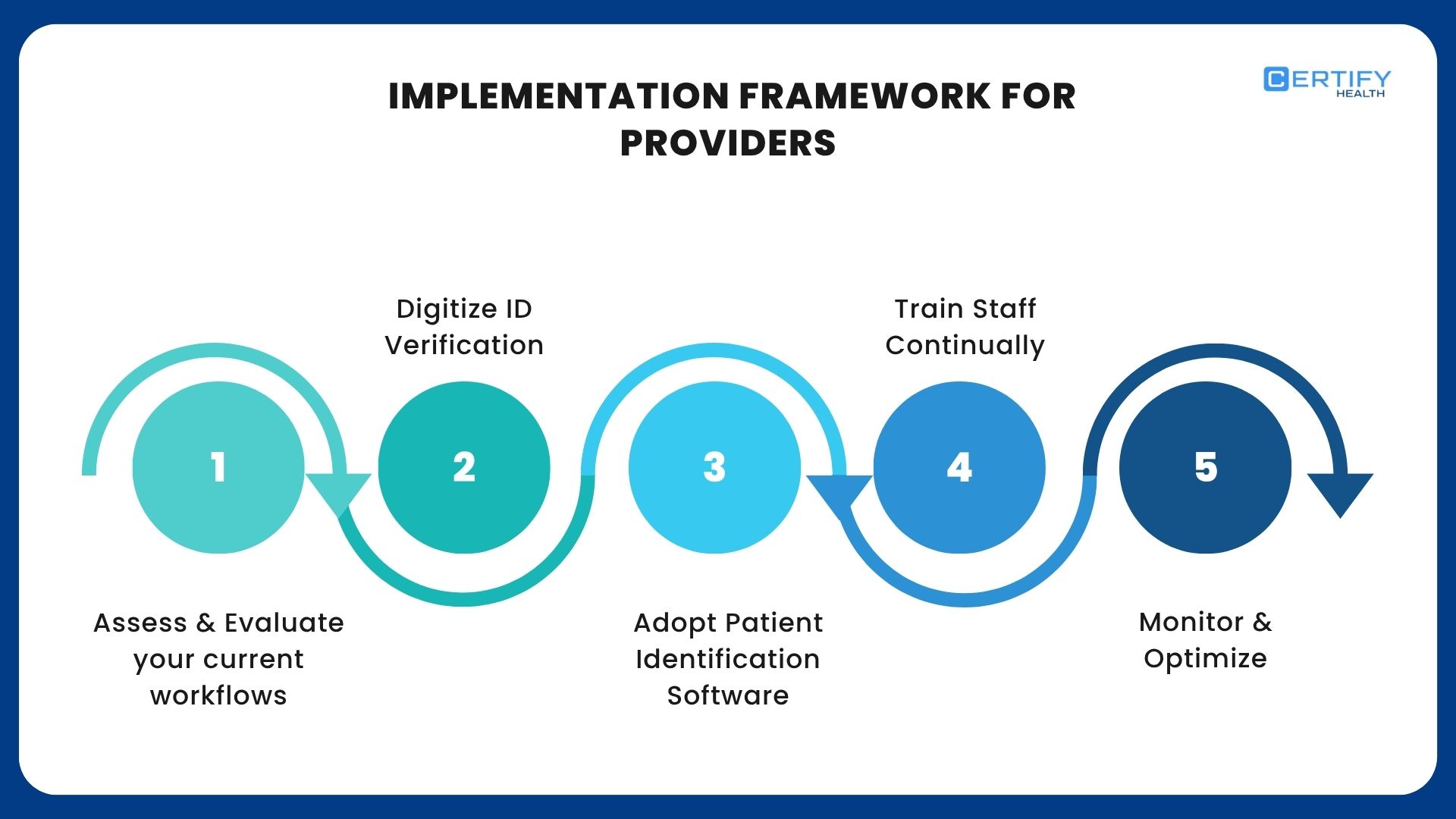
A practical implementation framework helps providers strengthen identification protocols without disrupting care workflows:
- Assess current workflows: evaluate failure points in your intake and verification processes.
- Digitize verification: adopt mobile-driven ID capture and instant cross-checking with EHR records.
- Adopt patient identification software: integrated with biometric or digital solutions.
- Train staff continually: especially around high-volume and multi-department transitions.
- Monitor and optimize: track error rates, workflow speed, and patient satisfaction.
Many leading healthcare technology partners, such as CERTIFY Health, now offer unified platforms combining check-in automation, biometric verification, and compliance logging, all aimed at reducing staff burden and ensuring accurate identification.
If your current identification process depends on staff asking two questions at check-in, a brief workflow review can show where that approach falls short and what a more reliable alternative looks like.
Where this connects to the workflow
For outpatient practices, this topic becomes more urgent when it affects manual identity checks, duplicate records, fraud risk, and slower check-in. CERTIFY Health helps connect patient identity and check-in verification workflows so teams can strengthen patient identity checks without slowing the visit.
Conclusion
As discussed, patient identification is no longer about compliance; it’s about ensuring patient safety, faster, and more connected care. With reliable identifiers and tools like biometrics, practices can prevent errors, boost patient trust, and protect revenue. Audit your workflows, fix the gaps, and adopt next-gen patient Identification software to stay secure and compliant.