

Table of Contents
Introduction: The ACA and Its Role in US Healthcare
Affordable care act definition: It is a comprehensive U.S. healthcare law enacted in 2010 to expand access to care, lower costs and protect patients, while also giving providers clearer rules, new patient pools and funding that helped practices stay afloat. It benefited patients by ending many coverage exclusions and helped practices by stabilizing reimbursement and reducing uncompensated care.
The Affordable Care Act (ACA) continues to shape how medical practices manage compliance, insurance coverage, and patient access. As new regulations emerge and ACA Marketplace premiums continue to rise, practices must stay prepared for both policy changes and their operational impact.
Fast-forward to Affordable Care Act 2025 and beyond
New Centers for Medicare & Medicaid Services (CMS) and Internal Revenue Service (IRS) rule updates mean ACA compliance is no longer a box-check exercise but an active operational focus.
Keeping up with the latest ACA regulations has become a year-round responsibility for administrators rather than an annual review.
The 2025 Marketplace Integrity & Affordability rule from CMS was projected to reduce individual Marketplace premiums by an average of 5% and generate up to $12 billion in taxpayer savings by 2026 through stronger enrollment and eligibility measures.
However, more recent preliminary filings for 2027 indicate that insurers are proposing another round of premium increases, reflecting rising healthcare costs, inflation, and changing market conditions rather than the impact of the 2025 rule alone.
With tougher insurance eligibility/verifications and reporting requirements, practices must stay on top of ACA health insurance compliance requirements 2025, accurate reporting and patient education because even today, the ACA still drives how patients enroll, how providers get paid and how practices communicate benefits.
What Do ACA Provisions Actually Do for People And Practices?
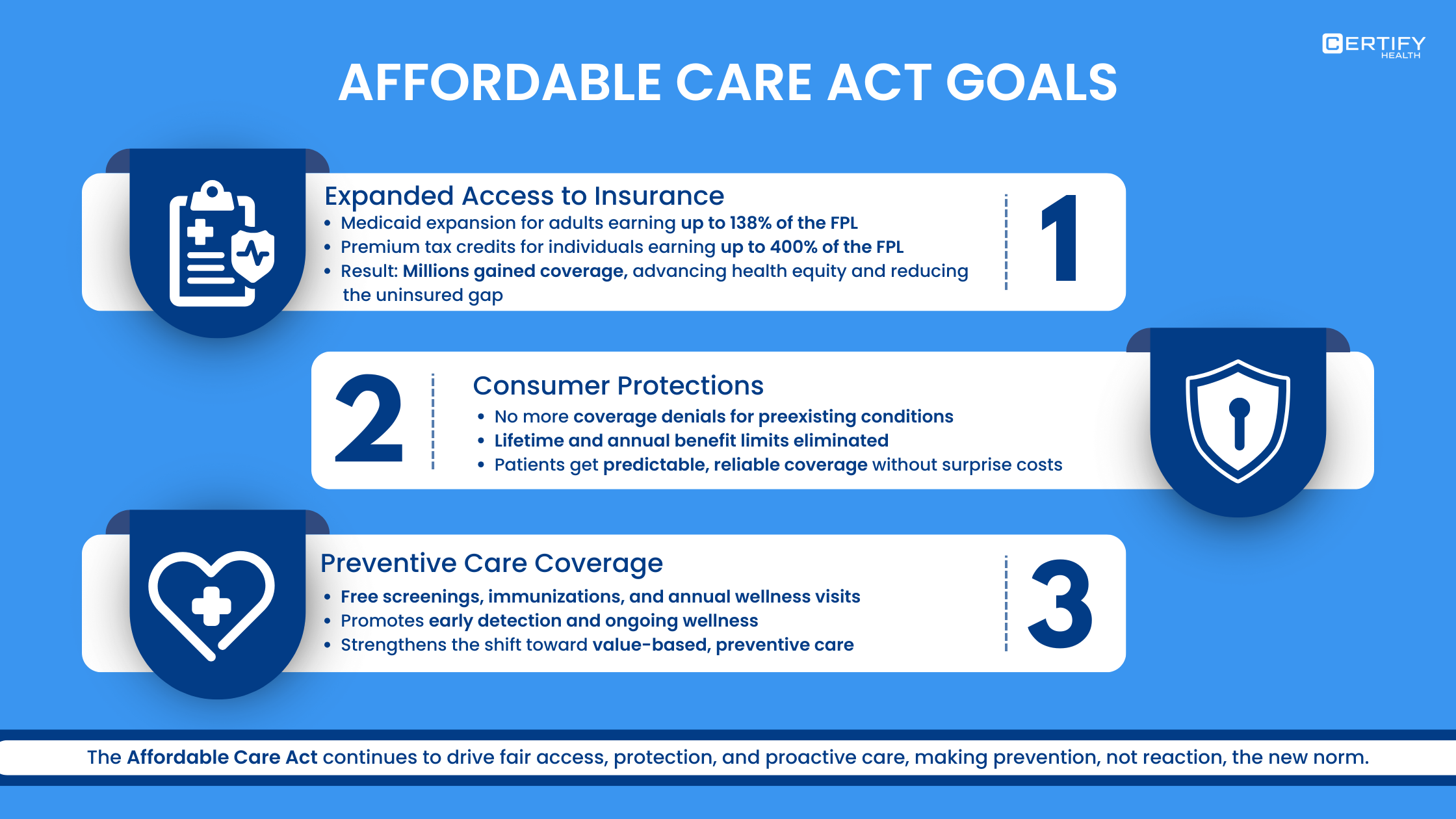
To understand the Affordable Care Act key provisions 2025, start with the core goals. The ACA helps make health insurance more affordable, prevents insurers from denying coverage based on certain conditions, and covers preventive care to support better long-term health.
As a result, practices experience fewer uninsured patients walking through their doors, more consistent reimbursements, and improved financial predictability through reduced healthcare costs.
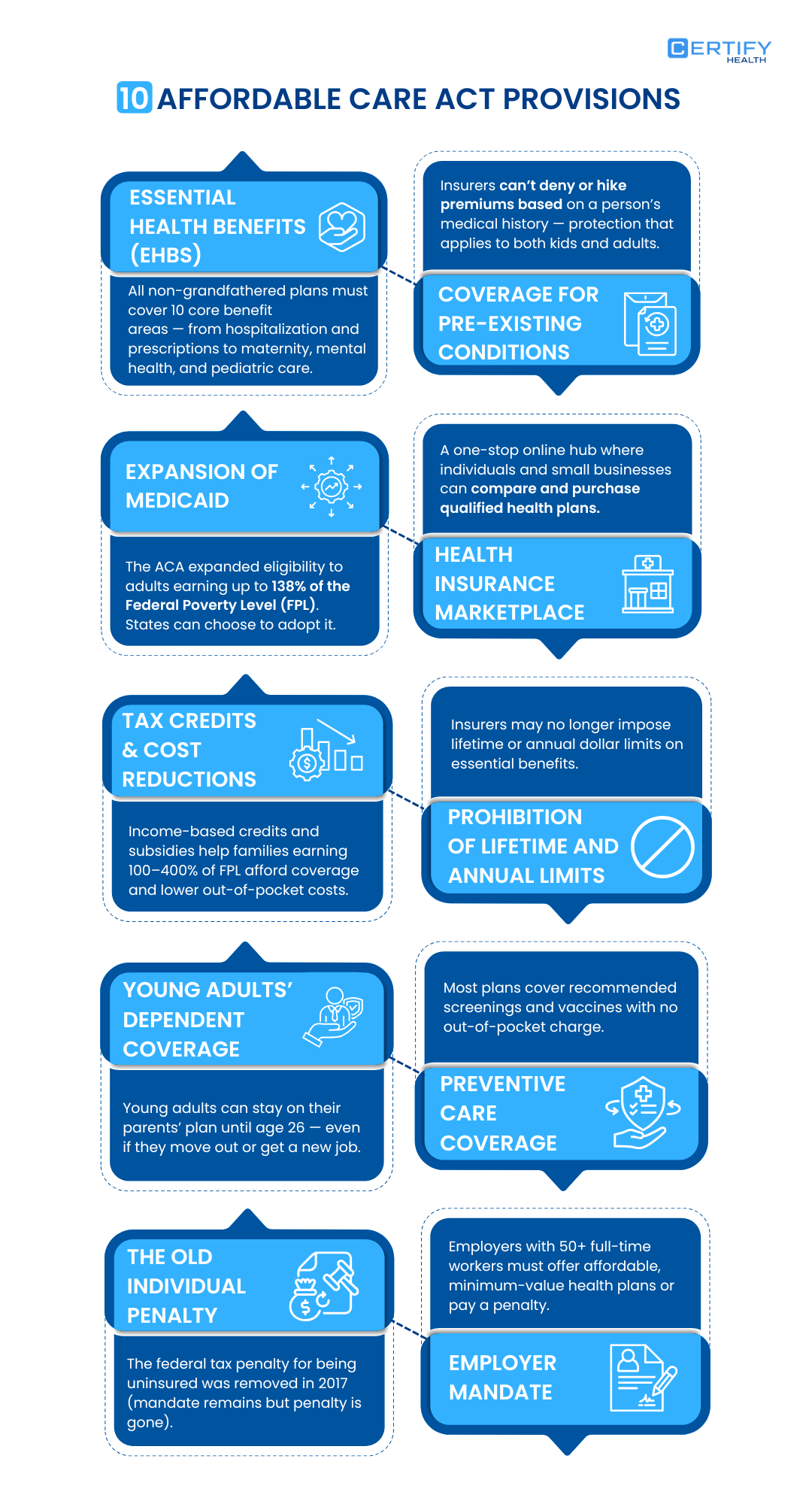
Let’s Take a Look at key Goals & 10 core Affordable Care Act Key Provisions 2025
Affordable Care Act Goals
10 Affordable Care Act Provisions
ACA’s Impact on Medical Practices
The Affordable Care Act’s influence on medical practices is multifaceted:
More Insured Patients
Thanks to the Affordable Care Act (ACA), more people now have access to insurance and that’s good news for practices. More insured patients usually mean consistent scheduling, predictable revenue, and fewer surprises in your revenue cycle.
Administrative Responsibilities
More coverage means greater administrative requirements. Practices now juggle ACA compliance, eligibility tracking, and those detailed ACA reporting requirements, especially under the employer mandate. That’s why having strong administrative workflows is now important.
Technology Integration
Practices need interoperable systems to maintain efficiency. Integrating Electronic Health Records (EHR) with billing workflows helps manage Medicaid and Marketplace coverage efficiently, ensuring claims are accurate and ACA compliance stays on point.
Value-Based Care
The ACA’s focus on quality reporting and population health management pushes practices toward value-based care. The goal is to deliver better outcomes without increasing costs and create a healthcare system that rewards preventive care over paperwork.
In 2025, risk adjustment audits and eligibility checks are getting tighter. CMS is rolling out new data integrity standards, which means healthcare providers now have more responsibility to verify and validate patient data accurately.
In short: cleaner data, fewer errors, and stronger compliance.
You might also like to read: How to Verify Patient Insurance Verification Using CERTIFY Health Solutions
Which Practices Are Most Impacted By Affordable Care Act 2025
Different types of medical practices feel the impact of the Affordable Care Act in distinct ways:
| Practice Type | ACA Impact Highlights |
|---|---|
| Small and Mid-Sized Clinics | Struggle with ACA record-keeping and complex IRS ACA reporting mandates. |
| Multi-Specialty & Behavioral Health Practices | Manage multi-payer eligibility and Medicaid overlaps, requiring sophisticated verification workflows. |
| Dental & Vision Practices | ACA provisions affect pediatric essential health benefits and preventive care claims. |
| Rural or Medicaid-Heavy Practices | Face risks from coverage fluctuations and delayed Medicaid reimbursements. |
These impacts correlate with payer mix trends, Medicaid participation rates, and regional differences (see KFF reports and CMS data), highlighting how state policies and enrollment patterns shape healthcare access.
2025 Rule Changes & What They Mean for Your Practice
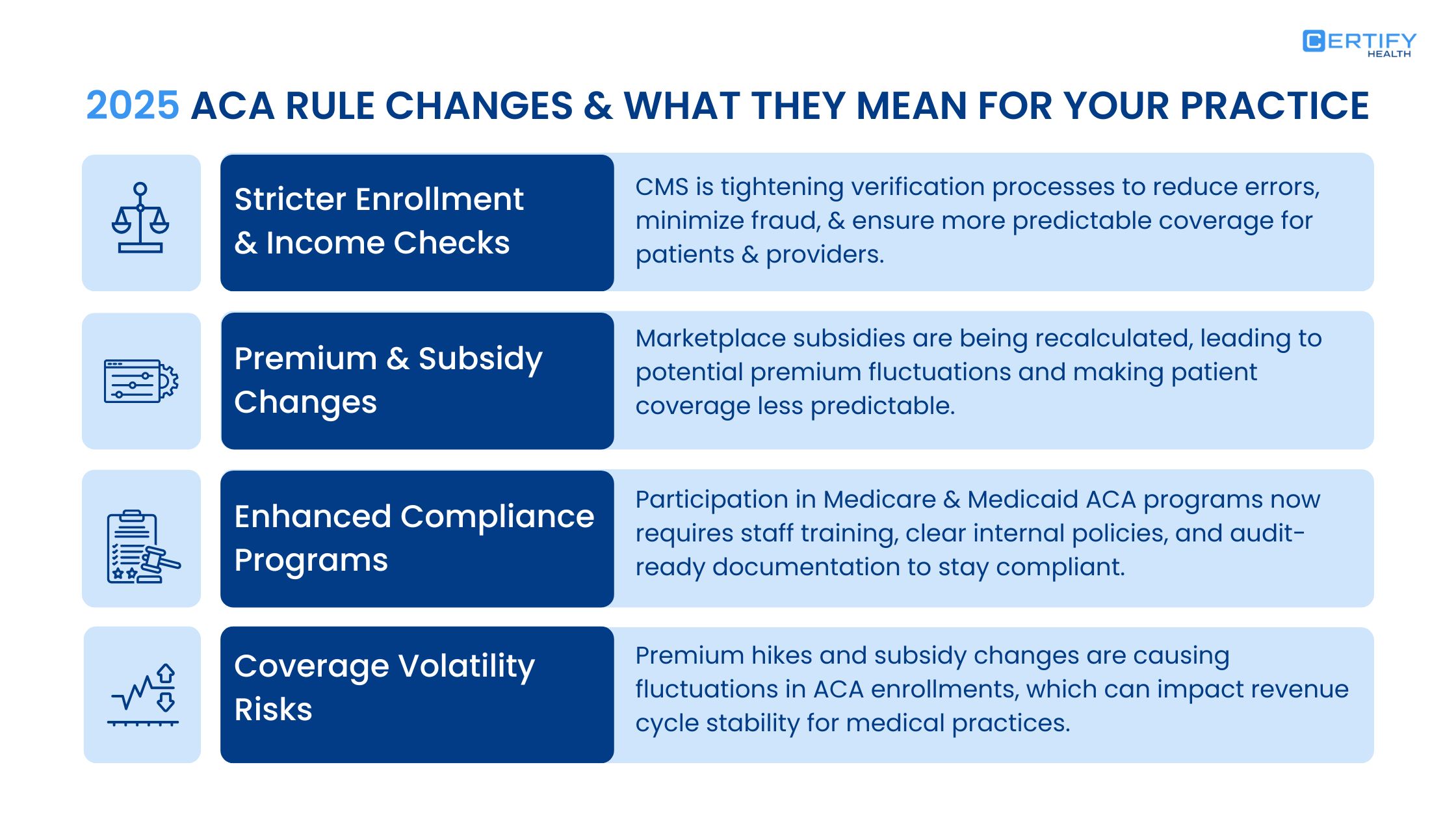
Medical practices in 2025 must adapt to significant ACA rule changes:
Marketplace Integrity Rule
CMS is cracking down on enrollment and income verification. The goal? Make sure premium tax credits go only to those who qualify, which means fewer errors, less fraud, and more predictable coverage.
Premium Adjustments, ACA Regulations, and Subsidy Changes
Recent preliminary filings also show insurers requesting a median 14% premium increase for 2027. Although these rates are still under regulatory review, they highlight the continued financial pressure on the ACA Marketplace and reinforce the importance of helping patients understand their coverage and financial responsibility
Enhanced Compliance Programs
Participating in Medicare and Medicaid ACA programs now requires strong internal controls: staff training, clear policies, and audit-ready documentation. These measures help ensure compliance and operational protection.
Coverage Volatility Risks
Consecutive years of proposed premium increases and changing subsidy policies may lead some patients to switch plans, lose coverage, or delay care due to affordability concerns. Practices should expect more eligibility verification, benefit questions, and payment discussions during patient intake.
ACA 2025 Insight: Prepare for Rising Out-of-Pocket Costs
One of the most significant ACA shifts in 2025 is the potential expiration of enhanced premium tax credits, which could sharply increase healthcare costs for millions of patients. Alongside this, CMS continues enforcing its new Marketplace Integrity Rule, tightening eligibility checks and income verification.
For practices, this means patients could face higher out-of-pocket expenses, potentially delaying or deferring care if payment flexibility isn’t offered. At the same time, insurance verification and eligibility checks have become critically important for both providers and patients.
New federal rules have also tightened eligibility requirements and verification processes for Marketplace subsidies and Medicaid,creating additional administrative work and increasing the risk of coverage loss for some patients.
Recent preliminary filings also indicate that ACA Marketplace premiums could rise again in 2027.
Latest Update: ACA Marketplace Premiums Continue to Rise
Recent preliminary filings show that ACA Marketplace insurers are proposing another round of premium increases for 2027, with a median proposed increase of 14%.
Insurers say the proposed increases are being driven by rising hospital and prescription drug costs, inflation, changes in federal policies, and growing healthcare spending. While the proposed rates are still under regulatory review, they reflect the continued financial pressure across the healthcare system.
For medical practices, these rising costs could mean more patients delaying non-urgent care, switching insurance plans, or asking more questions about their coverage and out-of-pocket costs before scheduling appointments. This makes accurate insurance eligibility verification, transparent cost estimates, and proactive patient financial communication more important than ever.
Practices that simplify these processes can reduce administrative burden, improve the patient experience, and help patients make informed financial decisions about their care.
Practices that invest in better patient access and financial workflows are better equipped to manage these challenges.
That’s where CERTIFY Health helps. With robust Revenue Cycle Management solutions, practices can:
- Offer patient payment options like upfront cost estimates, digital payment plans, and transparent billing experiences that support both the No Surprises Act (NSA) and the Affordable Care Act (ACA).
- Streamline insurance verification and eligibility checks to improve coverage accuracy and reduce claim denials.
- Equip staff with patient-friendly payment tools that simplify financial conversations and improve collections.
- Maintain financial stability while helping patients access the care they need.
You can also explore CERTIFYPAY, CERTIFY Health’s healthcare payment platform. It enables practices to offer upfront cost estimates, digital and recurring payment plans, secure online and in-office payments, and transparent payment experiences.
Built with PCI DSS-compliant processing, fraud detection, and tokenization, CERTIFYPAY helps reduce administrative work, improve collections, and create a more convenient financial experience for patients.
Protip: Track coverage patterns quarterly to anticipate financial impacts and adjust operational workflows accordingly.
ACA Compliance Requirements for Practices
For medical practices, meeting aca health insurance compliance requirements 2025 is critical to avoid penalties and sustain operations, and understanding what is affordable care act compliance in practical, day-to-day terms starts here:
- Employers with 50 or more full-time employees must offer affordable, minimum essential coverage to at least 95% of their full-time workforce.
- Accurate ACA reporting, including submission of IRS Forms 1095-C and 1094-C, is mandatory with strict deadlines. Noncompliance can lead to substantial fines.
- Staying updated with ACA guidelines 2025 via IRS, CMS, and Department of Labor websites ensures preparedness for ongoing regulatory changes.
Additionally, new 2025 updates lengthen IRS response time windows and introduce a six-year statute of limitations on ACA-related penalties, providing employers more clarity and time to address compliance matters.
You might also like to read: The Ultimate Guide to Healthcare Compliance for Medical Practices
Patient Communication and Education
Medical practices have an essential role in patient education regarding ACA coverage:
- Front-desk and healthcare teams should be trained to assist patients in navigating ACA coverage options, including explaining insurance tiers like Bronze, Silver, Gold, and Platinum plans.
- Practices can also create simple patient education materials, such as FAQs, posters, and front-desk scripts, to help patients better understand their ACA coverage options.
- Educating patients on preventive care benefits covered under the ACA helps improve satisfaction and outcomes, while also reducing financial surprises.
- Practices that empower patients with clear communication on coverage and subsidies build trust, increase patient retention, and enhance financial predictability for the practice.
This approach establishes the practice as an active participant in patient care delivery.
Moving Forward: ACA in 2025 and Beyond
Recent ACA policy changes around Marketplace integrity, enrollment verification, and premium adjustments highlight the evolving compliance landscape. More recent preliminary filings proposing another round of ACA Marketplace premium increases for 2027 further reinforce the financial pressures facing patients, insurers, and healthcare providers.
As healthcare costs continue to rise, practices that proactively monitor regulatory changes, strengthen insurance eligibility verification, improve patient financial communication, and adopt patient-friendly payment options will be better equipped to navigate these challenges. Investing in efficient, compliant workflows can help reduce administrative burden while improving the patient experience.
The Affordable Care Act continues to shape healthcare delivery in meaningful ways. Practices that stay informed and adapt to changing regulations, affordability concerns, and patient expectations will be better positioned to deliver accessible, high-quality care in an increasingly value-based healthcare environment.
The Affordable Care Act continues to shape healthcare experience in meaningful ways. Compliant, informed practices are positioned to operate effectively in a patient-centered, value-based healthcare environment, balancing regulatory requirements with improved access and outcomes for all patients.
Conclusion
The Affordable Care Act continues to expand access to care while shaping how medical practices manage compliance, patient coverage, and financial responsibility. As ACA regulations evolve and healthcare affordability remains a growing concern, practices that invest in streamlined eligibility verification, transparent patient financial workflows, and ongoing compliance efforts will be better positioned to deliver high-quality care and build long-term operational resilience.