
Table of Contents
Hospitals around the United States are rapidly decreasing staff. At least 93 hospitals and health institutions have declared layoffs for 2025, totalling approximately 18,900 workers. Margins are just 1%. Federal austerity are further pinching finances. What about patient volumes? They have recovered above pre-COVID levels and are not declining. That is the problem. Fewer hands. Same patient load. Without the appropriate practice management software, something has to give.
Where Throughput Breaks Down
The staff being let go are not surgeons. They’re schedulers. Intake personnel. Front desk teams. These are the individuals who keep the patient flow moving. They go without taking their job with them.
Here’s what breaks first:
Scheduling. When booking via phone, there must be someone on the line. In a lean team, that person is frequently tied up. Calls remain unanswered. Patients give up. Slots remain unfilled, even when demand is great.
Intake and check-in. Paper forms are slow. They consume up to 40% of front-office personnel time. Check-in takes longer when there are fewer staff members. Wait times increase. Patient scores decrease.
Follow-ups and reminders. When teams are stretched thin, it is easy to overlook reminders. Skip them, and the no-show percentage will rise above 20%. That is cash lost on each open slot.
As a result, fewer personnel and patients are seen. That is the worst possible conclusion when margins are already thin. Without practice management software to shoulder the strain, each staff reduction directly impacts patient output.
The Practice Management Software Layer That Closes the Gap
The right practice management software doesn’t replace your team. It takes the manual, repeat work off their plate. Fewer staff can still hit the same patient load when the tools do the heavy lifting.
Three levers make the biggest difference:
1. Digital Patient Intake
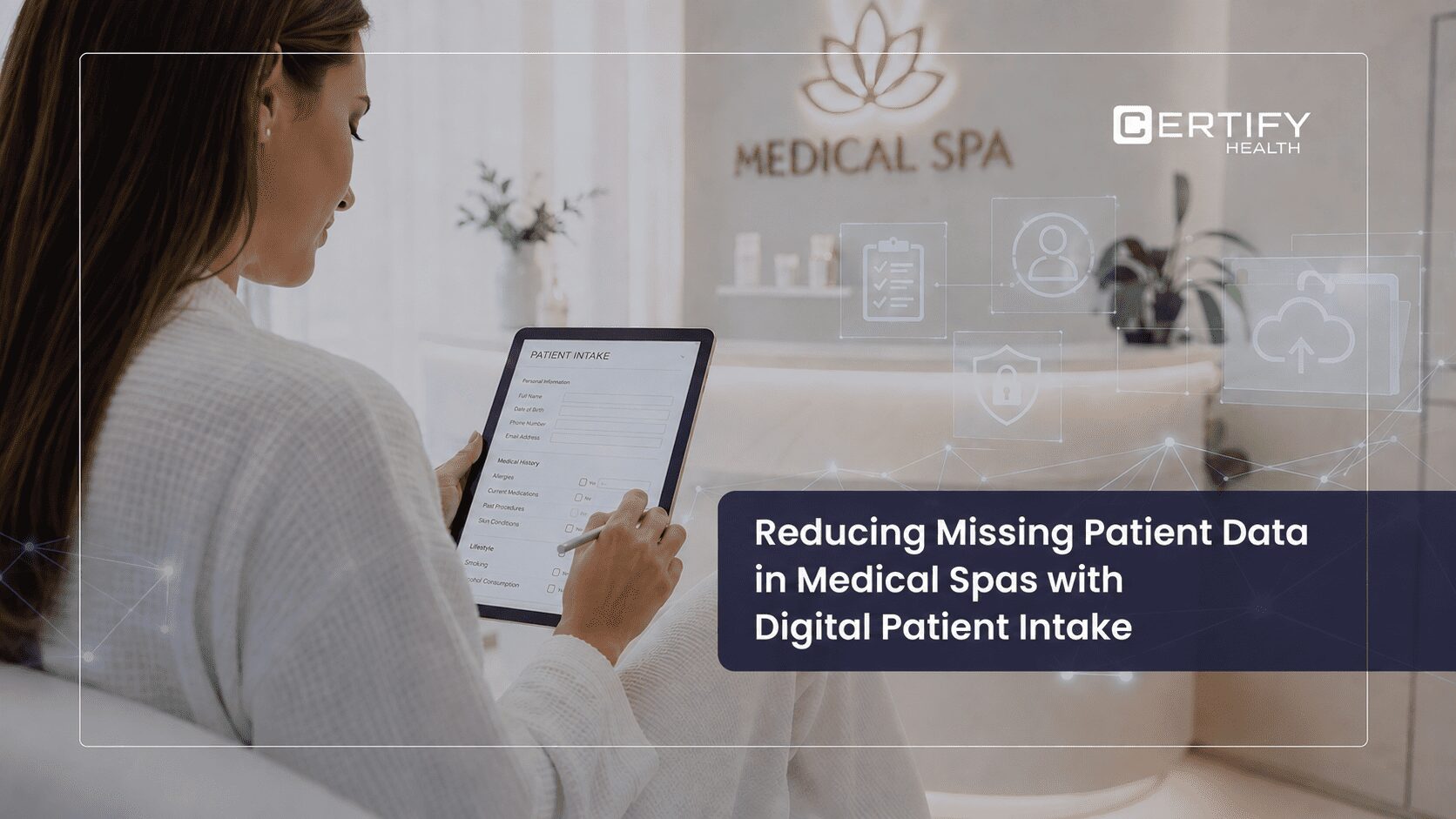
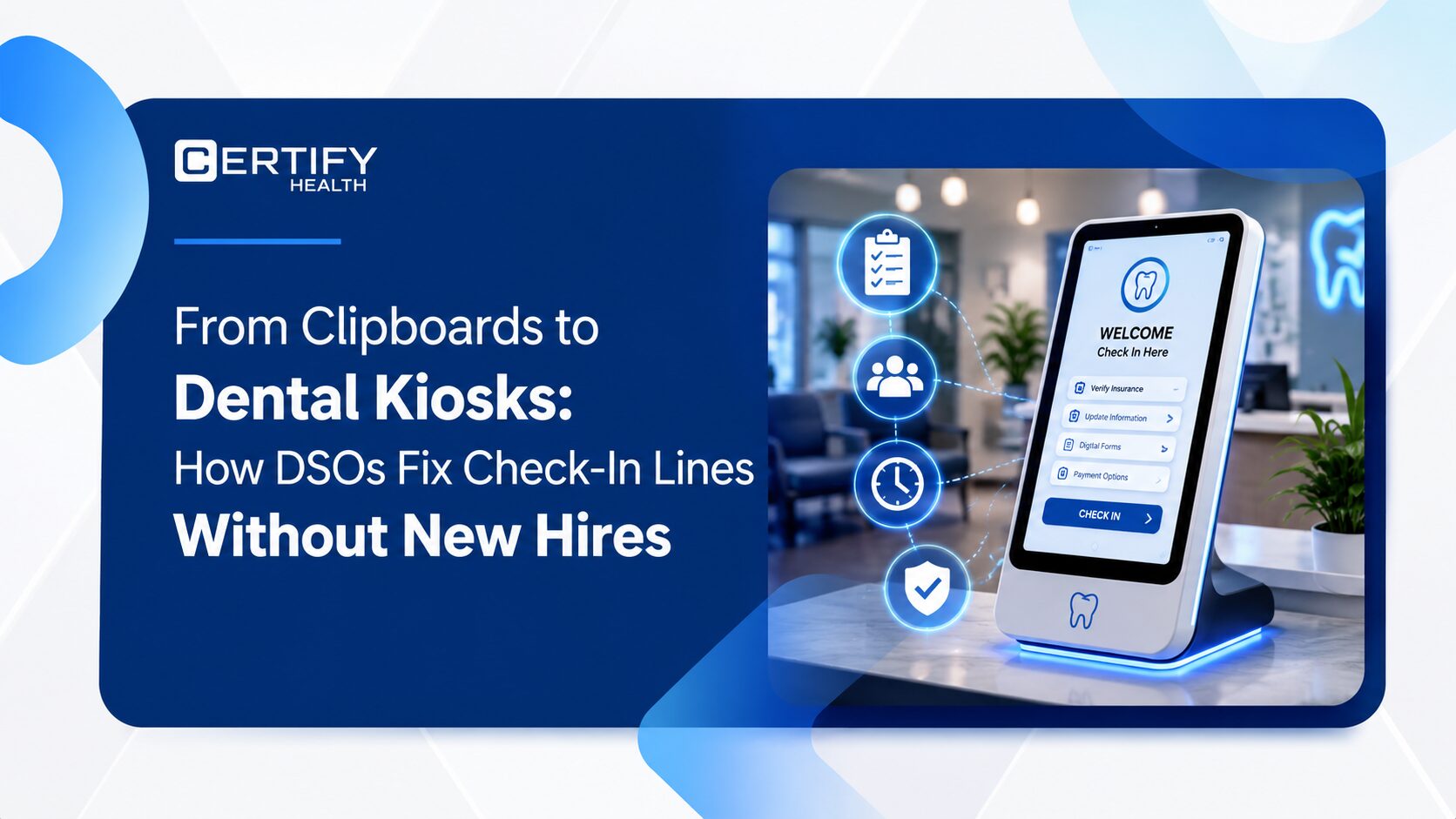
Patients complete out paperwork prior to their arrival. They are on their phones. On a tablet. At home. There was no requirement for staff to distribute forms or enter data. Insurance checks run in the background. Data enters the EHR on its own.
The data backs this up. CERTIFY Health’s digital intake reduced check-in time from 10 minutes to 2 minutes, representing an 80% decrease. One clinic saw 35% more patients per day and reduced front-desk work by 40% after going digital. Staff who are no longer required to enter data can focus on patients rather than forms.
2. Patient Self-Scheduling Software
Booking by phone has a strict limit. It can only handle as many calls as the personnel can pick up. Patient self-scheduling software removes that barrier. Patients can book, change, or cancel appointments at any time of day or night, with no assistance from professionals.
According to studies, online booking saves staff time, reduces wait times, and improves patient satisfaction. 68% of patients choose practices that accept online bookings. With digital check-in, you can reduce front-desk staffing by two or more full-time employees. That is at least $76,000 saved per year.
3. Auto Reminders and Follow-Ups
Reminders. Confirm texts. Pre-visit preparation. Post-visit notes. These tasks are critical. All of them can be set to run automatically. Set the triggers once, and they will go off every time. Regardless of how tiny the squad.
Combining online booking with automatic reminders reduces no-show rates to as low as 1.8%. The industry average exceeds 20%. Each no-show you have is a slot billed.
What Practice Management Software Makes “Maintaining Throughput” Look Like
Throughput is straightforward: patients seen each day, slots filled, wait times minimal, and no-shows low. It is the difference between a practice that remains stable despite a personnel reduction and one that falls apart.
HFMA discovered that health-care systems are now running leaner with fewer employees because they have reduced manual work rather than output. The practices that maintain their numbers have one thing in common. They use practice management software to automate tasks that used to be done manually by staff.
When intake is digital, two front-desk employees can handle what four previously did. Slots fill up on their own when booking is self-service. No-shows remain low when reminders are set to run automatically. The team is tiny. The production remains the same.
What to Look for in a Practice Management Software Platform
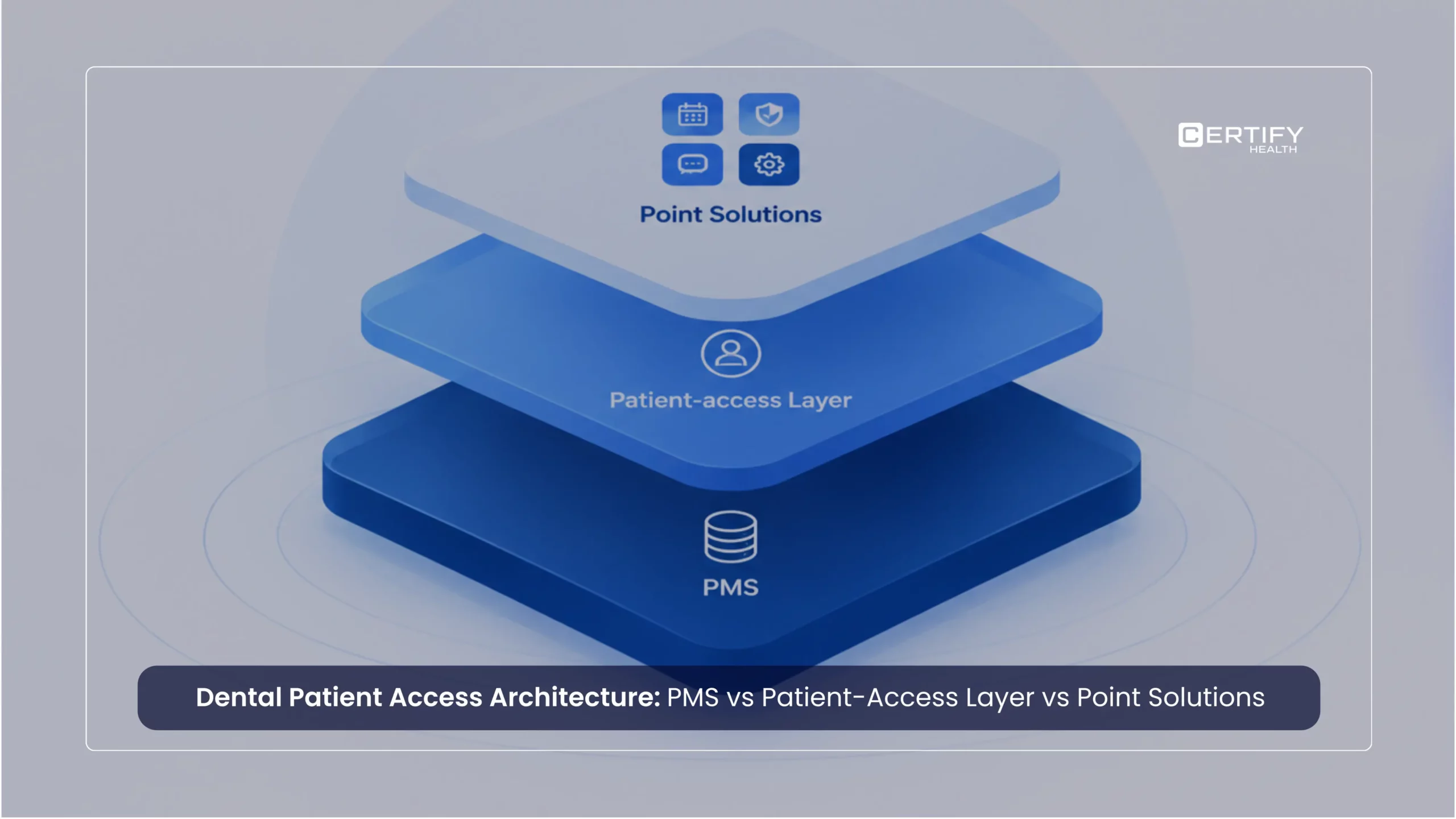
Not all practice management software works the same. The key is having one system. A platform that ties scheduling, intake, and messaging into one place beats three tools that don’t talk to each other.
Look for these four things:
- One workflow – scheduling, intake, check-in, and messaging in one place. No tool-switching.
- EHR sync – patient data flows straight into records. No re-entry needed.
- Simple patient UX – if it’s hard to use, they won’t. Uptake is all that counts.
- Real proof – ask for hard data on time saved and patients seen, not just a feature list.
CERTIFY Health is based on just this. A practice management software designed to keep patient volume consistent, even when teams diminish.
The Workforce Isn’t Coming Back. Your Workflows Need to Handle It.
The cuts will not end. A shortage of more than 78,000 nurses is expected by 2025. Doctor deficits range from 46,000 to 86,000. This is not a little blip. It is the new normal.
The practices that remain competitive will not do so by pushing their teams harder. They will accomplish this by eliminating manual labor that was never necessary.
Ready to see how CERTIFY Health helps practices maintain throughput with leaner teams? Explore the platform →