

Table of Contents
Key Takeaways
- Patient Experience Platforms help clinics reduce no-shows, automate manual work, and improve patient access from scheduling to follow-up care.
- Omnichannel patient engagement, digital intake, and automation are becoming core digital health trends for clinics in 2026.
- Clinics using connected patient workflows can improve communication, reduce front desk workload, and create a faster and smoother patient experience.
Introduction
Missed appointments have become a growing challenge for healthcare providers. Patient no-show rates can range from 14% to 50%. These missed visits cost healthcare providers nearly $150 billion every year. Many patients also struggle to book appointments, fill out forms, or get quick answers from clinics. Long wait times and poor communication make getting care harder than it should be.
In 2026, patients want access to healthcare to feel easy and fast . They want to book visits online, fill out forms on their phone, and get updates without making long calls. Clinics that still use slow and disconnected systems are falling behind.
That is why more healthcare groups are using Patient Experience Software. These systems help healthcare teams manage the full patient access journey through one streamlined workflow. They help clinics lower no-show rates, reduce staff workload, and create a smoother patient experience from beginning to end.
In this blog, we will explore the top digital health trends shaping patient access in 2026 and how patient experience solutions help healthcare teams keep up with these changes.
6 Top Digital Health Trends in 2026
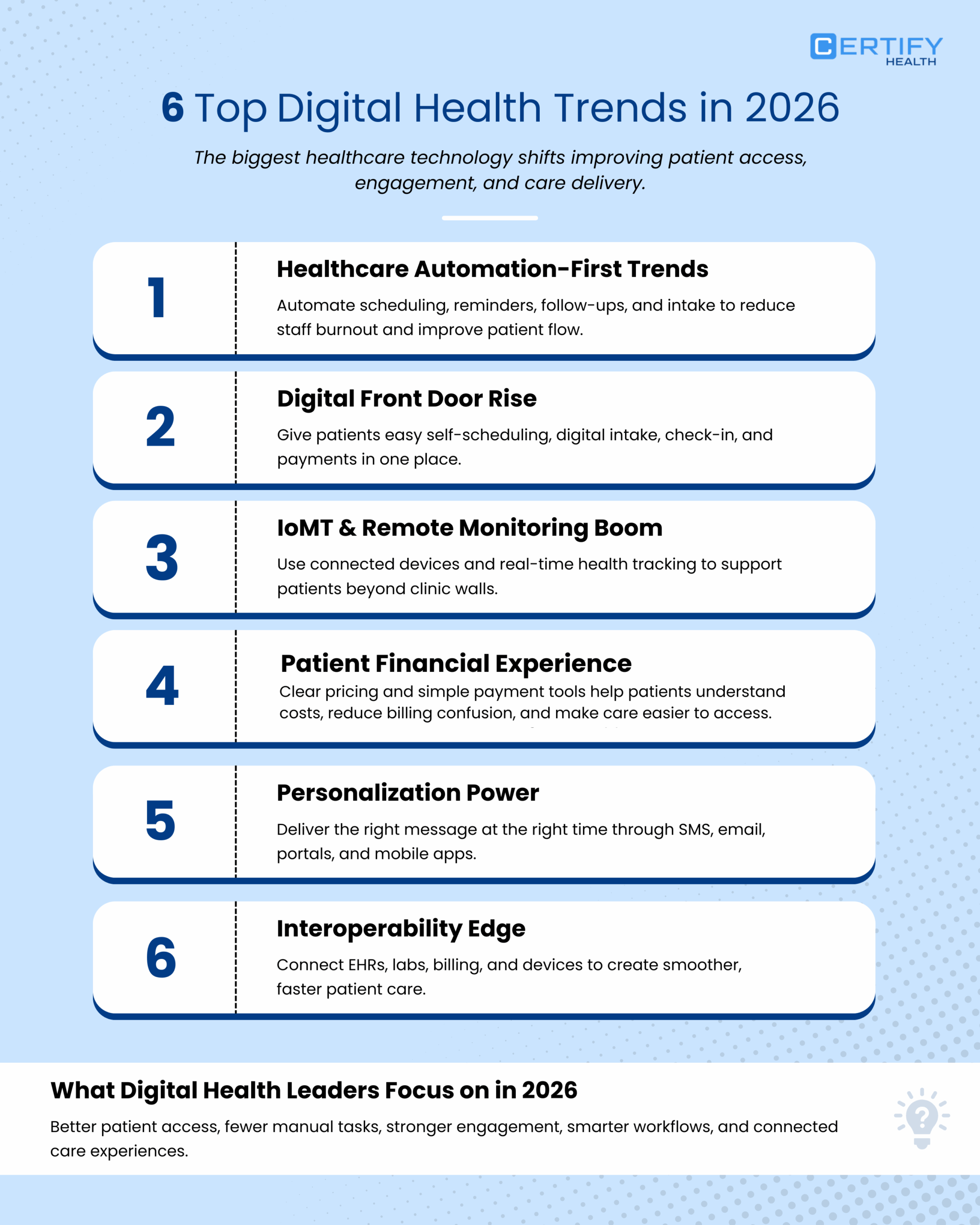
1. Healthcare Automation-First Trends
Healthcare digital transformation now prioritizes patient experience software that acts like silent staff. These tools handle triage, follow-ups, and reminders, freeing front desks from phone overload.
Many clinics also face staffing shortages and front desk burnout. Automation helps teams manage high patient volumes without adding more manual work or long phone queues.
Automated workflows can send check-ins and post-visit SMS messages, reducing the need for manual phone calls. A study published in JAMA Network Open found that 79.5% of patients replied to at least one automated message, highlighting strong engagement with text-based communication.
CERTIFY Health’s patient experience platform automates scheduling, intake, check-in, insurance checks, and patient messages in one simple platform. It reduces manual tasks, cuts front desk phone calls, and helps patients move through care faster with less work for staff.
2. Digital Front Door Rise
Patients no longer want to wait on hold just to book a doctor visit.
The digital front door healthcare model puts scheduling, registration, insurance checks, intake, and payments into one simple system. Patient self-scheduling software enables patients to book visits at any time instead of calling during office hours. Patients can fill out intake forms online, check in from mobile devices, and make payments digitally. Staff spend less time answering phones and fixing paperwork problems.
This matters because patient access delays are getting worse across healthcare. A 2024 report from The Wall Street Journal found that many patients now wait nearly a month for new appointments in major U.S. cities.
Long hold times and hard-to-use portals continue to frustrate patients.
Many clinics still manage scheduling, intake, and reminders across separate systems. CERTIFY Health brings these workflows into one connected digital front door. It also connects with EHRs like athenahealth, helping clinics move away from paper forms and long front desk calls.
3. IoMT and Monitoring Boom
Internet of Medical Things (IoMT) devices help doctors track patient health from home. Wearables in healthcare now include smart watches, glucose monitors, blood pressure cuffs, and heart trackers. These devices send health updates in real time.
Patient experience platforms bring this data into one patient record. Care teams can quickly see changes and reach out before a small problem becomes serious. Patients get alerts, reminders, and support without needing extra clinic visits.
This trend is helping patients with long-term health problems stay on track. Doctors and nurses can monitor patients from one dashboard instead of waiting for emergency visits.
As IoMT adoption grows, platforms that centralize patient reminders and care coordination will be essential for managing communication alongside monitoring data.
4. Patient Financial Experience
Clear pricing and simple billing are becoming more important in healthcare. Hospitals are now required to share service prices, and many patients want to know the cost before booking an appointment. Cost estimates are now something patients expect.
Digital payment tools like online bill pay, automatic payment plans, and instant cost estimates make billing easier. When patients know what they may owe ahead of time, they are less likely to delay care or miss appointments because of billing confusion.
Cost is still one of the main reasons people avoid medical care. Clinics that keep billing simple, offer flexible payment options, and explain costs clearly can help more patients get the care they need.
CERTIFY Health supports digital payment collection as part of the intake and scheduling workflow, helping clinics reduce outstanding balances while keeping patients moving through the care journey.
5. Personalization Power
Omnichannel patient engagement is transforming the way clinics communicate with patients. Patients want simple and personal communication. They request reminders in their native language. They want updates on the device they use most. They also want messages at the right time.
Patient communication software can send messages through SMS, email, patient portals, and mobile apps. Healthcare providers can use automated outreach to send prescription reminders, appointment updates, billing notifications, and personalized follow-up messages based on each patient’s situation.
With timely and personalized communication across multiple channels, patients are more likely to confirm appointments, complete follow-up care, and stay involved between visits.
Omnichannel patient engagement also helps build trust. When patients receive the right information at the right moment, they feel more supported throughout their healthcare journey. Clear and convenient communication also helps older adults and busy families stay more connected to their care.
CERTIFY Health’s patient communication tool helps clinics improve omnichannel patient engagement through SMS, email, digital forms, reminders, and follow-up tools.
The platform supports each step of the care journey, from scheduling and intake to payments and post-visit follow-ups, helping clinics reduce no-shows and keep patients engaged without adding more staff work.
6. Interoperability Edge
One of the biggest digital health trends in 2026 is better data sharing between healthcare systems.
Regulatory milestones are accelerating this shift.
CMS-0057-F now mandates prior authorization APIs. TEFCA is expanding nationwide healthcare data sharing across connected systems. FHIR API requirements are also pushing EHR vendors to open their data layers.
Together, these changes make interoperability a defining healthcare priority for 2026 rather than a long-term industry goal.
Health data interoperability helps EHRs, labs, billing systems, and medical devices work together more efficiently. Information can move securely across platforms instead of staying trapped in disconnected systems.
This makes daily operations easier for clinics. Staff spend less time searching through multiple tools or re-entering the same information. Care teams can quickly access records, lab results, insurance details, and patient history in one connected workflow.
Patients benefit as well. They spend less time filling out repetitive forms or repeating the same information at every visit. Care becomes faster, smoother, and more coordinated across providers.
Secure and connected data sharing also helps build trust. Patients feel more confident when clinics can manage their information safely, accurately, and efficiently.
CERTIFY Health improves interoperability by connecting with EHRs and other healthcare systems. Clinics spend less time switching between systems, while patients get a smoother care experience.
Overcoming Digital Health Trend Barriers
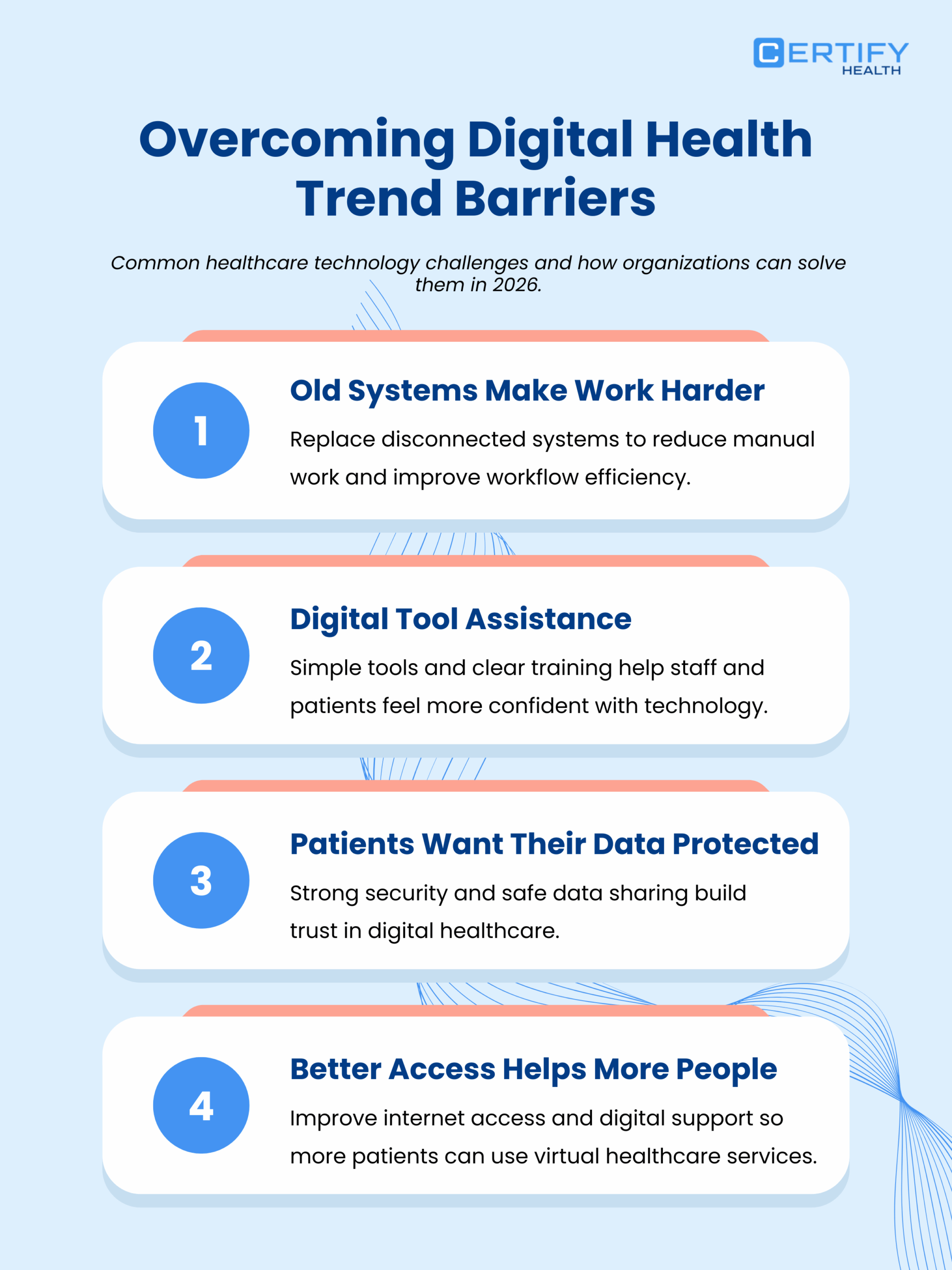
Old Systems Make Work Harder
Many healthcare teams still use systems that do not work together. This slows staff down and creates extra work.
Some People Need Help Using Digital Tools
Patients and staff may find online tools confusing. Simple training and easy-to-use software can help people feel more comfortable.
Patients Want Their Data Protected
People want to know their health information is safe. Strong security and clear rules help build trust.
Better Access Helps More People
Some patients do not have good internet or easy access to digital tools. Better access can help more people use digital healthcare services.
Healthcare organizations that fix these problems can keep up with digital health trends and create a better experience for both patients and staff.
Conclusion
The biggest digital health trends in 2026 all point to one thing: patients want faster and easier access to care. Clinics that still rely on phone calls, paper forms, and disconnected systems will struggle to keep up.
Patients now compare healthcare experiences the same way they compare other digital services. Clinics with faster scheduling, easier communication, and connected patient access tools can stand out in a more competitive healthcare market.
CERTIFY Health supports the digital patient journey in one simple platform. From scheduling and reminders to intake and follow-ups, teams can reduce manual work while creating a smoother patient experience.
Book a free CERTIFY Health demo to see how your clinic can improve patient access and reduce front desk workload.