
Contactless Patient Check-In: Benefits, Technology, and Implementation Guide
You pulled out your phone, tapped a few times, and walked straight through. Patients now expect the same convenience at the doctor’s office.

You pulled out your phone, tapped a few times, and walked straight through. Patients now expect the same convenience at the doctor’s office.

Every minute your front desk spends on paperwork is a minute a patient spends waiting. According to AMN Healthcare, the average wait time for a new patient appointment in the U.S. has reached 31 days — up 19% since 2022 and 48% since 2004. That is not just frustrating for patients. It is a direct drain on your practice’s revenue, staff capacity, and reputation.

In 2025, patients in the U.S. waited an average of 31 days for a doctor appointment. Long wait times and slow check-ins can frustrate patients and put more pressure on front-desk staff. Even small delays during check-in can create long lines and slow down the whole office.

A recent survey revealed that 60% of Americans reported experiencing poor healthcare service within the last two years. Most of those frustrations were not related to the actual medical care. They were about patient access, communication, scheduling, billing, and delays.

In 2023, healthcare data breaches hit over 133 million people, the highest on record.
Most of those breaches start where you’d least expect: everyday patient communication.

Paper intake forms now have an end date. CMS released the first wave of its HealthTech Ecosystem on April 9, 2026, as part of a nationwide effort to transition healthcare away from clipboards, fax machines, and repetitive paperwork. They called it “Kill the Clipboard.”

Most dental offices still use old or partly safe dental patient forms. This can put patient data at risk.

We often talk about how technology should be helpful in the moments that matter most.
Today, that helpfulness is redefining the dental industry.
We are seeing a fundamental shift where the patient journey is no longer a straight line but a complex, digital-first experience.
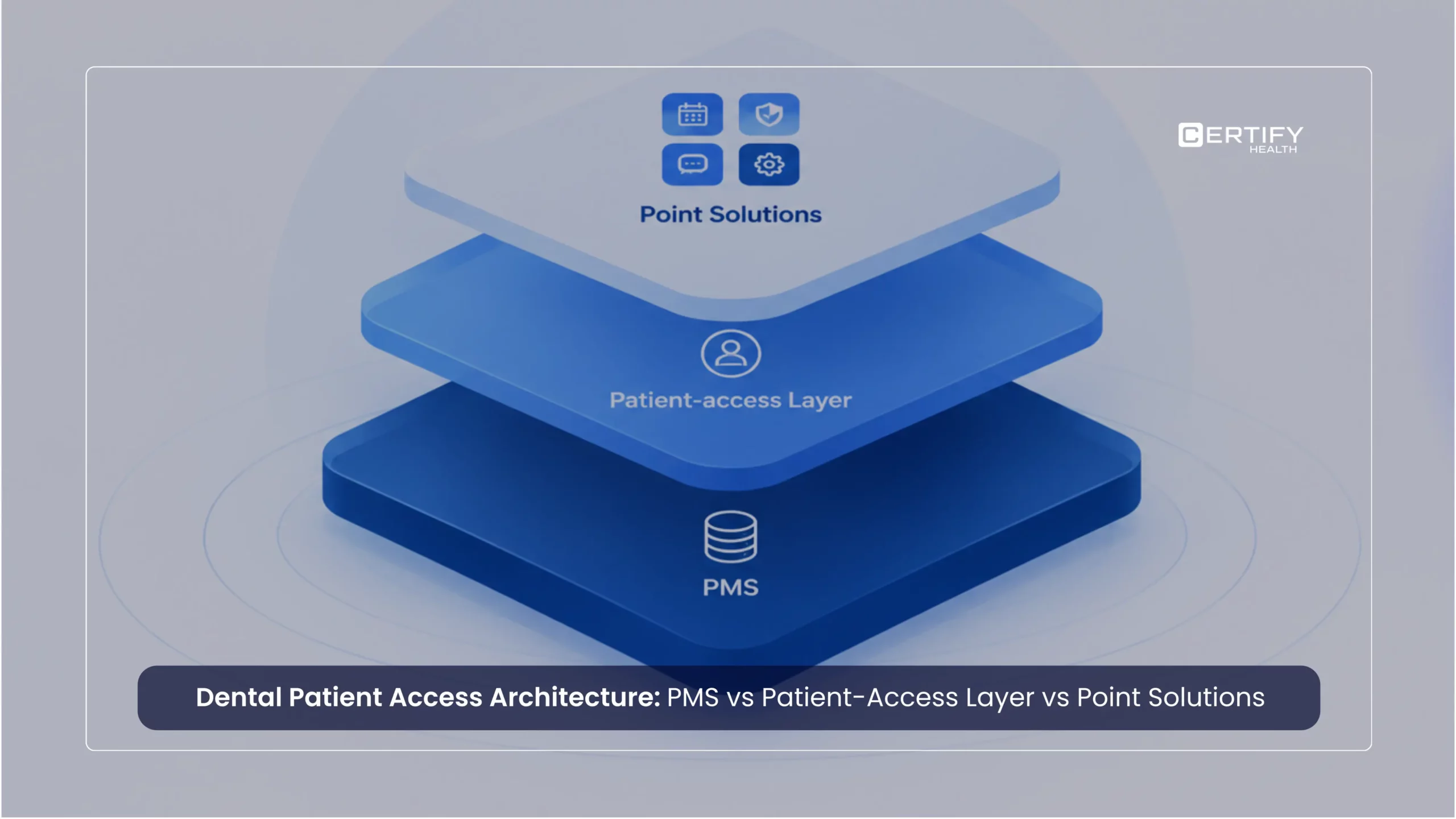
To build a resilient practice, we must organize your digital presence to be as intuitive and accessible as possible.

It’s an exciting time to be at the intersection of healthcare and technology. As we move deeper into 2026, we’re seeing a profound shift in how information moves. We’ve spent decades digitizing records; now, the challenge is making that data speak to the right person at the right time.

Intake is the first gate for identity, eligibility, and documentation that determines whether a visit is billable and clinically safe.