
CERTIFY Health Vs Luma Health
Which Patient Access Platform Fits Your Organization?

Luma Health and CERTIFY Health both help healthcare teams reduce patient access friction, but they start from different places.

Luma Health is often evaluated around Operational AI for access, engagement, intake, referrals, faxes, waitlists, and payments.

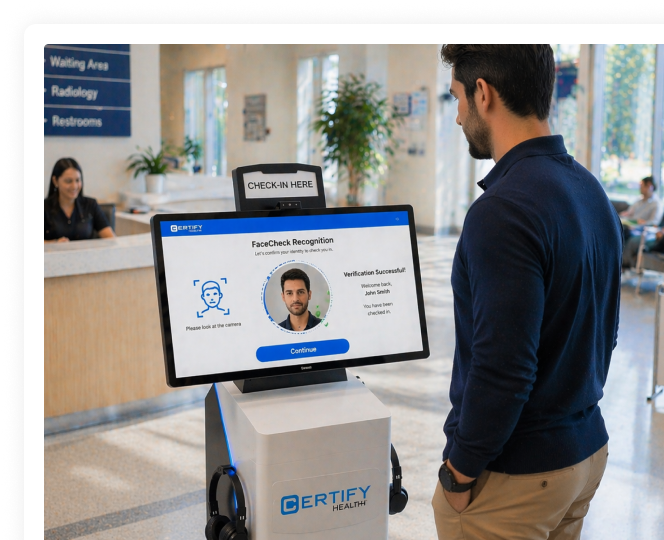
CERTIFY Health connects practical outpatient work staff handle every day: self-scheduling, digital intake, eConsent, ID and insurance capture, eligibility review, mobile/kiosk/tablet check-in, patient communication, FaceCheck identity workflows, CERTIFYPAY, and operational reporting around existing EHR and PM systems.

So the real question is simple: are you looking for enterprise access orchestration led by AI, or a connected outpatient workflow layer your teams can deploy around concrete front-office and revenue tasks?

A Simple Way
to Compare the Two

Look at
LumaHealth when

Luma Health is worth a closer look when the main goal is enterprise-scale access orchestration, AI-enabled patient communication, referral automation, and large-system workflow transformation.

Look at
CERTIFY Health when

Look at CERTIFY Health when the priority is execution around the visit: scheduling, intake completion, insurance capture, eligibility checks, check-in, identity verification, payment prompts, Text-to-Pay, payment plans, and staff-visible workflow status

That difference matters. A broad AI transformation and a practical outpatient workflow rollout are different projects with different owners, timelines, and success measures.

Key Differences at a Glance

Understand how each platform fits your outpatient or ambulatory workflow before you scope a project.

Buying Context

Often evaluated for Operational AI across patient access, engagement, intake, referrals, waitlists, payments, and enterprise workflows.

Often evaluated when outpatient teams need multi-channel intake, insurance and ID capture, eligibility readiness, mobile/kiosk/tablet check-in, FaceCheck, communication, CERTIFYPAY, and reporting around current systems.

Core strength

Strong enterprise access automation narrative, with AI, messaging, referrals, document flows, and orchestration.

Executes the patient access workflow from scheduling to payment: pre-registration, eConsent, eligibility, check-in, identity verification, reminders, payment prompts, and front-end revenue follow-up.

EHR relationship

Built for deeper enterprise integrations and health-system workflows.

Works alongside existing EHR, EMR, and practice management systems without requiring rip-and-replace.

Patient access

Supports access, engagement, intake, waitlist, referrals, faxes, eligibility, and clinic flow depending on scope.

Supports mobile, web, kiosk, tablet, patient portal, and staff-assisted intake and check-in workflows tied to scheduling, eligibility, insurance capture, and readiness.

Payments

Payment workflows are part of the broader access and engagement story.

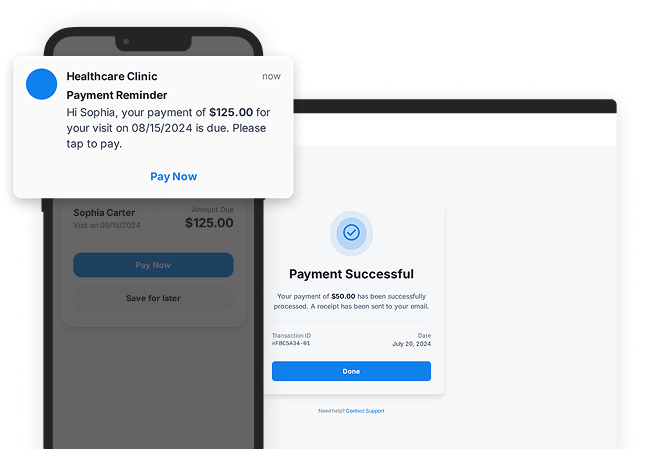
Supports patient payments through CERTIFYPAY, including Text-to-Pay, online payments, in-office payments, payment plans, card-on-file, and reminders where configured.

Who should look closer

Health systems and larger groups pursuing AI-led access orchestration and enterprise workflow automation.

Outpatient teams that want practical workflow improvement across intake, check-in, eligibility, communication, and payments.


The Workflow Difference Most Practices Miss

On a feature checklist, both platforms can appear to cover patient access, intake, messaging, waitlist, and payments. The practical difference is how much of the project is an enterprise AI program versus a focused operational rollout.

Luma Health can make sense when the organization wants to orchestrate access at scale across call centers, referrals, document flows, and multiple enterprise pathways. But some practices do not need to start with a full AI transformation. They need patients to finish intake, staff to catch coverage issues earlier, and payments to move with the visit workflow.

CERTIFY Health is built for that practical layer. It helps teams connect scheduling, intake, check-in, eligibility, communication, identity, and payments around the systems already in place.

CERTIFY Health Capabilities That Matter in This Comparison

CERTIFY Health’s strongest fit is the outpatient workflow between the first patient action and the final payment. The capabilities that matter most in this comparison are:

Multi-channel intake

Patients can complete intake through a secure web portal, mobile link, kiosk, tablet, patient portal, or staff-assisted workflow. Intake can include demographics, insurance, medical history, digital forms, and eConsents.

EHR-connected intake

Submitted information can be routed into connected practice systems based on the integration and workflow configuration.

Insurance capture and eligibility review

Patients or staff can capture insurance card images, and coverage can be checked during scheduling, pre-registration, or check-in when the workflow is configured for it.

Check-in nudges

Automated reminders can prompt patients to finish forms, confirm arrival steps, complete mobile check-in, make payments, or use kiosk and staff-assisted options when needed.

Patient payments

CERTIFYPAY supports payment links, Text-to-Pay, card-on-file, payment plans, payment reminders, online payments, and in-office payment options where configured.

Identity verification

Photo ID capture can be part of intake and check-in. FaceCheck can be used as an optional identity assurance layer where the practice needs added control.

Interoperability

CERTIFY Health is built to work with existing healthcare systems through scoped EHR/PM integrations, HL7, FHIR, EDI, payment gateway connections, identity tools, and communication services.

Practice Scenarios Where the Difference Becomes Clear

How to Decide

Choose the evaluation path based on the problem you are trying to solve.

Evaluate Luma Health more closely if:

  1. You need enterprise access orchestration across call center, referrals, waitlists, messaging, and document workflows.
  2. Your team is ready to govern AI-enabled workflows across departments.
  3. The project owner is solving health-system access at scale.
  4. You want an enterprise automation narrative with broad workflow scope.

Evaluate CERTIFY Health more closely if:

  1. You want to improve intake, check-in, eligibility, communication, and payments around current systems.
  2. Your teams need practical workflow visibility before and during the visit.
  3. You want patient access workflows across mobile, web, kiosk, tablet, portal, and staff-assisted channels.
  4. You want to connect patient access and revenue tasks without turning the project into enterprise AI transformation.

Where CERTIFY Health Fits Without Turning Access Into an AI Transformation

CERTIFY Health does not need to replace Luma Health as an enterprise Operational AI platform for access orchestration, referrals, faxes, call workflows, or AI-led transformation. CERTIFY Health fits when the buyer needs practical workflow execution around the visit: scheduling, digital intake, eConsent, ID and insurance capture, eligibility review, mobile/kiosk/tablet check-in, identity verification, patient communication, payments, and reporting around existing EHR and PM systems. Not every access problem needs an AI transformation. Some need the visit workflow to work cleanly from scheduling to payment.

See How CERTIFY Health Would Fit Your Workflow

Bring your current scheduling, intake, check-in, eligibility, communication, and payment process into the demo. We’ll walk through where work breaks down today and where CERTIFY Health can help connect the patient journey without replacing the systems that already run your practice.

Questions to Ask Before You Choose

Four questions that separate a quick communication fix from a real workflow decision. Step through them and tick off the ones you’ve thought about.

Frequently Asked Questions

Is CERTIFY Health an Operational AI platform like Luma Health?

No. CERTIFY Health should not be positioned as a direct AI-orchestration equivalent. It is better framed as a connected outpatient workflow platform for patient access, intake, check-in, eligibility, communication, identity, and payments.

Luma Health may make more sense when enterprise access orchestration, AI workflows, and referral/document automation are the main priorities. CERTIFY Health may make more sense when outpatient workflow execution around the visit is the priority. 

Yes, but the page should keep the claim grounded. CERTIFY Health can support multi-location and specialty workflows depending on integrations, modules, rollout scope, and implementation plan.

Compare the work to be fixed first. A team solving call-center access has a different buying problem than a team solving intake completion, eligibility readiness, check-in, and patient payment friction.

Download: Kiosk & Mobile Check-In Readiness Checklist

Download: Patient Identity & Check-In Risk Checklist

Download: Medical Practice Software Evaluation Checklist

Download: EHR Integration Readiness Checklist

Download: Patient Communication Workflow Audit

Download: Eligibility & Denial Prevention Checklist

Download: Digital Intake & Pre-Visit Readiness Checklist

Download: Revenue Leakage & Patient Payment Workflow Audit

Download: No-Show & Waitlist Recovery Checklist

Download the Free Checklist

Schedule a free demo

Eliminate Check-In Delays | Prevent Claim Denials | Simplify Patient Workflows