
Key Takeaways:
- Digital patient intake collects complete, validated data before arrival, cutting check-in from 20–25 minutes to 2–3 minutes.
- Required fields and smart validations eliminate missing allergy, consent, and insurance data that drive claim denials and liability risk.
- Med spas gain faster eligibility verification, higher upfront payment success, and safer aesthetic treatments with pre-visit digital intake.
Table of Contents
One Missing Field Can Cause Many Problems
In a medical spa, missing patient details can slow operations and cause risk. A small error at patient check-in can lead to denials, slower payment, and more work for staff.
According to AHIMA, about 20% of all claims are denied. Even worse, 60% of denied claims are never sent back for payment. Common reasons include missing approvals, wrong patient information, services not covered by insurance, and out-of-network providers.
Billing is not the only issue facing medical spas.
A missing allergy, an unsigned consent form, or missing treatment notes can create risk for your practice. What should be a simple Botox visit can quickly become a costly issue.
Key Stat 💡
According to Becker’s Hospital Review, claim denials cost hospitals and health systems nearly $20 billion every year.
The report also found that denied claims are often tied to expensive treatments. On average, these claims involved procedures costing more than $14,000.
This is money that no practice wants to lose.
Why This Matters for Med Spas
Med-spa services fall into two groups:
- Medically billable treatments (some injectables or procedures with medical codes). These may involve insurance and can be affected by eligibility and claim rules.
- Cosmetic, self-pay treatments (most Botox, fillers for cosmetic use). These are paid by the patient and depend on clear consent and upfront payment.
This article focuses on how digital intake fixes problems for both types. For medically billed care, better intake helps avoid eligibility and claim issues. For self-pay care, it helps with clear consent and collecting payment before treatment.
What Is "Missing Patient Data"? Why Should You Care?
Not all missing data looks the same. On paper forms, it can occasionally be a blank field. Sometimes it is an insurance ID number entered with one digit transposed. Sometimes it is a consent form that was signed but never scanned into the chart.
In the context of a med spa or aesthetic practice, “missing patient data” also means the same as:
- Incorrect or invalid insurance policy numbers or payer IDs
- Missing demographic details like date of birth, address, phone, email
- Incomplete allergy fields, medication lists, or medical histories
- Handwriting on paper intake forms that is unreadable
- Outdated contact, insurance, or guarantor information for returning patients
- Missing or ambiguous treatment consent, photo release, or HIPAA acknowledgment
- Skin condition history or contraindication flags left unanswered
Each one of these gaps creates a ripple effect, from your front desk all the way to your billing team.
See Where Your Intake Process Is Breaking Down.
The Effect Downstream: How Three Workflows Are Broken by One Gap
Patient intake serves as the starting point for every step of the patient experience. When the patient record starts with missing information, every step that follows, check-in, eligibility verification, billing, and payment collection, can be affected.
| Stage | What Goes Wrong | Business Impact |
|---|---|---|
| Check-In | Paper-based workflows often lead to duplicate data entry, unreadable information, and incomplete records. | Check-in stretches 20–25 minutes vs. 2–3 minutes with digital |
| Eligibility Verification | Wrong policy numbers, outdated coverage not flagged | Denied or underpaid claims |
| Payment Collection | Unknown deductibles/co-pays, incorrect billing address | Late payments, bad debt, slower A/R |
| Compliance | Lost paper forms, missing e-signatures | HIPAA exposure and liability risk |
Example:
A patient fills out a paper form before a filler appointment but skips allergies and signs no consent. Staff miss this during a busy check-in. Later, the clinic must call the patient, delay the treatment, and document extra consent. If the patient is self-pay but the card fails, the clinic risks losing revenue for that visit.
The front desk staff manages a hectic schedule while swiftly reviewing the papers. Missing details often go unnoticed.
Later, staff must follow up with the patient to collect updated records and fill in the missing information. This extra work could have been avoided before the visit.
The issue isn’t the visit; it starts at intake. When patient data is collected during check-in using paper forms, key details miss out.
That’s why digital patient intake solution is essential for medical spas. Patients can complete forms on their phones before arriving. Staff then have time to review the information, identify missing or incorrect details, and check insurance eligibility if needed.
This lowers administrative burden, reduces preventable mistakes, and strengthens confidence in your practice.
How Digital Intake Fixes Eligibility Verification
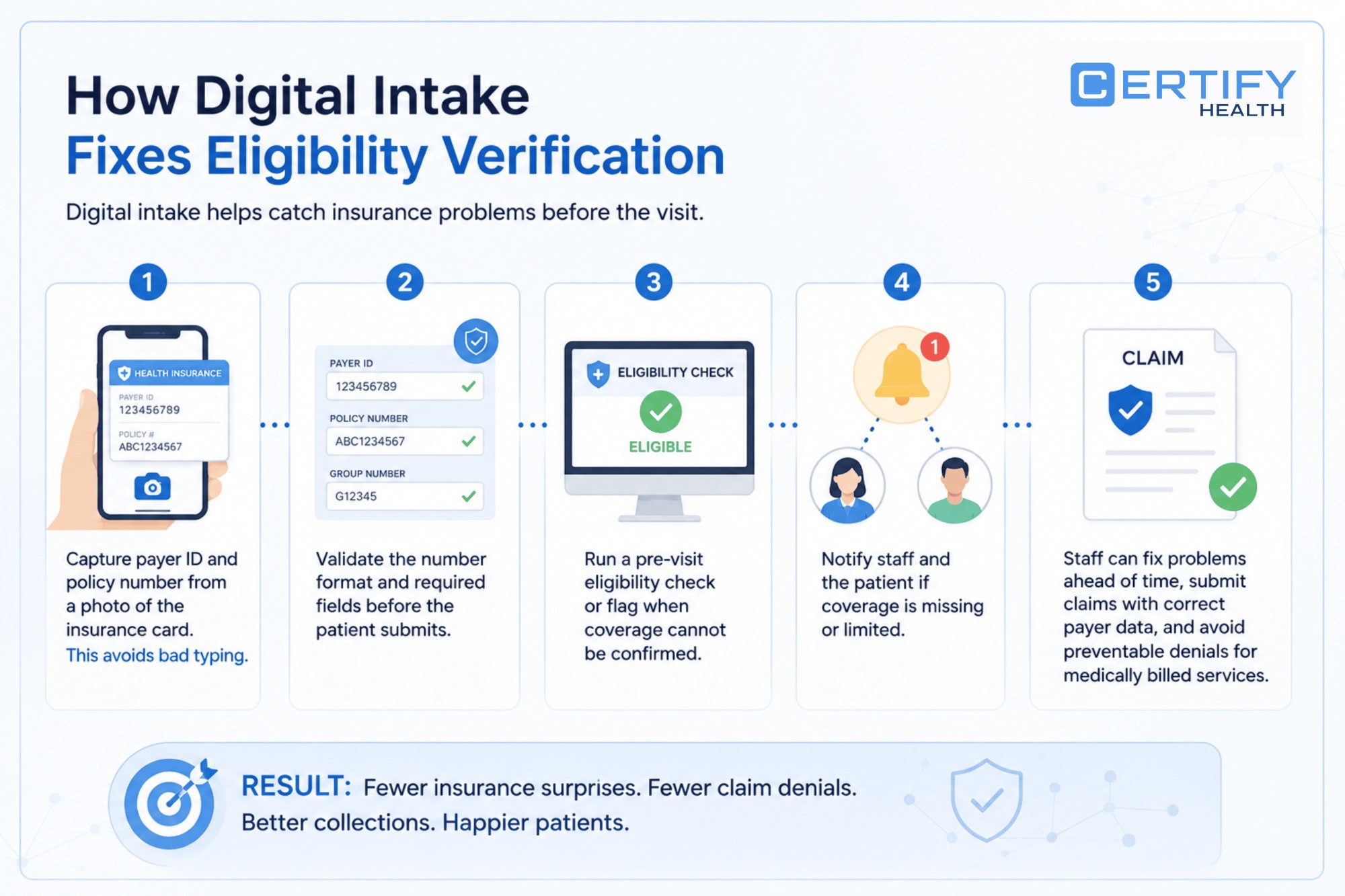
Digital intake helps catch insurance problems before the visit. Key steps:
- Capture payer ID and policy number from a photo of the insurance card. This avoids bad typing.
- Validate the number format and required fields before the patient submits.
- Run a pre-visit eligibility check or flag when coverage cannot be confirmed.
- Notify staff and the patient if coverage is missing or limited.
Result: staff can fix problems ahead of time, submit claims with correct payer data, and avoid preventable denials for medically billed services.
How Digital Intake Improves Payment Collection
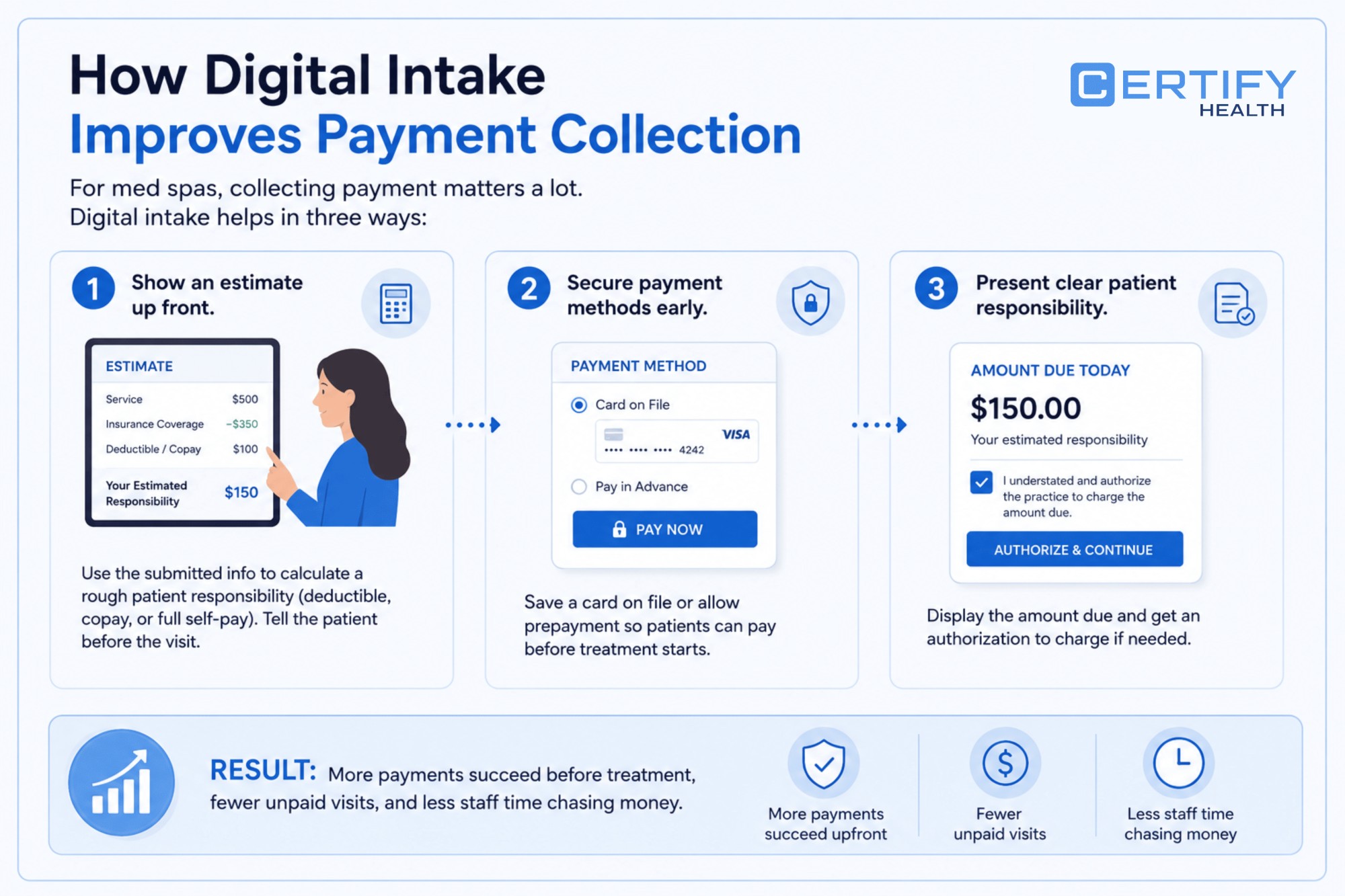
For med spas, collecting payment matters a lot. Digital intake helps in three ways:
- Show an estimate up front. Use the submitted info to calculate a rough patient responsibility (deductible, copay, or full self-pay). Tell the patient before the visit.
- Secure payment methods early. Save a card on file or allow prepayment so patients can pay before treatment starts.
- Present clear patient responsibility. Display the amount due and get an authorization to charge if needed.
Result: more payments succeed before treatment, fewer unpaid visits, and less staff time chasing money.
How Outdated Intake Methods Create Ongoing Documentation Errors
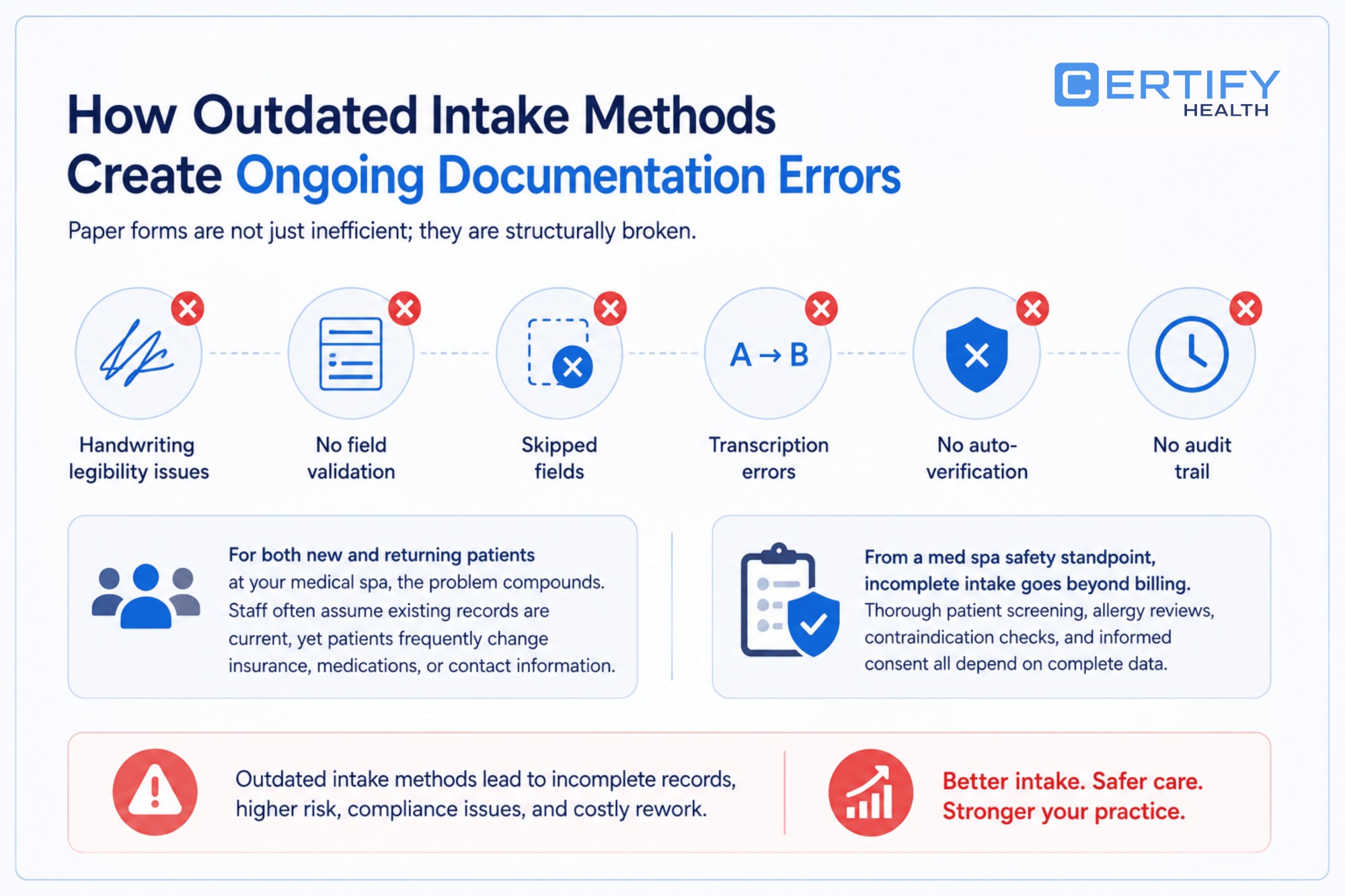
Paper forms are not just inefficient; they are structurally broken.
- Handwriting legibility issues
- No field validation
- Skipped fields
- Transcription errors
- No auto-verification
- No audit trail
For both new and returning patients at your medical spa, the problem compounds. Staff often assume existing records are current, yet patients frequently change insurance, medications, or contact information.
From a med spa safety standpoint, incomplete intake goes beyond billing. Thorough patient screening, allergy reviews, contraindication checks, and informed consent all depend on complete data.
How Digital Patient Intake Helps Medical Spas Get Better Patient Information
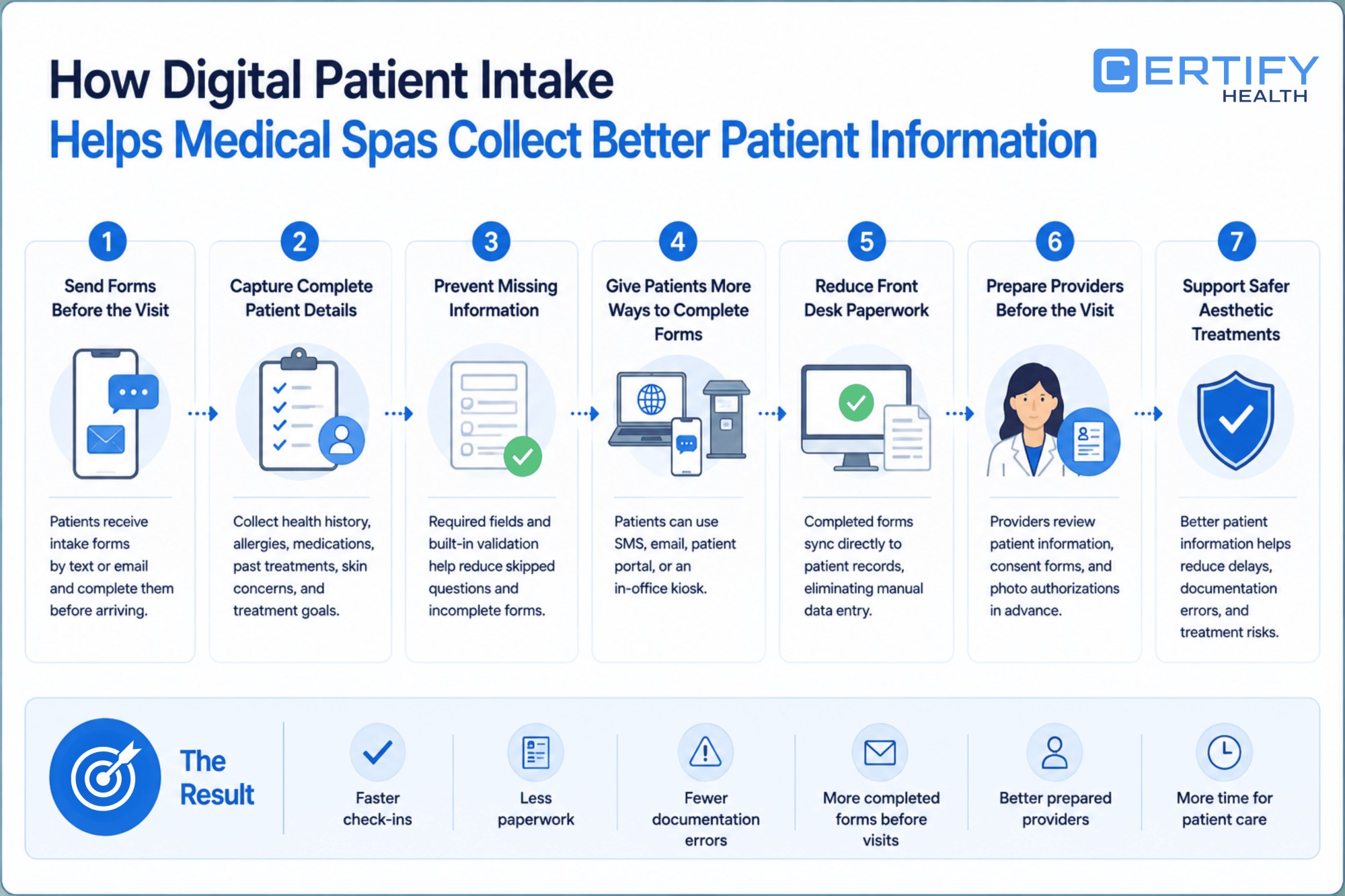
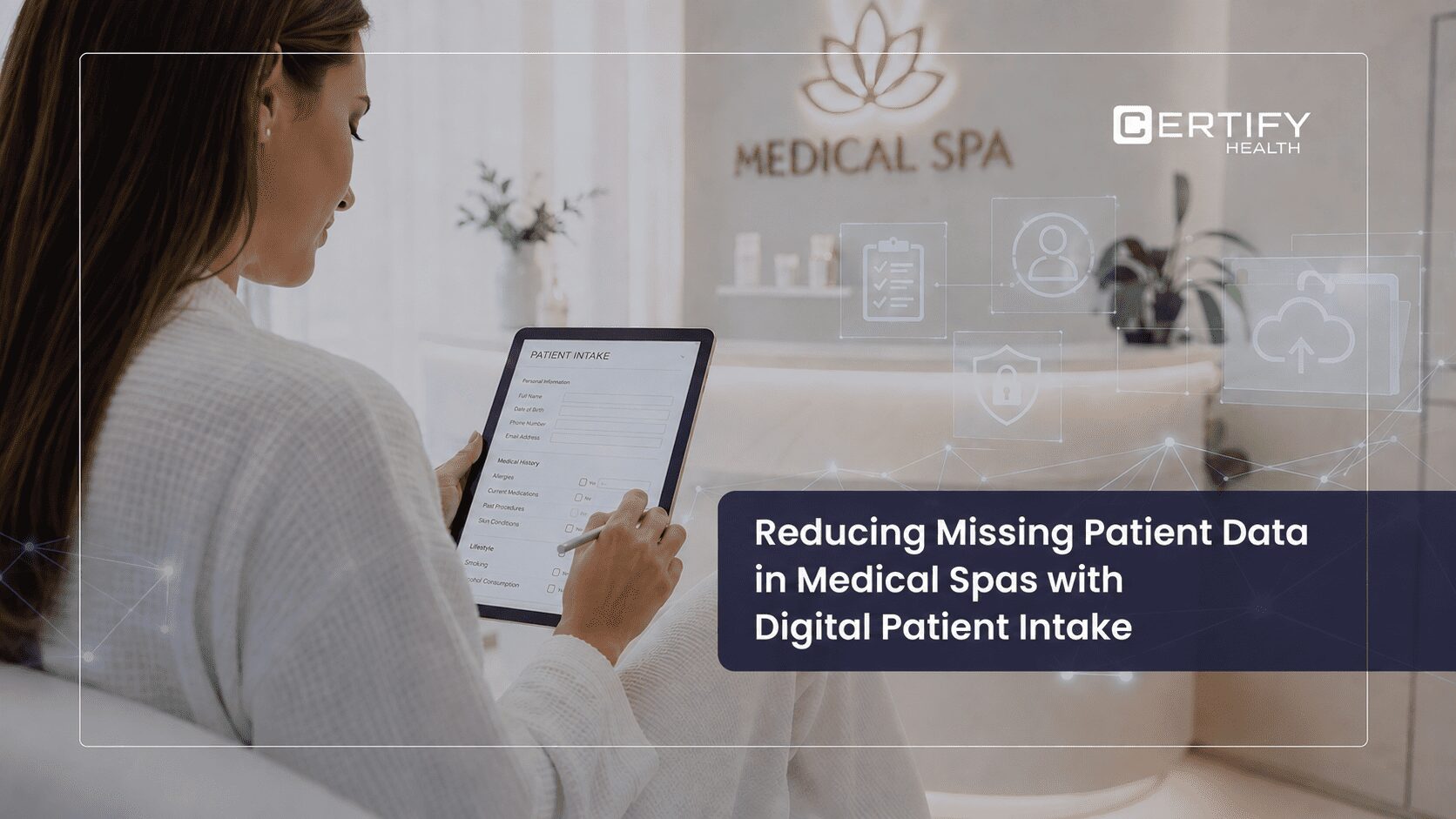
Medical spas use digital patient intake to gather patient data before appointments. Instead of filling out paperwork in the waiting area, patients can submit their information from home using a desktop computer, tablet, or smartphone.
A. Patients Complete Online IntakeForms Before They Walk In
Patients get a link by text or email and complete their forms before the appointment. Filling in:
- Health history
- Allergies
- Medication they take
- Past cosmetic treatments
- Skin concerns
- Treatment goals
This gives providers more time to review the information before the visit.
B. Information Gaps Are Easier to Find
Paper forms are often rushed. Patients may skip questions or forget important details.
Digital forms can remind patients to complete all required fields before they submit the form. This helps minimize missing details and small errors.
Capture Complete Patient Data Before the Visit
Med spas using CERTIFY Health‘s patient intake software gather precise patient data prior to the visit, saving your staff time at the front desk filling out paperwork.
- Secure HIPAA compliant online intake forms distributed through SMS and email
- Mandatory fields and built-in validation checks help ensure complete and accurate information.
- Insurance card capture + eligibility-ready data
- Consent forms and photo authorizations can be completed before the visit.
- Real-time sync to patient records
Result: Cleaner check-ins, fewer billing surprises, and safer aesthetic treatments.
Replace paper intake with fully automated patient intake
C. Patients Can Use the Method They Prefer
Patients can complete forms through:
- Text message
- Patient portal
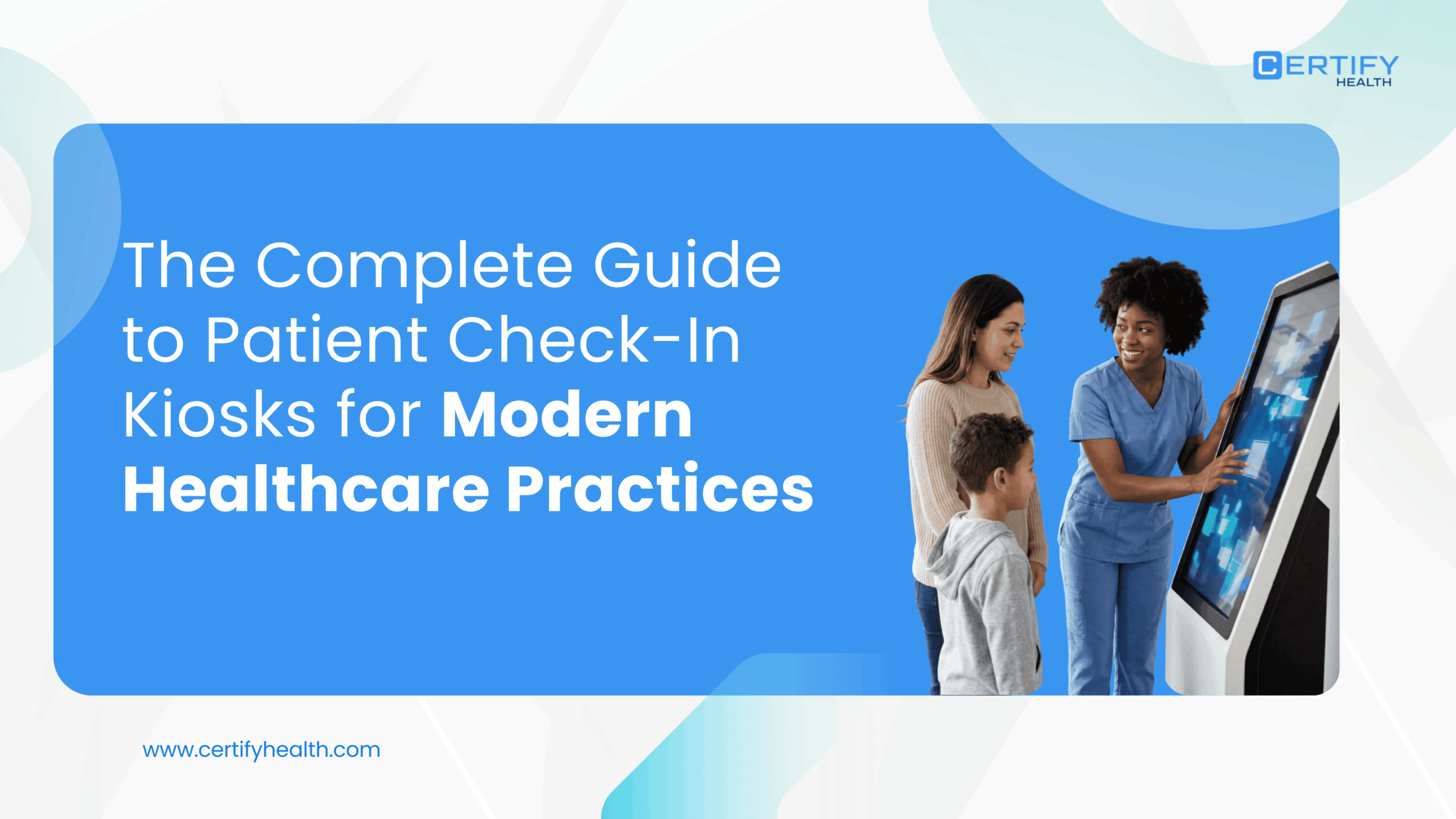
- In-office kiosk
Giving patients more options makes it easier for them to finish their forms on time.
D. Staff Spend Less Time on Paperwork
Automatic reminders encourage patients to complete forms before their appointment.
Once the forms are finished, the information is added to the patient’s record. Staff can review it before the visit instead of collecting and entering paperwork at check-in.
E. Better Information Supports Safer Care
Medical spas need more than a patient’s name and phone number.
Providers need to know about allergies, medicines, past treatments, and other health details before performing a procedure. They also need signed med spa consent forms and photo release forms when required.
Digital patient intake helps collect this information early. That means fewer surprises, fewer delays, and a smoother experience for both patients and staff.
What Does Your Medical Spa Gain?
Medical spas that use online patient intake often see:
- Faster check-in
- Less paperwork
- Fewer mistakes
- More forms completed before the visit
- Less time spent chasing missing information
- More time with patients
- Smoother appointments
The biggest benefit is time.
Staff spend less time fixing forms and entering information by hand. They can spend more time helping patients and getting ready for appointments.
Providers can review important details before the visit, such as allergies, medicines, past treatments, and signed consent forms.
This helps appointments run more smoothly. It also helps patients feel prepared and cared for.
If your medical spa collects payment before treatment, having the right patient information can also help avoid payment problems and delays.
Best Practices for Using Digital Patient Intake Software at Your Medical Spa
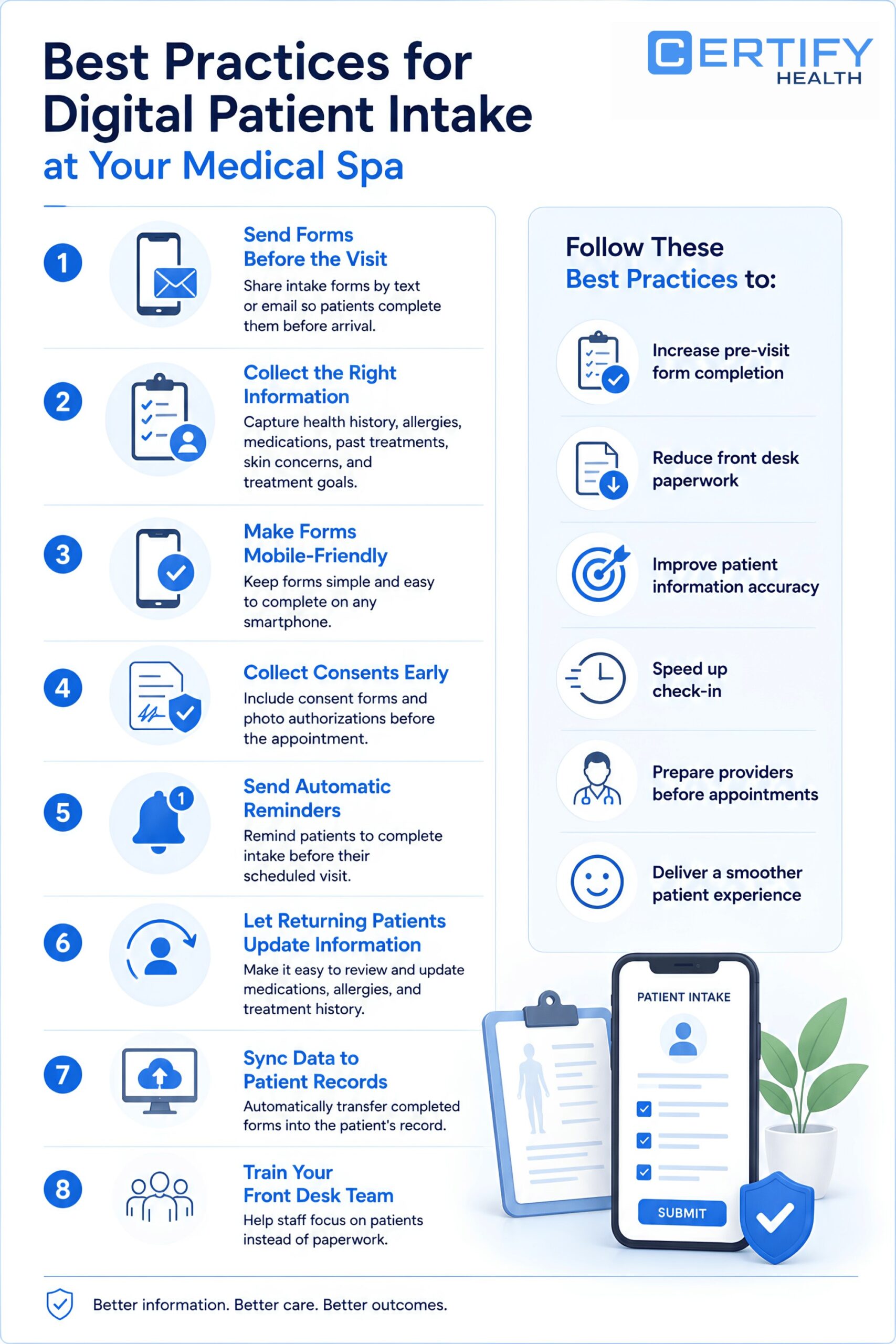
When your medical spa starts using online patient intake, the goal is more than getting rid of paper forms. The goal is to collect patient information before the visit and make check-in easier for both patients and staff.
To make the most out of your online patient intake software, follow these best practices.
1. Review How Patient Information Is Collected Today
Start by looking at how patients complete forms today.
Where do delays happen? What information is often missing? Identifying these gaps helps practices strengthen and streamline the entire intake workflow.
2. Ask the Right Questions
Medical spas need more than a patient’s name and phone number.
Forms should ask about:
- Health history
- Allergies
- Medicines
- Past cosmetic treatments
- Skin concerns
- Treatment goals
This ensures staff and clinicians have the information they need before the visit.
3. Make Forms Easy to Complete on a Phone
Most patients prefer completing forms directly from their smartphones.
Keep forms short, user-friendly, and easy to complete. This encourages more patients to finish them before their appointment.
4. Collect Consent Forms Early
Start gathering information before the patient comes in.
Include consent forms and photo release forms in the intake form. Patients can review and sign them before their appointment.
5. Send Reminders
Some patients forget to complete their forms.
Text and email reminders can help patients finish their intake before the visit.
6. Let Returning Patients Update Their Information
Patient information can change.
Give returning patients a quick way to update their medicines, allergies, contact details, and treatment history.
7. ConnectDigitalIntake Forms HIPAA to Patient Records
Choose a system that sends information directly to the patient’s record.
This minimizes manual paperwork while helping maintain accurate and current patient records.
8. Educate Staff on the Updated Workflow
Staff should spend less time entering information and more time helping patients.
Review the new workflow with your team so everyone knows what to do before, during, and after the appointment.
FAQ
What is missing patient data in medical intake forms?
Missing patient data refers to important information that is absent or incorrect. Examples include insurance details, contact information, medical background, allergy records, and completed consent documents. Missing data can slow down visits and cause billing problems later. CERTIFY Health helps collect complete information with digital forms, eConsent, and insurance card capture before the patient arrives.
How much do claim denials from bad intake data cost practices?
Bad patient data can lead to denied claims and lost money. Staff also spend extra time fixing errors and sending claims again. Some denied claims are never paid. CERTIFY Health helps reduce these problems by collecting accurate patient information and checking insurance before the visit.
What is the error rate difference between manual and digital intake?
Studies show that typing information by hand can lead to mistakes.
A U.S. study found that 3.7% of manually entered healthcare records contained errors. These errors happened when staff had to type information into a system.
Paper forms can make this problem worse. Handwriting may be hard to read, and patients may forget to fill in important fields.
Digital patient intake helps catch mistakes before forms are submitted. Required fields make sure key information is not missed. Patients can also upload their insurance cards and enter information directly.
CERTIFY Health uses required fields, digital healthcare forms, and insurance card capture to help improve data accuracy.
How does digital intake improve eligibility verification?
Patients can securely upload insurance information before check-in through a digital intake process. The system flags missing or invalid data and runs pre-visit checks so staff can fix issues before care begins.
CERTIFY Health includes real-time insurance eligibility checks to help practices verify coverage before care is provided.
Is digital intake HIPAA-compliant for med spas?
Yes, it can be. A healthcare intake system should protect patient data with security tools such as encryption, audit logs, and secure e-signatures. CERTIFY Health is built for healthcare and helps practices keep patient information safe and secure.
CERTIFY Health includes real-time insurance eligibility checks to help practices verify coverage before care is provided.
How long does check-in take with digital vs. manual intake?
Paper check-in can take 20–25 minutes. With information already collected digitally, patients can typically finish check-in within two to three minutes of arrival. CERTIFY Health lets patients complete forms and sign consents before they arrive.
Turn Intake Into a Revenue Protection System
Many med spas lose revenue before treatment when intake misses insurance or payment details CERTIFY Health’s patient intake management software helps you fix this at the source.
From intake → eligibility → consent → payment readiness, everything is captured before the patient walks in.
What changes with CERTIFY Health:
- Fewer denied claims
- Faster check-in (minutes, not paperwork delays)
- Cleaner eligibility verification
- Higher upfront payment success
The Bottom Line
For med spas and aesthetic clinics, missing patient information can cause big problems. An old insurance card, a missing consent form, or incomplete health information can slow down check-in, create billing issues, and add more work for staff.
The best way to avoid these problems is to collect the right information before the patient arrives.
CERTIFY Health helps med spas do exactly that. Patients can complete digital forms, sign med spa consent forms, upload insurance cards, verify their identity, and answer surveys before their visit. When paperwork is completed in advance, staff can focus more on patient care.
The result is faster check-in, more accurate eligibility checks, fewer data errors, smoother payment collection, and a better experience for both patients and staff.
Want to see how it works? Schedule a demo and discover how CERTIFY Health helps med spas simplify intake, reduce front-desk work, and get paid faster.